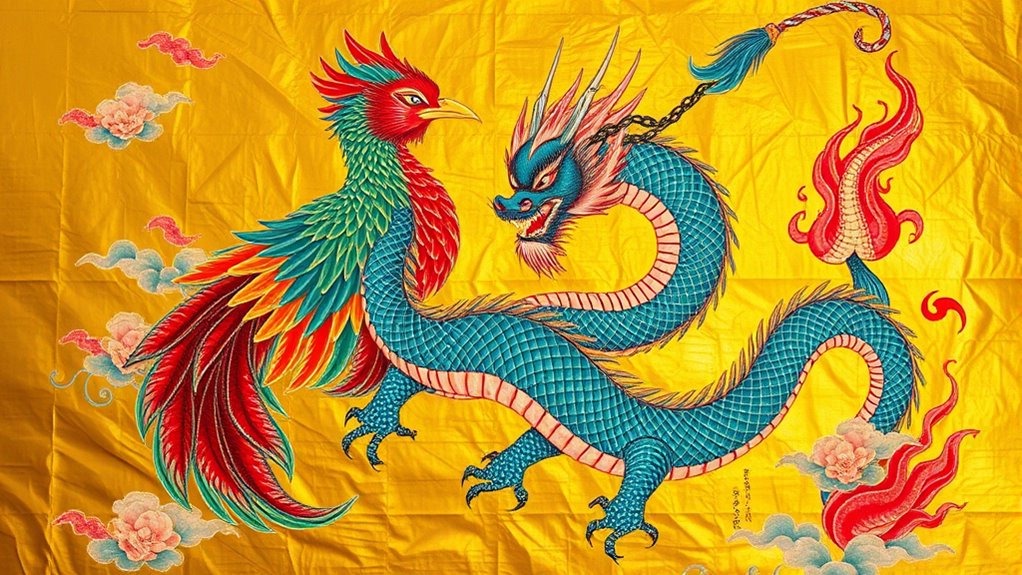

In Chinese art, the phoenix and dragon together symbolize perfect harmony between yin and yang, embodying cosmic balance, imperial authority, and moral virtues. The dragon signifies strength, power, and masculine energy, while the phoenix represents grace, renewal, and feminine virtues. Their pairing highlights a harmonious union between different cosmic forces, often reflecting imperial stability and virtue. Exploring these motifs further reveals rich cultural meanings rooted in mythology and philosophy that shaped Chinese symbolism.
Key Takeaways
- The pairing symbolizes harmony between yin (Phoenix) and yang (Dragon), representing balanced cosmic forces in Chinese culture.
- Together, they embody imperial authority and virtue, often signifying a harmonious reign or royal legitimacy.
- Their depiction emphasizes the union of masculine strength (Dragon) and feminine grace (Phoenix), reflecting ideal rulership qualities.
- The motifs are common in imperial art, architecture, and robes, reinforcing themes of prosperity, order, and divine right.
- Symbolically, their coexistence illustrates the balance of moral virtues and celestial powers in Chinese cosmology.

In Chinese art, the phoenix and dragon symbolize harmony and balance, representing the complementary forces of yin and yang. These mythical creatures go beyond mere decoration; they carry profound symbolism in mythology and imperial symbolism. When you see a phoenix and dragon depicted together, you’re witnessing a visual representation of harmony, prosperity, and the ideal order of the universe. The dragon, often seen as a powerful, auspicious creature, embodies strength, authority, and the yang energy—masculine and active. Conversely, the phoenix signifies grace, renewal, and the yin energy—feminine and receptive. Together, they embody the perfect balance, a concept central to Chinese philosophy and cosmology.
In traditional Chinese mythology, the phoenix and dragon aren’t just fanciful beasts—they symbolize the harmony between heaven and earth, the union of different cosmic forces. The dragon’s association with water and the heavens connects it to imperial authority, as emperors often claimed to be dragon descendants. This connection elevates the dragon to a symbol of imperial power, sovereignty, and divine right. The phoenix, meanwhile, is linked to virtue, virtue, and virtue’s renewal. It’s often associated with the empress or feminine virtues and is used in mythology to represent rebirth and renewal after chaos or destruction. When these symbols are paired, they portray a harmonious kingdom where heaven and earth, male and female, and power and virtue coexist in balance.
As imperial symbolism, the phoenix and dragon appear frequently in palace architecture, imperial robes, and artworks. The dragon is traditionally depicted as a majestic creature with a long, serpentine body, often with five claws—signifying imperial authority. The phoenix, with its elegant feathers and graceful stance, complements this imagery, emphasizing the harmony between different aspects of rulership and virtue. When painted together, they symbolize a harmonious reign, where power is tempered with virtue, strength with grace. This dual motif underscores the ideal qualities of an emperor and empress, reinforcing the emperor’s divine right to rule and the emperor’s role as a moral and cosmic guardian of the domain.
Top picks for "phoenix dragon together"
Open Amazon search results for this keyword.
As an affiliate, we earn on qualifying purchases.
Frequently Asked Questions
How Do Regional Differences Influence Phoenix and Dragon Depictions?
Regional differences shape how you see phoenix and dragon depictions through distinct artistic styles and mythological symbolism variations. In northern China, dragons appear more serpentine and fierce, while southern styles favor more ornate and benevolent versions. Phoenix representations also vary, reflecting local cultural values and aesthetics. These regional influences guarantee that each depiction uniquely expresses local beliefs, artistic traditions, and regional symbolism, enriching the diversity of Chinese art.
Are Phoenix and Dragon Motifs Used in Modern Chinese Design?
Yes, phoenix and dragon motifs are used in modern Chinese design. You’ll see them integrated into contemporary symbolism, like fashion, interior decor, and branding, where they represent harmony and prosperity. Designers often adapt traditional imagery with modern aesthetics, blending cultural significance with current trends. This fusion keeps the motifs relevant, allowing you to appreciate their timeless symbolism while enjoying fresh, innovative visuals in today’s creative landscape.
What Materials Are Traditionally Used for Phoenix and Dragon Artworks?
You typically see phoenix and dragon artworks crafted from materials like ceramic sculptures and silk embroidery. Artists use ceramics to create detailed, durable sculptures that capture the mythic qualities of these creatures. Silk embroidery is also popular, allowing you to enjoy intricate, vibrant depictions on textiles. These materials honor traditional craftsmanship while bringing the majestic symbolism of the phoenix and dragon into contemporary and historical art forms.
How Do Phoenix and Dragon Symbols Vary Across Chinese Dynasties?
Imagine witnessing the symbol evolution across dynasties, where mythological symbolism transforms with culture. You’ll see that during the Han Dynasty, dragons embody imperial power and authority, while the phoenix signifies harmony. By the Tang and Song periods, their representations become more intricate, emphasizing divine beauty. In later eras, the phoenix often symbolizes rebirth, and dragons are linked to celestial forces, reflecting shifting cultural values and spiritual beliefs.
Are There Specific Festivals Celebrating Phoenix and Dragon Symbols?
You’ll find festivals celebrating phoenix and dragon symbols, especially during Chinese New Year and the Dragon Boat Festival. These events highlight their mythical origins and artistic symbolism, representing harmony, power, and renewal. During these festivities, dragon dances and phoenix-themed performances showcase their cultural significance. Participating in these celebrations helps you connect with Chinese traditions and appreciate how these motifs embody essential cultural values through vibrant displays and storytelling.
Conclusion
Seeing the phoenix and dragon together in Chinese art reminds you of harmony and balance, even in chaos. Some might think these symbols are just decorative, but they represent deep cultural values and shared dreams. By appreciating these motifs, you connect with a timeless story of unity and hope. Don’t dismiss their beauty—let their powerful symbolism inspire you to seek harmony in your own life, just as they do in art.