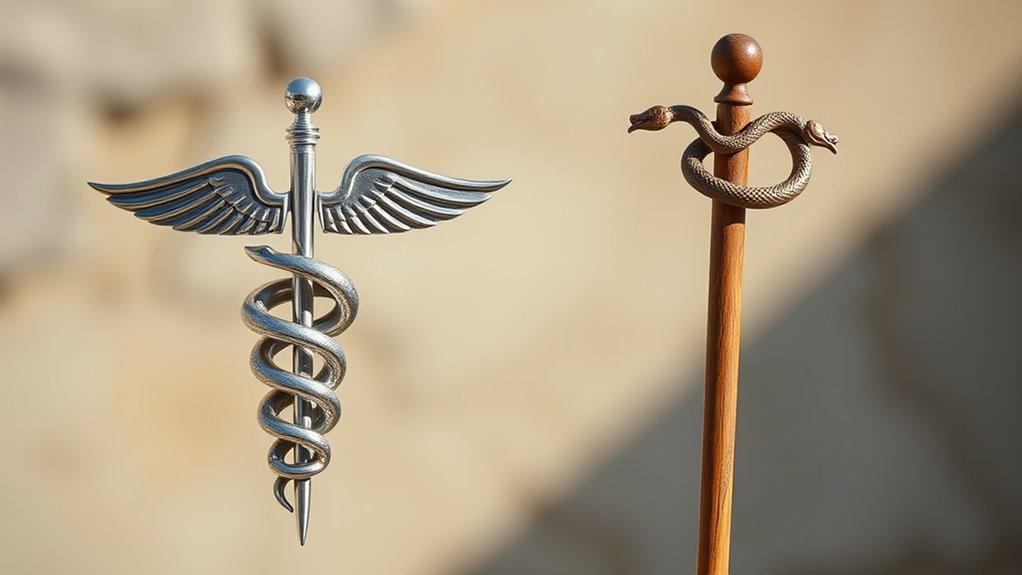

The Rod of Asclepius features a single serpent winding around a staff and is widely recognized as the true symbol of medicine, representing healing and renewal rooted in Greek mythology. In contrast, the Caduceus has two snakes around a winged staff and is historically linked to Hermes, symbolizing negotiation and commerce. While the Caduceus is common in North American medical contexts, understanding their origins reveals why they carry different meanings—keep exploring to learn more.

Prime made for students and young adults
- Fast, free delivery for dorm and study essentials
- Prime Video and Amazon Music included
- Member-only deals
Key Takeaways
- The Rod of Asclepius features a single serpent on a staff and symbolizes healing and medicine, originating from Greek mythology.
- The Caduceus has two serpents entwined around a winged staff, historically linked to Hermes and commerce, not medicine.
- The Rod of Asclepius is the traditional symbol for medicine and healthcare, emphasizing natural healing cycles.
- The Caduceus is often mistakenly used in medical contexts but primarily represents negotiation, trade, and communication.
- Despite common confusion, the Rod of Asclepius remains the authentic and widely accepted symbol of medicine and health.
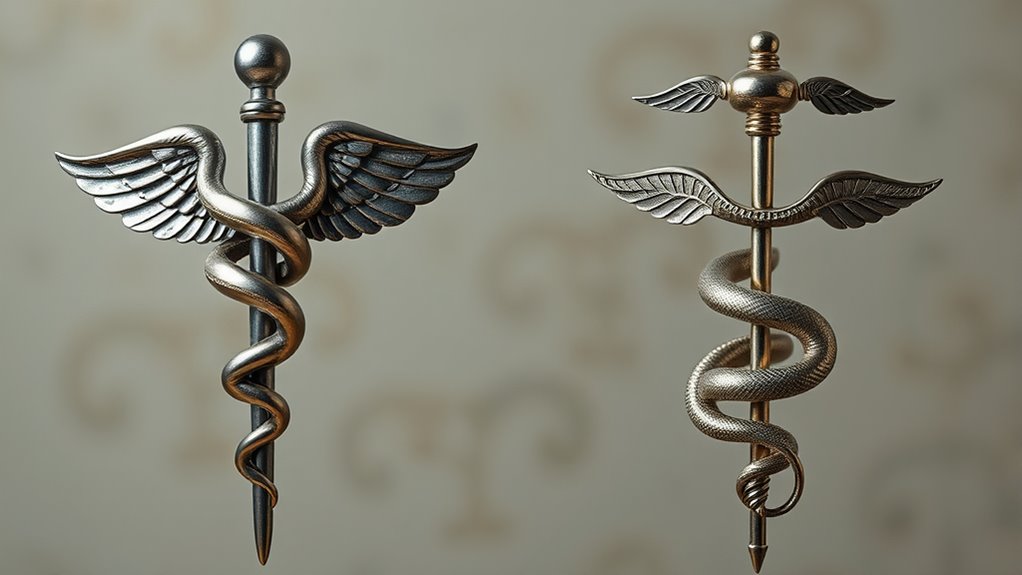
Have you ever wondered what those familiar symbols in medical charts and signage really mean? The two most recognizable emblems—the Caduceus and the Rod of Asclepius—have rich histories and cultural meanings that often lead to confusion. Understanding their historical origins and cultural significance can clarify why they’re used and what they represent in the medical world.
The Rod of Asclepius, featuring a single serpent wrapped around a staff, has roots that trace back thousands of years to ancient Greece. It’s named after Asclepius, the Greek god of healing and medicine. The symbol’s origins are deeply intertwined with Greek mythology, where Asclepius was revered as a healer who possessed divine powers. The staff itself is believed to represent authority and healing, while the serpent symbolizes renewal and rebirth, thanks to its shedding of skin. Over centuries, the Rod of Asclepius became a powerful emblem of medicine, emphasizing healing, health, and the natural cycle of life. Its cultural significance extends beyond Greece, influencing medical symbols worldwide, especially in institutions that aim to evoke a sense of trust, tradition, and respect for healing arts.
The Caduceus, on the other hand, features two serpents entwined around a winged staff. Its origins are linked to Hermes, the Greek messenger god associated with commerce, negotiation, and communication. Historically, the Caduceus was a symbol of negotiation and balance, not medicine. However, in the 19th and 20th centuries, it was adopted by some medical organizations in the United States, leading to widespread confusion. Its cultural significance today is often misunderstood; many people associate it with medicine and healthcare, but traditionally, it’s more connected with commerce and trade. The wings on the staff symbolize speed and agility, while the intertwined serpents are often seen as representing duality and harmony. Despite its less direct connection to healing, the Caduceus has become a popular emblem in medical contexts, especially in North America, but it remains a symbol with a broader, more diverse history.
Frequently Asked Questions
Why Do Some Medical Organizations Choose One Symbol Over the Other?
You might choose one symbol over the other based on your organization’s branding implications and how you want to be perceived. Some favor the Caduceus for its association with commerce and modern medicine, while others prefer the Rod of Asclepius for its historical link to healing and medicine. Your selection reflects your values, target audience, and the message you want to convey in your branding strategy.
Are There Cultural Differences in the Use of These Symbols Globally?
When you look at these symbols worldwide, you’ll see cultural symbolism shaping their use. The Rod of Asclepius, with its focus on healing, enjoys global recognition, especially in health contexts. Meanwhile, the Caduceus often gets mistaken for medicine but is linked to commerce and trade in some cultures. You might say, it’s a case of “reading between the lines,” as cultural nuances influence which symbol resonates most across different regions.
How Did the Caduceus Become Associated With Medicine?
You might find it surprising that the caduceus became associated with medicine due to a mix of mythical origins and historical adoption. Originally, it was linked to Hermes as a symbol of commerce and negotiation. However, in the early 20th century, American medical institutions adopted it, likely due to its visual similarity to the Rod of Asclepius. This shift cemented its mistaken association with healthcare and healing.
Do These Symbols Have Legal Protections or Trademarks?
Imagine the symbols are actors on a stage, fighting for recognition. You should know that the Rod of Asclepius and Caduceus do have some legal protections, but they’re often involved in trademark disputes. The Rod of Asclepius tends to be more protected due to its medical significance, while the Caduceus’s trademark status is less clear. These legal battles shape how healthcare organizations use and claim these powerful symbols.
Are There Other Symbols Used in Medical Branding or Identification?
You’ll find that besides the Caduceus and Rod of Asclepius, heraldic emblems and other medical insignia are also used in branding and identification. These symbols help convey professionalism and trust, often representing hospitals, clinics, or medical organizations. While some logos are trademarked, many heraldic emblems and medical insignia remain widely recognized without formal legal protections, but they still serve as important visual identifiers in the healthcare industry.
Conclusion
Remember, a picture is worth a thousand words—especially when it comes to symbols like the caduceus and Rod of Asclepius. Knowing their differences helps you understand medical history and trust the symbols guiding healthcare today. As the saying goes, “knowledge is power.” By recognizing these emblems, you’re better equipped to appreciate the rich symbolism behind the healing profession, ensuring you’re never in the dark when it comes to medical iconography.
Fall Picks
fall essentials
As an affiliate, we earn on qualifying purchases.