In both Buddhism and Hinduism, the lotus symbolizes purity, spiritual awakening, and resilience. It represents rising above impurities, like mud, to reach enlightenment and divine beauty. The lotus is often linked to deities and spiritual teachings, guiding practitioners toward higher consciousness. Its blooming petals show spiritual growth and wisdom unfolding. If you explore further, you’ll discover how this sacred flower influences cultural rituals, art, and personal spiritual journeys across these rich traditions.
Prime for Young Adults — start your free trial
Fast free delivery, streaming and member deals for eligible 18–24 year olds.
As an affiliate, we earn on qualifying purchases.
Key Takeaways
- The lotus symbolizes purity, enlightenment, and spiritual awakening in both Buddhism and Hinduism.
- It represents rising above impurity and ignorance despite roots in muddy waters.
- In Hinduism, it is associated with deities like Vishnu and Lakshmi, embodying divine beauty and prosperity.
- In Buddhism, it signifies spiritual purity, the unfolding of wisdom, and the journey toward enlightenment.
- The lotus serves as a meditative focus and a symbol of resilience and transcendence across spiritual practices.
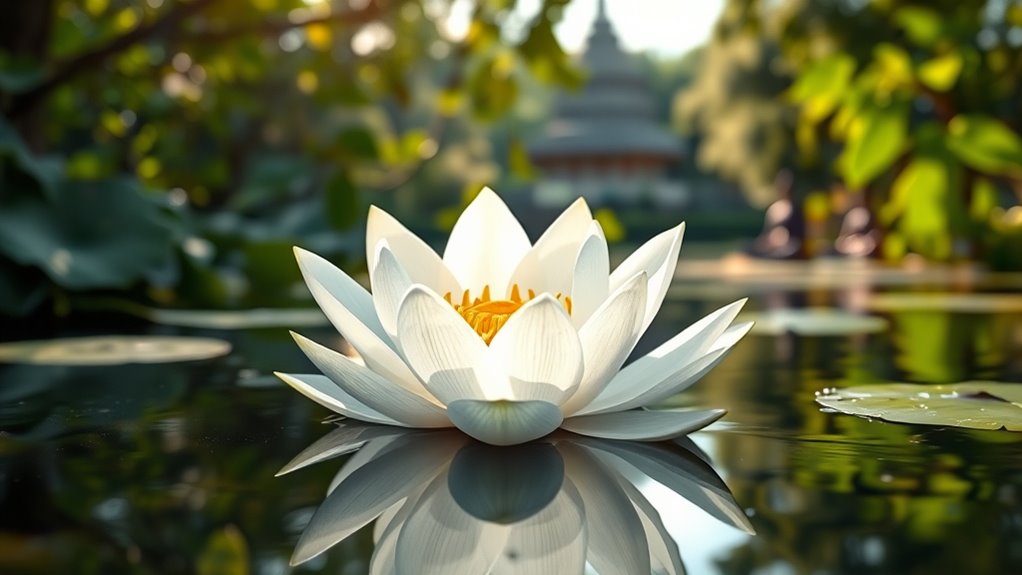
The lotus holds a profound symbolic significance in both Buddhism and Hinduism, representing purity, spiritual awakening, and enlightenment. Its enduring presence in these traditions reflects its deep meditative symbolism and cultural significance. As you explore these spiritual paths, you’ll notice how the lotus serves as more than just a beautiful flower; it embodies a journey of rising from impurity and ignorance to attain spiritual clarity. Its ability to bloom pristine and untouched despite rooted in muddy waters makes it an ideal metaphor for the soul’s progression through life’s challenges toward enlightenment. In meditation practices, the lotus often appears as a symbol to help focus the mind and evoke serenity. Visualizing a lotus during meditation can deepen your concentration and inspire you to reach higher states of consciousness, reinforcing its role as a meditative symbolism that guides practitioners to inner peace.
The cultural significance of the lotus extends beyond its visual appeal. In Hinduism, the flower is associated with gods like Vishnu and Lakshmi, symbolizing divine beauty, fertility, and prosperity. You might see images of deities seated or standing on lotus flowers, emphasizing their divine nature and the spiritual elevation the flower signifies. Similarly, in Buddhism, the lotus is linked to the Buddha and his teachings, representing purity of body, speech, and mind. Its blooming petals symbolize the unfolding of spiritual wisdom and the journey toward enlightenment. The recurring motif of the lotus in religious art and architecture underscores its importance in shaping cultural narratives about spiritual growth and transcendence.
Furthermore, the lotus’s ability to emerge beautifully from muddy waters resonates with the human experience. It reminds you that even in difficult circumstances, spiritual growth and awakening are possible. The flower’s cultural significance imbues it with layers of meaning, inspiring devotion and reverence among followers. When you see a lotus in temples, paintings, or rituals, you’re witnessing a symbol that bridges physical beauty with profound spiritual truths. Its meditative symbolism encourages you to cultivate purity and resilience in your own life, viewing obstacles as opportunities for spiritual development. Ultimately, the lotus’s cultural significance and meditative symbolism serve as a reminder that enlightenment is a journey rooted in overcoming impurities and embracing spiritual awakening, inspiring you to pursue growth with patience and devotion.
As an affiliate, we earn on qualifying purchases.
Frequently Asked Questions
How Does the Lotus Symbolize Enlightenment Differently in Buddhism and Hinduism?
You see the lotus as a powerful symbol of enlightenment, but it symbolizes it differently in each tradition. In Buddhism, the lotus represents purity of mind and spiritual awakening, rising above impurity. In Hinduism, it signifies divine beauty and spiritual growth, often linked to gods like Vishnu and Lakshmi. Both see the lotus as a profound enlightenment symbolism, but its emphasis varies—purity in Buddhism, divine connection in Hinduism.
Are There Specific Rituals Involving Lotuses in Modern Buddhist and Hindu Practices?
You might find that many modern practitioners incorporate ritual offerings with lotus flowers, especially during meditation lotus sessions. In Hindu rituals, you often see lotus flowers offered to deities, symbolizing purity and spiritual awakening. Buddhists sometimes use lotus flowers in ceremonies or place them around altars to enhance meditation focus. These practices highlight the lotus’s enduring significance, connecting you to tradition while enriching your spiritual experience today.
What Are the Variations of Lotus Symbolism Across Different Asian Cultures?
You’ll notice that cultural variations and regional interpretations shape how the lotus symbolizes purity, enlightenment, and rebirth across Asia. In China, it often represents harmony and spiritual awakening, while in Japan, it signifies resilience and enlightenment. In Southeast Asia, the lotus embodies spiritual growth and beauty. These differences reflect local beliefs and traditions, giving the lotus a unique significance in each culture’s spiritual and artistic expressions.
How Has the Lotus Motif Influenced Asian Art and Architecture Historically?
You see how the lotus flower symbolism deeply influences Asian art motifs and architecture throughout history. It inspires elegant paintings, intricate carvings, and beautiful temple designs, symbolizing purity and spiritual awakening. Artists and architects incorporate lotus patterns to evoke serenity and divine connection. This motif’s enduring presence highlights its cultural importance, shaping the aesthetic and spiritual landscape of many Asian societies across centuries.
Are There Any Contemporary Spiritual Practices That Incorporate the Lotus Symbol?
You’ll find the lotus symbol in many contemporary spiritual practices today. During meditation practices, people often visualize the lotus to promote spiritual growth and purity. Modern art interpretations also frequently feature the lotus to symbolize enlightenment and rebirth. These practices help connect you with the symbol’s deep-rooted meanings, blending ancient symbolism with modern spirituality, and allowing you to explore your inner journey through visualizations and artistic expressions.
Conclusion
As you reflect on the lotus’s symbolism, it’s clear it serves as a bridge between worlds, rising pristine from muddy waters to embody purity and enlightenment. Like a silent guardian, it reminds you that even in life’s darkest depths, beauty and spiritual growth can bloom. Embracing this timeless flower, you recognize its power to inspire resilience, transforming obstacles into stepping stones on your journey toward inner awakening.
NFL season / tailgating Picks
team gear
As an affiliate, we earn on qualifying purchases.