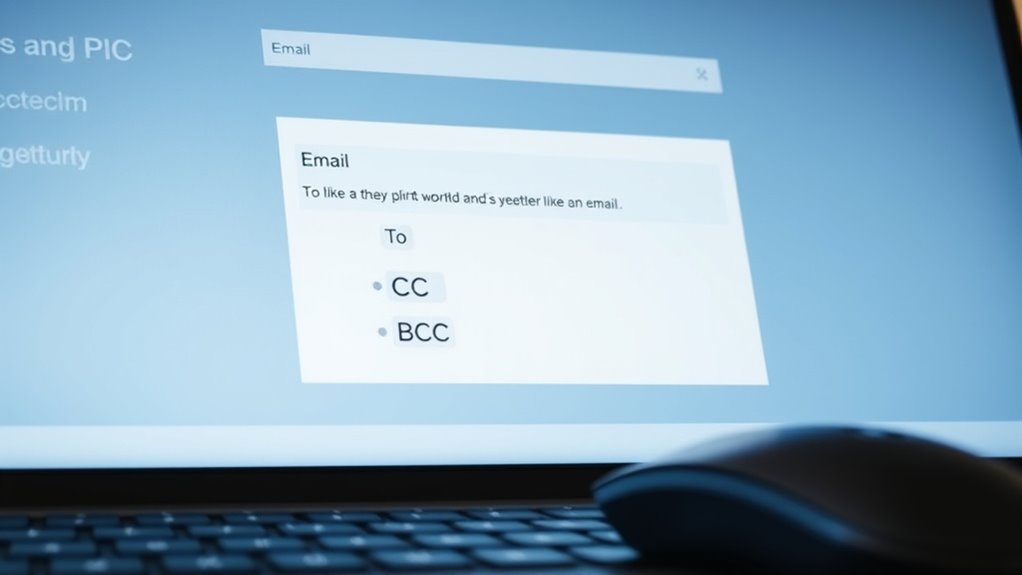

In email, CC and BCC are used to include recipients without cluttering or exposing everyone’s contact details. CC (carbon copy) is shown with a symbol like “CC” and lets everyone see who else received the email, useful for transparency. BCC (blind carbon copy) is indicated with “BCC” and keeps recipients’ addresses private, great for confidentiality. Mastering when and how to use these symbols helps you communicate clearly and ethically—there’s more to discover below.

Prime made for students and young adults
- Fast, free delivery for dorm and study essentials
- Prime Video and Amazon Music included
- Member-only deals
Key Takeaways
- In email clients, CC is usually represented by a “CC” label and BCC by a “BCC” label or field.
- The CC field displays recipients’ email addresses publicly, while BCC hides them from all recipients.
- Symbols like the “@” sign are common in email addresses but are not specific to CC or BCC.
- Use the “CC” or “BCC” fields to designate recipients as per visibility and privacy needs.
- Proper usage involves placing email addresses in the appropriate fields to communicate intent clearly.

When you send an email, understanding the difference between CC (carbon copy) and BCC (blind carbon copy) is essential for effective communication. These features help you include multiple recipients, but they also have implications for email etiquette and privacy considerations. Knowing when and how to use each can make your messages clearer and more respectful of others’ privacy.
Using CC allows you to keep someone in the loop without requiring a direct response from them. When you add someone as a CC, all recipients can see their email address and know they’ve been included. This transparency is useful for collaborative projects or when you want to keep others informed. However, it’s important to consider email etiquette here. Overusing CC can clutter inboxes and create confusion about who’s responsible for follow-up. Be mindful to include only relevant parties and avoid unnecessary visibility, as this can overwhelm recipients or breach confidentiality in sensitive situations.
Using CC keeps others informed but can clutter inboxes and cause confusion if overused.
BCC, on the other hand, is a discreet way to include recipients without revealing their email addresses to others. When you use BCC, those recipients receive the email, but their addresses stay hidden. This feature is particularly valuable when you’re emailing a large group or when privacy considerations are paramount. For example, if you’re sending out a newsletter or promotional email, BCC protects recipients’ contact information from being exposed. Using BCC demonstrates good email etiquette by respecting privacy and preventing the accidental sharing of personal details. It also helps avoid the spam or phishing risks associated with exposing email addresses publicly.
However, you should use BCC thoughtfully. Misusing it to hide recipients intentionally or to send unsolicited emails can damage your credibility and violate privacy norms. Always verify your intent aligns with good email etiquette and that you’re not deceiving others about who else received the message. When in doubt, it’s better to be transparent about who’s included, unless privacy considerations dictate otherwise.
As an affiliate, we earn on qualifying purchases.
Frequently Asked Questions
How Do I Add CC or BCC Recipients in Different Email Clients?
To add CC or BCC recipients, open your email client setup and compose a new message. Look for the CC and BCC fields, usually below the To field. Click on each to add recipients, typing their email addresses directly. In most email clients, you can also find options to toggle these fields visible if they’re hidden. Just make certain you’re adding recipients correctly to keep your email organized and private.
Can Recipients See Each Other’s Email Addresses in BCC?
Did you know that over 80% of email users value privacy? When you use BCC, recipients can’t see each other’s email addresses, ensuring email privacy. This keeps recipient visibility limited, protecting everyone’s contact info. So, if you want to send a message discreetly without revealing addresses, BCC is your best option. It maintains confidentiality, reduces spam risks, and respects your contacts’ privacy.
Are There Privacy Concerns When Using CC and BCC?
Yes, there are email privacy concerns when using CC and BCC. When you include recipients in CC, everyone can see all addresses, which may compromise recipient confidentiality. BCC helps safeguard email privacy by hiding addresses from others. Use BCC for mass emails or sensitive information to ensure recipient confidentiality. Always be mindful of privacy issues and avoid sharing email addresses without permission to prevent potential privacy breaches.
What Are Best Practices for Using CC and BCC?
Think of email etiquette as guiding a respectful conversation. When using CC, include only those who need to stay informed, like trusted allies in your story. BCC acts as a silent messenger, protecting privacy and preventing unintended replies. Always be transparent when necessary and avoid overusing CC or BCC. This keeps your professional communication clear, respectful, and efficient—like a well-told tale that everyone understands and values.
Can CC or BCC Be Used to Track Email Opens?
You can’t rely on CC or BCC to track email opens directly. Instead, email open tracking uses tiny, invisible pixels embedded in the email, which notify you when the email is opened. Using CC or BCC for tracking can raise privacy concerns, as recipients might not expect their email activity to be monitored. Always consider privacy implications and use proper tracking tools to respect your recipients’ privacy.
Conclusion
Now that you know the secrets behind CC and BCC, imagine how mastering these tools can change your email game. Will you use them to stay transparent or to keep things private? The choice is yours, but one thing’s certain—your emails will never be the same. So, are you ready to open the full potential of your messages? Immerse yourself, experiment, and see where these powerful symbols can take you. The next move is yours.
Fall Picks
fall essentials
As an affiliate, we earn on qualifying purchases.