
Puns are a fun way you can play with language by using homophones—words that sound alike but have different meanings—or homonyms, which are spelled the same but carry different ideas. When you craft or catch a pun, you’re exploiting these similarities to create humor, surprise, or cleverness. Mastering puns helps you see how playful and inventive language can be, turning simple words into humorous or insightful twists. Keep exploring, and you’ll discover even more clever wordplay tricks.

Prime made for students and young adults
- Fast, free delivery for dorm and study essentials
- Prime Video and Amazon Music included
- Member-only deals
Key Takeaways
- Puns rely on wordplay involving homophones (sound-alike words) and homonyms (same spelling, different meanings).
- They create humor by twisting familiar phrases into unexpected or double meanings.
- Effective puns require understanding nuances of pronunciation and context.
- They showcase language’s versatility and can enhance communication through clever twists.
- Recognizing puns reveals the playful and inventive potential of words in humor and expression.
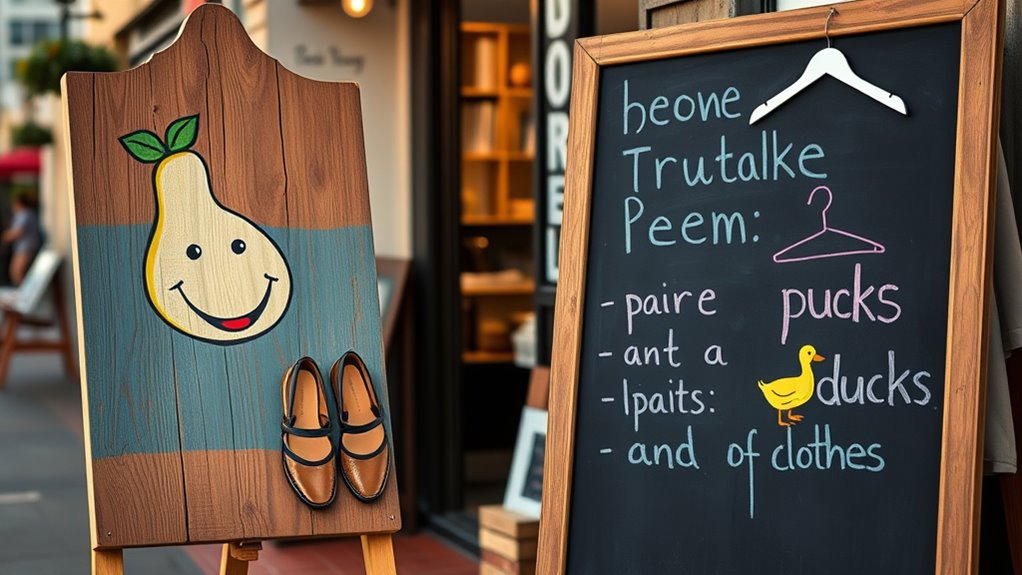
Have you ever laughed at a joke that hinges on words sounding alike but having different meanings? That’s the magic of puns. They’re a playful form of linguistic humor that relies on wordplay techniques to create amusing or clever double entendres. When you understand how puns work, you realize they’re more than just silly jokes—they’re a showcase of language’s flexibility and wit. Puns often involve homophones (words that sound the same but have different meanings) or homonyms (words spelled and pronounced the same but with different meanings). By exploiting these similarities, you can craft humor that surprises and delights.
You might notice that puns are everywhere—on signs, in conversations, in literature, and even in advertising. Their appeal lies in their simplicity and their ability to evoke an “aha” moment. When you hear a pun, your brain immediately recognizes the wordplay, and you’re rewarded with a quick, satisfying laugh. For instance, a sign that reads “Time flies like an arrow; fruit flies like a banana” uses wordplay techniques to twist a familiar phrase into something unexpected. This clever twist is a classic example of linguistic humor, where the fun comes from the double meaning of “flies” and “like.”
Using puns effectively requires a keen ear for language nuances and a good sense of timing. You need to identify words with multiple meanings or similar sounds that can be swapped or combined for comic effect. When you master this, you’re engaging in a form of wordplay that’s both creative and intellectually playful. Puns also serve as an excellent tool for breaking the ice or making a point memorable because they stick in people’s minds. Whether in jokes, branding, or everyday banter, they turn ordinary words into playful expressions.
Mastering puns requires a keen ear for word nuances and timing for memorable humor.
Puns aren’t just about making people laugh; they also showcase the richness of language. They demonstrate how words can carry multiple layers of meaning, depending on context and pronunciation. When you start paying attention to these nuances, you’ll find that puns can be a fun way to sharpen your linguistic humor and enhance your communication. So, next time you hear a clever play on words, appreciate the wordplay techniques behind it. You’re witnessing language at its most inventive, turning simple sounds and spellings into moments of humor and insight.
As an affiliate, we earn on qualifying purchases.
Frequently Asked Questions
How Do Puns Enhance Language Learning and Literacy Skills?
Puns enhance your language learning and literacy skills by encouraging wordplay development and vocabulary expansion. When you enjoy puns, you actively engage with language, making it easier to understand multiple meanings and nuances of words. This playful approach helps you remember new vocabulary and improves your comprehension. As you recognize and create puns, your ability to think creatively and analyze language deepens, making learning more enjoyable and effective.
What Are the Cultural Differences in Pun Usage Worldwide?
You’ll notice that cross-cultural humor influences how puns are used worldwide, reflecting linguistic diversity. In some cultures, puns are central to humor and social bonding, while others see them as less common or even confusing due to language differences. Your appreciation of puns requires understanding these cultural nuances, helping you navigate linguistic diversity more effectively. Recognizing these differences enriches your humor and deepens your cross-cultural communication skills.
Can Puns Be Considered Effective Tools in Advertising and Marketing?
Yes, puns can be highly effective tools in advertising and marketing. They boost brand recall by making messages memorable and foster consumer engagement through humor and clever wordplay. When you use puns thoughtfully, you create a fun connection with your audience, encouraging sharing and positive associations with your brand. This playful approach can differentiate your campaign, making it more engaging and easier for consumers to remember long after they’ve seen it.
How Do Puns Influence Humor Perception Across Different Age Groups?
You might find that 70% of children laugh at puns instantly, showing they process humor differently than adults. Age-related humor influences how you perceive puns; kids often enjoy simple wordplay, while older adults appreciate wit that requires more cognitive processing. Puns engage your brain across ages, but their humor impact varies because your ability to recognize and enjoy wordplay evolves as you grow, shaping your overall humor perception.
Are There Any Famous Historical Examples of Puns Impacting Society?
Yes, you can see puns shaping society through historical influence and societal impact. For example, Benjamin Franklin’s witty pun about “a republic, if you can keep it,” highlights the importance of civic responsibility. Such puns often make complex ideas memorable, sparking conversation and reflection. They show how humor and wordplay can influence public opinion, inspire leaders, and even shape political and cultural movements across history.
Conclusion
Imagine walking into a room where everyone’s joking, each pun landing perfectly like a well-timed punchline. Just like a skilled musician, you realize that puns, whether homophones or homonyms, strike a chord of laughter and cleverness. They turn language into a playground, inviting you to see words in a new light. So next time you stumble upon a pun, embrace it—because it’s a playful reminder that language, like life, is all about creative twists and turns.
Halloween Picks
halloween
As an affiliate, we earn on qualifying purchases.