In poetry and myth, the sea symbolizes the vast unknown, deep emotions, and life’s unpredictable nature. It represents mystery, adventure, and the power of nature, reminding you of your limited control. The ocean’s depths mirror inner worlds, while its storms and calm reflect resilience and change. Mythologically, it’s the domain of gods and monsters, embodying creation, chaos, and transformation. If you keep exploring, you’ll uncover even richer layers of its symbolic significance.
Key Takeaways
- The sea symbolizes the vastness of the unknown and deep human emotions, representing mystery and life’s unpredictability.
- It serves as a metaphor for transformation, change, and the flow of time in poetry and myth.
- The sea embodies divine forces, chaos, and the power of nature, often linked to gods, monsters, and mythic symbolism.
- It reflects the subconscious mind and hidden emotions, evoking awe, fear, longing, and emotional depth.
- The sea acts as a universal symbol of exploration, discovery, and confronting the mysteries of existence.
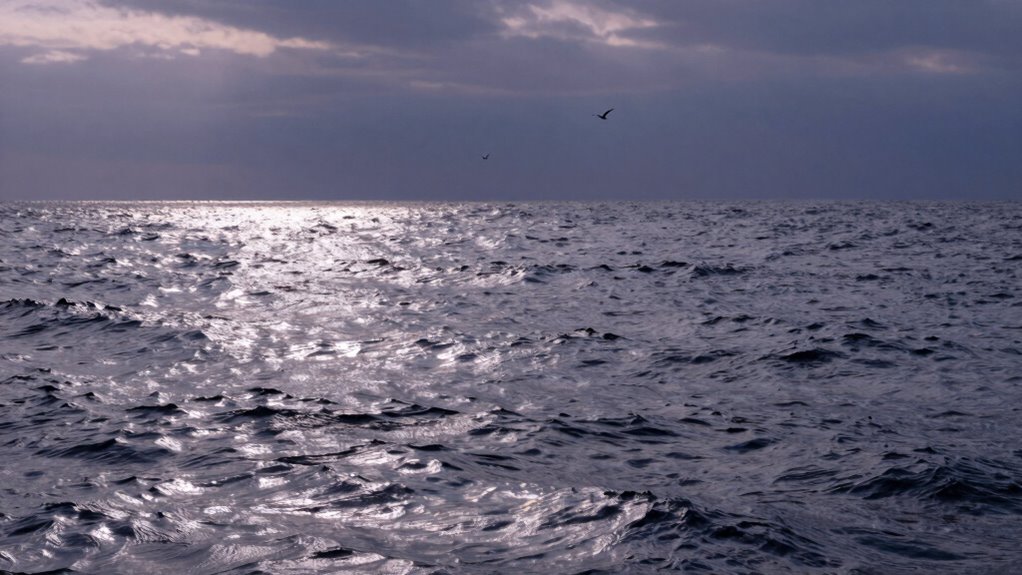
The sea has long served as a powerful symbol in poetry and myth, representing both the vastness of the unknown and the depths of human emotion. When you encounter maritime imagery, it often evokes feelings of mystery, adventure, and sometimes danger. Poets and mythmakers use oceanic motifs to tap into universal themes—life’s unpredictability, transformation, and the search for meaning amid chaos. You might see the sea described as a limitless expanse, encouraging introspection about your place in the universe or reminding you of how little you control in the face of nature’s grandeur.
The sea symbolizes the vast unknown and deep human emotions, inspiring reflection on life’s chaos and our place in the universe.
In poetry, the sea often stands for the subconscious mind or hidden emotions. Its endless surface suggests depths that remain unexplored, much like your own inner worlds. The shifting tides symbolize change and the inevitable flow of time, urging you to accept life’s constant motion. Waves crashing against rocks mirror struggles or conflicts, emphasizing resilience amid adversity. When poets incorporate oceanic motifs, they craft vivid images that stir your senses and evoke a sense of awe, fear, or longing. These images serve as metaphors for the human experience—its beauty and brutality intertwined. Recognizing the symbolic significance of the sea in literature can deepen your understanding of its emotional and cultural resonance. This symbolism often draws upon cultural associations that have developed over centuries, enriching its layered meanings.
Mythologically, the sea is frequently a domain of gods, monsters, and divine forces. It’s a place of both creation and destruction, where the boundaries between worlds blur. You might think of sea deities like Poseidon or oceanic spirits that govern the waters, reflecting humanity’s reverence and fear of the ocean’s power. These mythic figures embody the unpredictable nature of the sea itself, reminding you that beneath its surface lies both life-giving bounty and destructive fury. The sea’s symbolism in myth often underscores themes of chaos versus order, the unknown, and transformation—highlighting that crossing into the ocean can symbolize a journey into the self or into new domains of understanding. Additionally, the maritime imagery used in poetry can serve as a bridge to explore personal or collective histories tied to the sea. Its significance in various cultures highlights how the sea has shaped human stories and identities across time.
Ultimately, the sea’s symbolism in poetry and myth invites you to contemplate the mysteries of existence. Its imagery and motifs serve as a mirror for your own emotional depths and the vast, often unfathomable, universe beyond. Whether representing hope or peril, tranquility or turbulence, the sea remains a compelling symbol that challenges you to confront the unknown with courage and curiosity. It’s a timeless reminder that beneath the surface, there’s always more to discover about yourself and the world around you.
As an affiliate, we earn on qualifying purchases.
Frequently Asked Questions
How Has Sea Symbolism Evolved Over Different Cultures?
You see that marine symbolism has evolved through various cultures, reflecting diverse cultural interpretations. In some societies, the sea symbolizes mystery, power, or the subconscious, while others see it as a source of life, fertility, or danger. Over time, many cultures have transformed the sea’s meaning from a threatening force to a symbol of hope and adventure, highlighting how cultural perspectives shape our understanding of the sea’s rich symbolism.
Are There Specific Sea Symbols Unique to Certain Mythologies?
You might notice that specific sea symbols, like the Japanese koi fish representing perseverance or Norse Jörmungandr symbolizing chaos, stand out in certain mythologies. These marine imagery and oceanic metaphors often reflect cultural values and beliefs, making them unique. Coincidentally, such symbols deepen your understanding of how different societies interpret the sea’s power, mystery, and life force, revealing nuanced cultural stories woven through their mythological traditions.
What Psychological Meanings Are Associated With the Sea in Poetry?
You see the sea in poetry as a symbol of psychological depths and emotional turbulence. It reflects your inner struggles, fears, and desires, mirroring the complex layers of your mind. The vastness of the ocean can evoke feelings of wonder or loneliness, showing how your emotions can be both expansive and overwhelming. Through the sea, poets explore your subconscious, revealing the hidden currents that shape your emotional landscape.
How Do Contemporary Poets Interpret the Sea Compared to Classical Ones?
The sea, for contemporary poets, is a vast ocean of emotional depth and spiritual renewal, much like a never-ending universe of possibilities. You see it as more personal and complex than classical interpretations, reflecting inner struggles and hope. Modern poets often explore the sea’s mysteries to symbolize growth, resilience, and transformation, making it a powerful metaphor for your journey through life’s emotional and spiritual waters.
Can the Sea Symbolize Personal Transformation in Poetry?
Yes, the sea can symbolize personal transformation in poetry. You might see it representing your inner turmoil, reflecting the emotional chaos you experience. As you navigate its depths, it also signifies spiritual renewal and growth, offering a sense of rebirth and clarity. The sea’s vast, ever-changing nature mirrors your journey through challenges, helping you find strength and a renewed sense of purpose amidst the tumult.
Conclusion
You see, the sea in poetry and myth is like a mirror reflecting your deepest fears and hopes. It’s a symbol of mystery, vastness, and transformation, inviting you to explore the unknown just as explorers once did. By understanding its symbolism, you embrace the endless possibilities within yourself, much like the boundless ocean stretching to the horizon. The sea’s power to evoke emotion makes it a timeless symbol of life’s infinite journey.