TL;DR

Prime made for students and young adults
- Fast, free delivery for dorm and study essentials
- Prime Video and Amazon Music included
- Member-only deals
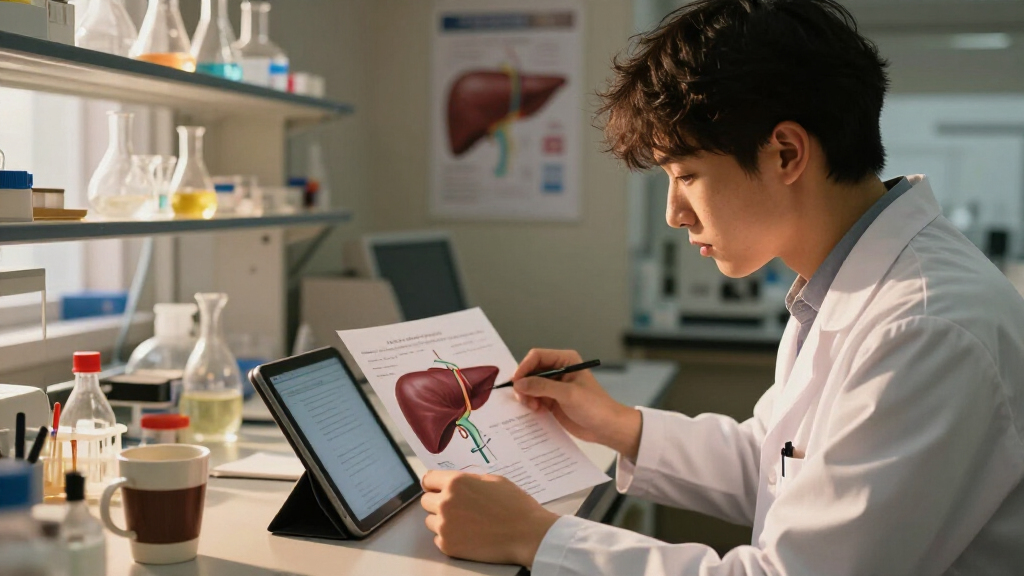
The liver’s ability to regenerate is unique among human organs, prompting scientific interest. Researchers are uncovering mechanisms that could advance treatments for liver disease, but many aspects remain unclear.
The liver’s extraordinary capacity to regenerate itself is a well-known phenomenon in medicine, but recent scientific studies are increasingly focused on understanding the underlying mechanisms that make this possible. This research is gaining attention because it could unlock new therapies for liver diseases, which remain a leading cause of global health concerns. While the regenerative process is confirmed to involve complex cellular activities, many details about why the liver is so uniquely capable are still being uncovered.
Scientists have established that the liver can regrow after significant damage or surgical removal, such as partial hepatectomy, with the organ often returning to its full size within a few months. This regenerative ability is driven by a combination of cellular proliferation, signaling pathways, and gene expression changes. Notably, hepatocytes—the main functional cells of the liver—can re-enter the cell cycle and multiply rapidly, unlike most other human organs.
Recent research suggests that specific molecular signals, including growth factors like hepatocyte growth factor (HGF) and cytokines, orchestrate this process. These signals activate cellular pathways that promote proliferation while maintaining the organ’s functional integrity. Researchers are also exploring why other organs lack this capacity, with some evidence pointing to differences in stem cell populations and cellular environment.
Despite these advances, many questions remain. For example, scientists are still investigating how the liver balances regeneration with preventing abnormal growth, such as cancer. Additionally, the precise reasons behind the organ’s ability to regenerate so efficiently, compared to other tissues, are not fully understood. This ongoing research could lead to breakthroughs in regenerative medicine and treatments for liver failure.
Implications of Liver’s Unique Regenerative Power
The liver’s exceptional regenerative ability has significant implications for medicine. It offers hope for developing treatments that could stimulate regeneration in other organs or repair damaged liver tissue more effectively. Understanding these mechanisms may lead to novel therapies for chronic liver diseases, including cirrhosis and hepatitis, which affect millions worldwide. Moreover, insights from liver regeneration could inform cancer research, given the organ’s propensity for abnormal growth when regulation fails.
Furthermore, this knowledge enhances surgical approaches, allowing for more extensive resections with less risk of organ failure. It also provides a model for studying tissue regeneration in humans, which has been limited compared to animal models. Ultimately, unraveling why the liver is so uniquely regenerative could revolutionize regenerative medicine and improve outcomes for patients with liver conditions.
As an affiliate, we earn on qualifying purchases.
Historical and Scientific Context of Liver Regeneration
The regenerative capacity of the liver has been recognized for centuries, with early medical observations noting its ability to recover after injury or surgery. Modern science has confirmed that this process involves complex cellular and molecular activities, distinguishing the liver from other organs with limited regenerative capacity, such as the heart or brain.
Research in the late 20th and early 21st centuries identified key growth factors and signaling pathways responsible for liver regeneration, including HGF and transforming growth factor-beta (TGF-β). Advances in molecular biology and imaging techniques have allowed scientists to observe these processes in real time, deepening understanding. Despite this progress, the reasons for the liver’s unique regenerative ability—such as why other tissues do not share this capacity—remain a central question in regenerative biology.
Current interest is fueled by rising rates of liver disease globally and the potential to harness regenerative mechanisms for therapeutic purposes. The recent spike in coverage and research interest appears linked to new experimental findings and technological advances, though the exact trigger for this surge remains unconfirmed.
Unresolved Questions About Liver Regeneration
Despite substantial progress, many aspects of liver regeneration remain unclear. It is not yet confirmed why the liver can regenerate so efficiently while other organs cannot. Researchers are still investigating the specific cellular environment and genetic factors that enable this process. Additionally, the mechanisms that prevent overgrowth or cancer during regeneration are not fully understood, raising questions about how these processes are tightly regulated.
Furthermore, the trigger for the recent surge in scientific interest is not confirmed, and it is unclear whether new technological developments or recent experimental findings are driving this focus.
Future Directions in Liver Regeneration Research
Researchers are expected to continue exploring the molecular pathways that enable liver regeneration, with a focus on identifying targets for potential therapies. Clinical trials may emerge to test regenerative drugs or gene therapies aimed at enhancing liver repair. Advances in stem cell research could also contribute to developing bioengineered liver tissues or organoids.
Additionally, further studies are likely to clarify why other organs lack similar regenerative capacity, which could inform broader regenerative medicine strategies. The next few years will be critical in translating basic science findings into clinical applications that could benefit millions suffering from liver diseases.
Key Questions
Why is the liver able to regenerate when other organs cannot?
Scientists believe it is due to specific cellular and molecular mechanisms unique to the liver, including the presence of hepatocytes capable of re-entering the cell cycle and regenerative signaling pathways. However, the exact reasons are still under investigation.
Can liver regeneration be stimulated in patients with liver disease?
Current research aims to develop therapies that could enhance natural regenerative processes, but such treatments are not yet widely available. Understanding the underlying mechanisms is essential for future clinical applications.
Are there risks associated with liver regeneration?
While regeneration is generally beneficial, abnormal growth or cancer can occur if regulation fails. Researchers are studying how to promote healthy regeneration without increasing such risks.
What recent discoveries have fueled interest in liver regeneration?
Recent advances in molecular biology, imaging, and stem cell research have provided new insights into the cellular signals involved, although the fundamental reasons for the organ’s regenerative capacity are still being explored.
Source: hn
Fall Picks
fall essentials
As an affiliate, we earn on qualifying purchases.