Military history board games range from quick, approachable battles to demanding simulations built around historical operations. I rank Memoir ’44 as the best overall pick for its accessible tactical play, while Axis & Allies 1942 Second Edition stands out for broad, globe-spanning strategy and Battle for Normandy Deluxe Edition for players seeking operational detail. The main tradeoff is between ease of learning and historical depth: lighter games reach the action sooner, while more involved systems ask for longer sessions and closer rules study. I also compare solo, travel, card-driven, and less commonly covered historical settings. Read on for the full breakdown and a pick matched to your group.

Prime made for students and young adults
- Fast, free delivery for dorm and study essentials
- Prime Video and Amazon Music included
- Member-only deals
Key Takeaways
Memoir ’44 is the most approachable all-rounder in this lineup; its scenario-based tactical format offers a gentler entry than the operational systems in Battle for Normandy or Combat Commander: Europe.
Axis & Allies 1942 Second Edition favors sweeping strategy, while Axis & Allies: 1941 offers a more compact entry into the same broad WWII conflict.
Historical focus varies as much as complexity: Burma 1942–45, Midway, Normandy, North Africa, and the American Revolution each serve buyers looking beyond familiar European-front battles.
Solo and travel needs narrow the field quickly: Midway Solitaire Travel Game is purpose-built for solo play on the go, unlike the lineup’s primarily group-oriented strategy games.
Higher detail means more commitment, not automatically a better fit: Battle for Normandy and Combat Commander: Europe reward players who want involved tactical or operational decisions, but are less suited to casual, short sessions.
| Compass Games Burma 1942–45 WWII Strategy Board Game |  | Best for Campaign-Level Detail | Players: 2 | Playing time: 2–6 hours | Scale: 1 hex = 15 miles | VIEW LATEST PRICE | See Our Full Breakdown |
| Battles of the American Revolution: Oriskany & Freeman’s Farm |  | Best Compact Two-Battle Pick | Battles: Oriskany and Freeman’s Farm | Players: 2; also playable solo | Playing time: 60 minutes or less | VIEW LATEST PRICE | See Our Full Breakdown |
| Axis & Allies 1942 Second Edition Board Game |  | Best for a Larger Multiplayer War | Players: 2–5 | Setting: Spring 1942 | Playing time: Approximately 3–4 hours | VIEW LATEST PRICE | See Our Full Breakdown |
| Worthington Publishing Midway Solitaire Travel Game |  | Best for Short Solo Sessions | Players: 1–2 | Setting: Battle of Midway, 1942 | Playing time: About 15–30 minutes | VIEW LATEST PRICE | See Our Full Breakdown |
| GMT Games Battle for Normandy Deluxe Edition |  | Best Premium Normandy Campaign | Players: 2–6 | Playing time: Estimated 6 hours | Mapsheets: 7, measuring 22 × 34 inches | VIEW LATEST PRICE | See Our Full Breakdown |
| Renegade Game Studios Axis & Allies: 1941 WWII Strategy Board Game |  | Best for Grand-Strategy Beginners | Players: 2–5 | Playing time: 1–3 hours | Recommended age: 12 years and up | VIEW LATEST PRICE | See Our Full Breakdown |
| World War II Historical Strategy Card Game |  | Best for Card-Game Groups | Players: Listed as 1–10; title specifies 2–5 | Playing time: 45 minutes | Recommended age: 18 years and up | VIEW LATEST PRICE | See Our Full Breakdown |
| Blitzkrieg! Combined Edition |  | Best Quick-Play Wargame | Players: 1–2 | Estimated playing time: 20 minutes | Recommended age: 14 years and up | VIEW LATEST PRICE | See Our Full Breakdown |
| Memoir ’44 WWII Strategy Board Game, 2025 Edition | 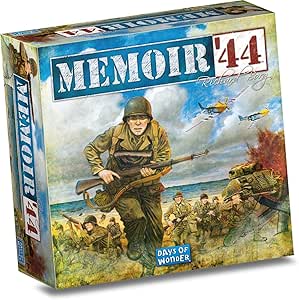 | Best for Scenario-Based Tactics | Players: Title lists 2–8; product description emphasizes two-player sessions | Playtime: 30–60 minutes | Age range: 8 years and up | VIEW LATEST PRICE | See Our Full Breakdown |
| Osprey Games Battalion: War of the Ancients |  | Best for Ancient Warfare | Players: 2–4 | Estimated playing time: 30 minutes | Recommended age: 14 years and up | VIEW LATEST PRICE | See Our Full Breakdown |
| Fighters of the Pacific |  | Best for Pacific Air Combat | Players: 2 | Playing time: Approximately 120 minutes | Recommended age: 14 years and up | VIEW LATEST PRICE | See Our Full Breakdown |
| Combat Commander: Europe WWII Tactical Wargame (Reprint) |  | Best for Tactical Infantry Detail | Players: 2 | Playing time: 150 minutes | Age recommendation: 12 years and up | VIEW LATEST PRICE | See Our Full Breakdown |
| Rommel’s War: World War II North Africa Board Game |  | Best for a Short Strategic Session | Players: 2 | Playing time: 1 hour or less | Recommended age: 15 years and up | VIEW LATEST PRICE | See Our Full Breakdown |
| military history board game | Players | Playing time | Recommended age | Language |
|---|---|---|---|---|
| Compass Games Burma 1942–45 WW | 2 | 2–6 hours | — | English |
| Battles of the American Revolu | 2; also playable solo | 60 minutes or less | 15 years and up | English |
| Axis & Allies 1942 Second Edit | 2–5 | Approximately 3–4 hours | 12 years and up | English |
| Worthington Publishing Midway | 1–2 | About 15–30 minutes | 15 years and up | English |
| GMT Games Battle for Normandy | 2–6 | Estimated 6 hours | 18 years and up | — |
| Renegade Game Studios Axis & A | 2–5 | 1–3 hours | 12 years and up | English |
| World War II Historical Strate | Listed as 1–10; title specifies 2–5 | 45 minutes | 18 years and up | English |
| Blitzkrieg! Combined Edition | 1–2 | — | 14 years and up | — |
| Memoir ’44 WWII Strategy Board | Title lists 2–8; product description emphasizes two-player sessions | — | — | — |
| Osprey Games Battalion: War of | 2–4 | — | 14 years and up | English |
| Fighters of the Pacific | 2 | Approximately 120 minutes | 14 years and up | English |
| Combat Commander: Europe WWII | 2 | 150 minutes | — | English |
| Rommel’s War: World War II Nor | 2 | 1 hour or less | 15 years and up | — |
More Details on Our Top Picks
Compass Games Burma 1942–45 WWII Strategy Board Game
Burma 1942–45 earns this role by making terrain and logistics central to the campaign, rather than treating supply as a side rule. Its brigade- and battalion-level combat, monthly turns, and monsoon effects give the Allied and Japanese sides distinct operational problems: long-range patrols and infiltration can shape plans as much as direct fighting. Compared with Axis & Allies 1942 Second Edition, this is a narrower theater with more attention to campaign conditions, but it also asks players to absorb more specialized rules. The mounted 22 × 34-inch map and 280 counters suit a dedicated table, while the stated 2–6-hour sessions leave room for a substantial game. Strong solitaire suitability adds flexibility, though the design is primarily for two players.
Pros:- Operational-scale combat gives the campaign more detail than the broad global scope of Axis & Allies 1942 Second Edition.
- Supply and monsoon rules make movement and timing meaningful parts of planning.
- Japanese infiltration and Allied long-range patrol options create distinct approaches for each side.
- Strong solitaire suitability lets one player explore the campaign without a regular opponent.
Cons:- Medium complexity means players must learn several interlocking systems before play flows smoothly.
- The two-player focus offers less flexibility for groups than Axis & Allies 1942 Second Edition.
- Its large mounted map and long sessions call for more table space and time than the compact Oriskany & Freeman’s Farm game.
Best for: Two-player wargamers who want an operational study of the Burma campaign, including supply, terrain, and seasonal effects, with a viable solo option.
Not ideal for: Casual groups seeking a short, easy-to-teach World War II game or players who need a design built around larger multiplayer teams.
- Players:2
- Playing time:2–6 hours
- Scale:1 hex = 15 miles
- Turn progression:Monthly
- Map:Mounted, 22 × 34 inches
- Components:280 counters, four player aid cards, two order-of-battle cards, rules booklet, six-sided die, mounted map
- Language:English
- Edition:Updated Edition
Our verdict“Choose Burma 1942–45 if you want a theater-focused campaign where logistics and weather shape the military history, and skip it if you need a quick group game.”
Battles of the American Revolution: Oriskany & Freeman’s Farm
Oriskany & Freeman’s Farm is the most portable choice here for players who want specific historical engagements without setting aside an evening. The double-sided 14 × 7-inch board presents two battles, and sessions are designed to finish within 60 minutes; that makes it a sharper fit for a short visit or a small table than Burma 1942–45 or the six-hour Battle for Normandy Deluxe Edition. It supports two players and solo play, so the compact format does not require a fixed opponent. The tradeoff is scale: a small board and limited counter count offer a tighter battlefield experience, not the broad campaign choices found in Axis & Allies 1942 Second Edition. Its counters are small, making it a poor fit for players who prefer larger pieces or have young children around.
Pros:- Two distinct battles provide more variety than a single-scenario travel game.
- The compact double-sided board is easier to transport and store than the large maps in Burma 1942–45 or Battle for Normandy.
- Solo play provides an alternative when a second player is unavailable.
- Sessions of 60 minutes or less suit players with limited game time.
Cons:- The 14 × 7-inch board leaves less room for a broad battlefield presentation than the larger maps in this lineup.
- Small counters carry a choking hazard warning and may be awkward for some players.
- Its short, compact battle format does not offer the extended campaign scope of Burma 1942–45.
Best for: Players who want two American Revolution battles in a portable format, with the option to play solo or finish a session in about an hour.
Not ideal for: Wargamers looking for a large operational map, extensive campaign systems, or components that are easy for young children to handle.
- Battles:Oriskany and Freeman’s Farm
- Players:2; also playable solo
- Playing time:60 minutes or less
- Board:Double-sided hardmounted board, 14 × 7 inches
- Components:2–3 counter sheets with 24 counters per sheet, player aids, printed rules, two six-sided dice, custom tray
- Mechanics:Area control; solitaire play
- Language:English
- Recommended age:15 years and up
Our verdict“Pick Oriskany & Freeman’s Farm for portable, short American Revolution battles, but choose a larger campaign game if you want more operational scope.”
Axis & Allies 1942 Second Edition Board Game
Axis & Allies 1942 Second Edition is the broadest group option in this batch: two to five players can take charge of major powers and manage military forces alongside wartime economies. Its 40 × 26-inch board and 410 plastic pieces make the global conflict tangible at the table, while the five-power structure gives a group more roles than the two-player focus of Burma 1942–45. That breadth comes with a longer commitment: sessions run about three to four hours, and resource management adds rules that may slow down casual players. Compared with the focused battles in Oriskany & Freeman’s Farm, this edition offers a much wider strategic canvas, but it is less convenient for a quick session or a small playing surface. The updated rules, reference cards, and storage bags help organize a game with many components.
Pros:- Five playable major powers support a larger group than the two-player-focused Burma 1942–45.
- The global board connects military positioning with management of wartime economies.
- A large supply of plastic pieces and markers gives each power a substantial physical presence.
- Updated rules, reference cards, double-sided tokens, and resealable bags support play and component storage.
Cons:- Three-to-four-hour sessions require a substantial time commitment.
- Resource management and strategic rules may be demanding for casual players.
- The 40 × 26-inch board requires more table space than the compact American Revolution travel game.
Best for: Groups of two to five who want a shared World War II game built around major powers, worldwide positioning, and economic decisions.
Not ideal for: Players seeking a short, low-rules session, a solo-focused design, or a game that fits on a small table.
- Players:2–5
- Setting:Spring 1942
- Playing time:Approximately 3–4 hours
- Board size:40 × 26 inches
- Playing pieces:410 plastic pieces
- Included components:Game board, battle strip, casualty strip, 12 Industrial Complex markers, 100 National Control markers, five setup cards, 80 chips, six dice
- Language:English
- Recommended age:12 years and up
Our verdict“Choose Axis & Allies 1942 Second Edition for a long, shared global war with several player roles, not for quick or compact play.”
Worthington Publishing Midway Solitaire Travel Game
Midway Solitaire Travel Game gives a solo player command of American carrier task forces against an automated Japanese opponent, centering play on aircraft strikes and mission goals. Its 15-to-30-minute sessions make it the quickest choice in this batch, a clear contrast with the multi-hour commitments of Axis & Allies 1942 Second Edition and Battle for Normandy Deluxe Edition. The compact travel format also suits players who want a focused encounter rather than a full theater campaign. That focus is both its appeal and its limit: this is a game about Midway and its surrounding campaign, not a broad survey of World War II. Although listed for one to two players, the description centers on solo play against the automated opponent, so buyers seeking a primarily head-to-head experience may prefer Oriskany & Freeman’s Farm.
Pros:- Automated Japanese opposition supports solo play without requiring another player.
- Carrier and aircraft-strike decisions give the Midway setting a focused command problem.
- Short sessions are easier to fit into spare time than the longer games in this roundup.
- Travel-oriented dimensions suit players who want a compact alternative to large-map games.
Cons:- The design concentrates on Midway rather than offering the global scope of Axis & Allies 1942 Second Edition.
- Its listed one-to-two-player count is less clear about head-to-head play than games explicitly designed around two players.
- Small parts carry a choking hazard warning.
Best for: Solo wargamers who want a portable, short World War II game centered on carrier command, aircraft strikes, and the Battle of Midway.
Not ideal for: Players looking for a broad World War II campaign, several distinct theaters, or a game designed mainly for direct competition between two people.
- Players:1–2
- Setting:Battle of Midway, 1942
- Playing time:About 15–30 minutes
- Play mode:Solo play against an automated Japanese opponent
- Format dimensions:7.25 × 1.75 × 0.1 inches
- Material:Paper
- Language:English
- Recommended age:15 years and up
Our verdict“Choose Midway Solitaire for brief solo command decisions in a specific Pacific battle, and skip it if you want a broad or mainly competitive game.”
GMT Games Battle for Normandy Deluxe Edition
Battle for Normandy Deluxe Edition is the most expansive, component-rich choice here for players focused on the Allied campaign in France. Combining the original game and expansion, it adds revised maps and units, updated rules, and new scenarios while keeping expansion material optional. Seven 22 × 34-inch map sheets, 11 counter sheets, and dedicated rule and scenario books signal a game built for extended planning, not a casual weeknight session. At an estimated six hours, it demands more time than Burma 1942–45, while its two-to-six-player range offers more group flexibility than that game’s two-player design. Compared with Axis & Allies 1942 Second Edition, it trades a global view for a concentrated Normandy campaign with revised research and scenario content. Its age recommendation and component scale make it a specialist choice rather than an accessible entry point.
Pros:- Combines the original game and expansion, with expansion content remaining optional.
- Revised maps, units, and rules incorporate new research while retaining the core system.
- New scenarios, a random events table, and interdiction level cards add campaign choices.
- The two-to-six-player range accommodates more group sizes than the two-player Burma 1942–45.
Cons:- The estimated six-hour playing time makes it a major time commitment.
- Seven large mapsheets and 11 countersheets call for considerable table and storage space.
- Recommended for ages 18 and up, and its strategic scope is less suited to newcomers than the compact Oriskany & Freeman’s Farm.
Best for: Experienced historical wargamers and groups of two to six who want a detailed, scenario-rich treatment of the Normandy campaign.
Not ideal for: Newcomers, players with limited table space, or anyone who wants a short game rather than a six-hour commitment.
- Players:2–6
- Playing time:Estimated 6 hours
- Mapsheets:7, measuring 22 × 34 inches
- Countersheets:11
- Rulebook:44 pages
- Scenario book:68 pages
- Components:Rules, counters, player aids, maps, dice, cards, and logs
- Dice:Three D6 and one D10
- Recommended age:18 years and up
Our verdict“Choose Battle for Normandy Deluxe Edition for a substantial, updated Normandy campaign with optional expansion content, provided your group has the time and space.”
Renegade Game Studios Axis & Allies: 1941 WWII Strategy Board Game
Axis & Allies: 1941 is my pick for players who want a broad World War II campaign, with major powers making both military and economic decisions. Its 160 plastic miniatures make forces easy to read across the board, while the updated rules and resealable component bags help keep play organized. Compared with Axis & Allies 1942 Second Edition, this version is the more approachable entry point in the series, though the supplied details do not establish a direct rules comparison. It still asks for a substantial time commitment: sessions run one to three hours, so it is not the quick-play choice here. I would choose it over Blitzkrieg! Combined Edition when a group wants a larger strategic contest rather than a compact, roughly 20-minute battle.
Pros:- 160 plastic miniatures give military units a clear presence on the board.
- Strategic play includes both military and economic decisions.
- Updated rules incorporate community feedback and errata.
- Resealable bags help organize components between sessions.
Cons:- One-to-three-hour playtime may be too long for a casual game night.
- The recommended age of 12 and up makes it a less suitable pick for younger children.
Best for: Groups of two to five players, ages 12 and up, who want a miniature-rich World War II game with strategic and economic decisions.
Not ideal for: Players seeking a short session, a solo game, or a focused historical scenario instead of a multi-power campaign.
- Players:2–5
- Playing time:1–3 hours
- Recommended age:12 years and up
- Genre:Board game / wargame
- Miniatures:160 plastic figures
- Language:English
- Brand:Renegade Game Studios
- Model number:RGS02553
Our verdict“Choose Axis & Allies: 1941 if your group wants an accessible, miniature-led World War II campaign and can set aside several hours.”
World War II Historical Strategy Card Game
This World War II card game swaps the maps and miniature armies of Memoir ’44 for cards, alliances, force deployment, and tactical decisions. That format may suit a classroom or game night where portability and a group-friendly theme matter more than recreating battlefield layouts. The listed 45-minute playtime is shorter than a full session of Axis & Allies: 1941, making it a more compact option on paper. There is a significant information gap, though: the product title says 2–5 players while its specifications list 1–10, so I would verify the intended player count before buying for a particular group. The recommended age is 18 and up, which also makes this a poor fit for families seeking a younger-player introduction to military history.
Pros:- Card-based play centers on alliances, force deployment, and tactical choices.
- A stated 45-minute playtime offers a shorter session than Axis & Allies: 1941.
- The tuck box and playing cards provide a compact format.
- The theme is presented as suitable for game nights or classroom use.
Cons:- Player-count information conflicts: the title says 2–5, while product details list 1–10.
- The 18-and-up recommendation limits its use with younger players.
- The supplied details do not specify scenarios, card count, or how historical events affect play.
Best for: Adult game-night hosts or educators seeking a portable World War II-themed card game for a group, after confirming the supported player count.
Not ideal for: Families with younger players, buyers who want detailed battlefield maps and miniatures, or anyone who needs reliable player-count information before purchase.
- Players:Listed as 1–10; title specifies 2–5
- Playing time:45 minutes
- Recommended age:18 years and up
- Genre:War, strategy, historical, educational, and military games
- Edition:Standard Edition
- Language:English
- Package type:Tuck box
- Included components:Game rules sheet, instruction manual, and playing cards
Our verdict“Consider this card game for adult groups who want a compact World War II theme, but confirm the player count before ordering.”
Blitzkrieg! Combined Edition
Blitzkrieg! Combined Edition is the clear quick-play pick: its estimated 20-minute battles are a sharp contrast to the longer campaign in Axis & Allies: 1941. Instead of resolving battles with dice or cards, players allocate army tokens across campaigns to earn victory points, resources, weapons, and strategic advantages. That keeps the focus on tradeoffs in deployment, not on building a large board presence with miniatures like Memoir ’44. The included expansion adds more content, while the solo mode makes this the only listed option here explicitly suited to one-player sessions. Its compact cardboard components and small box are easy to store, but buyers wanting detailed units, terrain, or historically specific scenarios may prefer Memoir ’44. Small parts also call for care around young children.
Pros:- Estimated 20-minute playtime suits short sessions.
- Includes both an expansion and a solo mode.
- Token allocation and resource management give players strategic choices without dice or cards for battles.
- Compact dimensions and 500 g listed weight make it easier to store than larger board games.
Cons:- The token-based presentation offers less visual battlefield detail than Memoir ’44’s miniatures and terrain.
- Designed for only one or two players, so it cannot serve a larger group.
- Small parts pose a choking hazard for young children.
Best for: Solo players or two-player pairs, ages 14 and up, who want a compact World War II strategy game that fits into a short session.
Not ideal for: Players who want painted-looking armies, detailed terrain, a large campaign map, or a longer historical battle experience.
- Players:1–2
- Estimated playing time:20 minutes
- Recommended age:14 years and up
- Edition:Combined Edition
- Expansion:Included
- Solo mode:Included
- Material:Cardboard
- Dimensions:2.16 x 8.07 x 8.07 inches
Our verdict“Pick Blitzkrieg! Combined Edition for concise solo or two-player strategy, not for a sprawling, miniature-filled battlefield.”
Memoir ’44 WWII Strategy Board Game, 2025 Edition
Memoir ’44 turns World War II history into a series of tactical scenario battles, using a double-sided hex board, terrain, miniatures, command cards, and dice. Its 30–60-minute sessions make it a more practical choice for focused encounters than the campaign-style Axis & Allies: 1941, and its easy-to-learn rules lower the barrier for newcomers. The 144 miniatures and varied terrain help each scenario present a distinct battlefield problem rather than a broad economic contest. Buyers should note two listing inconsistencies: the title says 2025 Edition and the description claims over 20 scenarios, while manufacturer text lists 17; the title also lists 2–8 players even though the description emphasizes two-player sessions. I would treat this primarily as a two-player tactical game unless the player count is confirmed.
Pros:- Scenario play draws on historical terrain, troop placements, and objectives.
- Includes 144 army miniatures, terrain tiles, and obstacles for a detailed board.
- Command cards and distinct unit types create tactical choices.
- Easy-to-learn rules and 30–60-minute sessions support approachable play.
Cons:- Player information is inconsistent: the title lists 2–8, while the description emphasizes two-player sessions.
- Scenario counts conflict between the product description and manufacturer text.
- Dice and command-card play may be less appealing to players seeking a more simulation-focused wargame.
Best for: Two-player households, including newcomers ages 8 and up, who want accessible World War II battles tied to specific scenarios and terrain.
Not ideal for: Buyers who need a clearly verified scenario count or player count, or who prefer economic strategy and multi-power campaigns over tactical battles.
- Players:Title lists 2–8; product description emphasizes two-player sessions
- Playtime:30–60 minutes
- Age range:8 years and up
- Board:Double-sided, three-section hexagonal board
- Army miniatures:144
- Terrain and obstacles:44 double-sided terrain tiles; 36 obstacles
- Command cards:60
- Scenarios:Product description says over 20; manufacturer text lists 17
Our verdict“Choose Memoir ’44 for accessible, scenario-led World War II tactics, while checking the edition details if player or scenario counts matter.”
Osprey Games Battalion: War of the Ancients
Battalion: War of the Ancients is the outlier in this group: it leaves the World War II focus of Memoir ’44 and Axis & Allies: 1941 for battles inspired by the ancient world. Its central appeal is assembling armies and recreating historical conflicts, with support for two to four players and an estimated 30-minute playtime. That shorter session makes it a more accessible fit for a quick game night than Axis & Allies, while its ancient setting gives history-minded groups a different period to explore. The supplied product data is sparse, however; it identifies the game as a tabletop strategy game but does not detail the pieces, rules, or specific battles. I would choose it for its period and player range, not for buyers who need a well-documented component list or a World War II subject.
Pros:- Explores ancient warfare, adding a distinct historical period to a World War II-heavy selection.
- Supports both two-player duels and games with up to four players.
- Estimated 30-minute playtime is shorter than Axis & Allies: 1941.
- Army assembly gives the game a clear historical-wargame focus.
Cons:- Does not match a buyer specifically seeking a World War II game.
- The supplied details do not specify components, named battles, or rules depth.
- The recommended age of 14 and up limits its suitability for younger families.
Best for: Groups of two to four players, ages 14 and up, who want a short historical strategy game focused on ancient armies rather than twentieth-century warfare.
Not ideal for: World War II-focused buyers, players seeking detailed component or battle information before purchase, or groups with younger children.
- Players:2–4
- Estimated playing time:30 minutes
- Recommended age:14 years and up
- Genre:Strategy
- Edition:Standard Edition
- Language:English
- Package type:Reinforced board game box
- Brand:Osprey Games
Our verdict“Choose Battalion: War of the Ancients if your group wants a short ancient-warfare alternative, not another World War II battle game.”
Fighters of the Pacific
Fighters of the Pacific earns its place for focusing on individual aircraft rather than broad campaign movement. On a hex-grid battlefield, fighters, bombers, and torpedo planes maneuver against aircraft, ships, and island targets, with different speed, armor, and abilities shaping each engagement. That makes it a more specialized choice than Combat Commander: Europe, which centers on infantry actions, and a better fit for players drawn to the Pacific air war than to ground-force command. Historical aircraft illustrations add setting without replacing the tactical decisions. The tradeoff is a firm two-player format and an estimated two-hour session, so this is less convenient for casual, short-play nights than Rommel’s War. Choose it for focused aerial tactics; skip it if you want a broad WWII campaign or faster setup-to-finish play.
Pros:- Individual aircraft movement makes positioning and maneuver central to play
- Distinct aircraft speed, armor, and abilities create tactical variation
- Fighters, bombers, torpedo aircraft, ships, and island targets support varied engagements
- Historical aircraft illustrations reinforce the Pacific setting
Cons:- Designed for exactly two players
- The approximately 120-minute playtime asks for a substantial session
- Its air-combat focus may not suit buyers looking for infantry or campaign-scale warfare
Best for: Two-player groups interested in tactical WWII aviation, aircraft maneuver, and Pacific theater targets
Not ideal for: Players seeking a game for three or more people, a short session, or a broad campaign spanning multiple theaters
- Players:2
- Playing time:Approximately 120 minutes
- Recommended age:14 years and up
- Game type:Historical tactical warfare board game
- Mechanics:Hex and counter, historical simulation, modular board
- Material:Cardboard
- Language:English
Our verdict“Choose Fighters of the Pacific if you want a dedicated two-player WWII air-combat game and can set aside about two hours.”
Combat Commander: Europe WWII Tactical Wargame (Reprint)
Combat Commander: Europe is the infantry-focused pick here, with leaders, five-man teams, and ten-man squads contesting objectives across 12 historical scenarios and six mapsheets. Its card-driven system makes unit activation and battlefield events less predictable than the aircraft-by-aircraft maneuver in Fighters of the Pacific; that variability can make each scenario feel responsive, but it also gives new players more rules and card effects to absorb. The stated scale of roughly 100 feet per hex supports close tactical decisions rather than sweeping campaign planning. Compared with Rommel’s War, this offers more scenarios and a longer, more involved session, while Rommel’s is the better fit for a shorter North African contest. The cost in time is real: play runs about 150 minutes, and the two-player design rewards partners willing to learn its systems.
Pros:- Twelve historical scenarios provide varied tactical situations
- Six mapsheets give the scenario set different battlefield layouts
- Card-driven activation and events create flexible, unpredictable turns
- Leaders, teams, and squads support detailed infantry command decisions
Cons:- The card system and rules take time to learn
- Approximately 150-minute playtime is a substantial commitment
- Designed for exactly two players
Best for: Two-player wargamers who want scenario-based European WWII infantry combat and enjoy card-driven tactical choices
Not ideal for: New or time-limited players who want a quick rules introduction, shorter sessions, or a game for more than two
- Players:2
- Playing time:150 minutes
- Age recommendation:12 years and up
- Scenarios:12 historical scenarios
- Mapsheets:6
- Hex scale:Approximately 100 feet (30 meters) per hex
- Unit types:Leaders, 5-man teams, and 10-man squads
- Language:English
Our verdict“Pick Combat Commander: Europe for detailed, replayable infantry scenarios if both players are ready for a longer game and a learning curve.”
Rommel’s War: World War II North Africa Board Game
Rommel’s War is the quickest route in this group to a focused historical contest: its North African campaign covers March 1941 to January 1942, with play designed for an hour or less. Instead of the detailed aircraft maneuver in Fighters of the Pacific or the squad-level scenarios in Combat Commander: Europe, it puts attention on unit strength, type, movement, and supply lines. Combat is resolved without dice, making force composition and position central rather than chance rolls. The mounted board and player aids suit a compact, ready-to-play format, but the game remains a two-player wargame and its campaign scope is narrow. Buyers who want a long, multi-scenario infantry system should prefer Combat Commander; those who want a shorter operational decision game will find Rommel’s War the more practical fit.
Pros:- Designed for play in an hour or less
- No-dice combat emphasizes unit strength and type
- Supply lines and movement create strategic choices beyond direct combat
- Mounted board and player aids support a self-contained play experience
Cons:- Designed for exactly two players
- Campaign is limited to a specific North African period
- Not recommended for children under 15 and includes small parts
Best for: Two-player history fans seeking a compact North Africa campaign with supply and unit-composition decisions in a session of an hour or less
Not ideal for: Players wanting a large-scale, multi-theater WWII game, a longer scenario system, or a game suitable for children under 15
- Players:2
- Playing time:1 hour or less
- Recommended age:15 years and up
- Campaign period:March 1941 to January 1942
- Board dimensions:12 x 9 inches
- Combat system:Based on unit strength and type; no dice used for combat
- Included components:Mounted board, custom printed blocks, tray, card deck, player aid sheet, rulebooks, die
- Materials:Paper, plastic, and wood
Our verdict“Choose Rommel’s War for a shorter, two-player North Africa contest centered on supply and force composition rather than dice.”
How We Picked
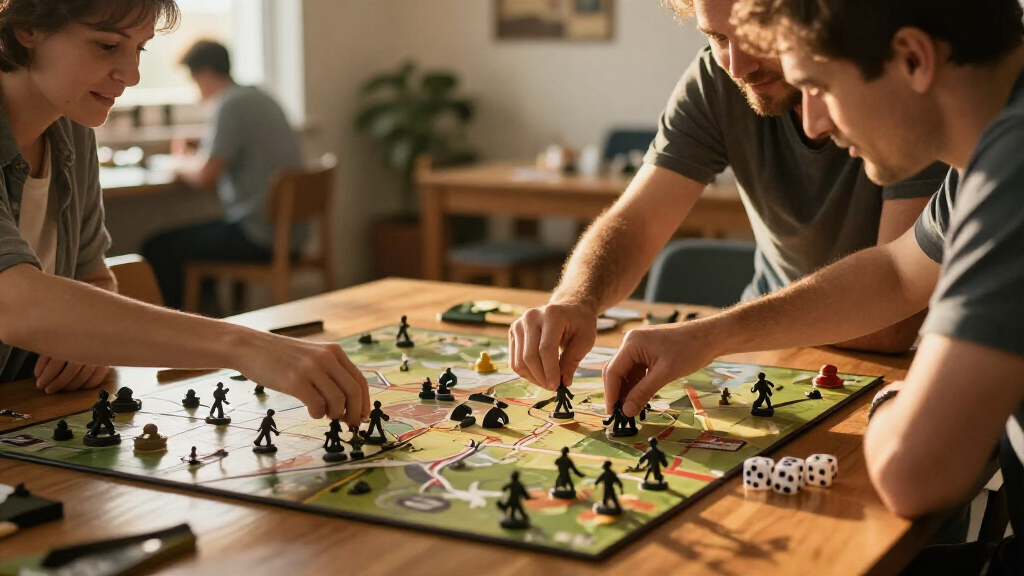
I ranked these games by how well they serve distinct military-history gaming needs: historical setting, strategic or tactical depth, accessibility, session fit, and the kind of play each supports. A strong pick should make its central decisions legible and connect them to the conflict it depicts, rather than rely on theme alone. I also weighed practical fit: whether a game suits newcomers, a dedicated two-player group, solo play, travel, or players ready to study a larger rules system.
The order reflects usefulness across likely buyers, not a claim that one level of complexity is inherently superior. Memoir ’44 leads for its balance of historical scenarios and approachability; broad strategic games and focused alternatives follow according to their audience. More specialized or demanding titles rank lower for general use, but may be the stronger choice for players seeking a particular campaign, theater, or style of simulation.
Factors to Consider When Choosing Military History Board Games
Before choosing among military history board games, decide what kind of historical decision-making you want at the table. A famous war setting can hide very different experiences: unit tactics, campaign planning, card play, or a compact solo puzzle. These factors help match the game to your group and prevent buying for theme alone.
Choose the Scale of Conflict You Want
Games can represent a single battlefield, a theater-wide campaign, or a conflict spanning several fronts. Larger scope often means more interconnected decisions, but it can also make a session feel less like commanding individual units. Tactical games put local positioning and combat choices closer to the foreground. Before buying, ask whether you want to plan a campaign or solve a battle-level problem. A frequent mistake is choosing a game for its famous setting without checking whether its scale matches the story you want to play.
Match Complexity to Your Group
Complexity is not just the number of rules; it affects how quickly players can make confident decisions and how often they need to consult references. A group that enjoys learning systems together may welcome a demanding simulation, while casual players may prefer a game that teaches through scenarios. Think about whether the same people will return for multiple sessions, since familiarity can make a detailed game easier to enjoy. Do not assume a lighter ruleset means shallow choices: focused scenarios can still create meaningful tactical decisions. Check the publisher’s rules and session guidance before choosing for a mixed-experience group.
Plan Around Player Count and Solo Needs
Some games depend on opposing players making unpredictable choices, while a solitaire design needs procedures that keep decisions engaging without an opponent. If you usually play alone, prioritize a game explicitly designed for solo play rather than relying on improvised rules. For two players, check whether each side has a distinct role and whether the game remains balanced at that count. Larger group options can create lively table discussion, but may also require more space and downtime between turns. Match the intended player experience to your actual gaming habits, not to the maximum player count printed on a box.
Consider Session Length, Setup, and Table Space
Session duration is only part of the time commitment: setup, rules refreshers, and putting away components all affect whether a game reaches the table. A sprawling map may need a dedicated surface, while a travel-sized design can fit into shorter opportunities to play. Ask where the game will live between sessions and whether you can leave it set up. Players with limited time may get more from a scenario-driven game that can be completed in one sitting than from a campaign requiring repeated appointments. Check the game’s format and component footprint before treating portability as a minor detail.
Decide How Much Historical Detail You Want
Historical fidelity can appear through scenario framing, unit types, terrain, command limits, or the way supply and uncertainty shape decisions. No single game can model every aspect of a conflict, so a historically themed title may emphasize playability over exhaustive simulation. Look for rules or scenario notes that explain what the design represents and what it abstracts. A common mistake is equating more rules with greater historical accuracy; extra procedures can add texture, but they can also model a narrow slice of events. Choose the level of detail that supports the kind of historical engagement you enjoy.
Weigh Replay Variety Against a Specific Historical Focus
A game centered on one battle or theater can offer a strong sense of place, while a broader system may provide more varied matchups or strategic paths. Scenario variety matters most when you expect to revisit a title with the same group. A focused historical subject may still be the better choice if that campaign is exactly what interests you. Review what changes between scenarios: different starting positions, objectives, forces, or merely small adjustments to the same contest. Pay for breadth only when your group will use it; a focused design can be more satisfying than a wider game that rarely gets played.
Frequently Asked Questions
Which military history board game is easiest to introduce to new players?
Memoir ’44 is my clearest starting recommendation in this lineup because it offers WWII tactical play without asking newcomers to begin with a sprawling operational system. Axis & Allies: 1941 is another route if your group wants broad strategic decisions, though its world-war scope creates a different learning experience. For a first session, teach one scenario or a small set of core rules rather than explaining every option at once. If your group dislikes rules discussions, avoid choosing a game solely because its historical subject is familiar.
Can I find a good option here for playing alone or while traveling?
Midway Solitaire Travel Game is the lineup’s most direct match for solo and portable play because those needs are central to its format. Most of the other titles are designed around an opponent, so they are not interchangeable substitutes for a dedicated solitaire game. Before choosing a travel game, check how much table space it needs and whether its components are easy to manage away from home. If solo play is occasional rather than your main use, decide whether you are willing to learn a dedicated system for that purpose.
Should I choose Axis & Allies: 1941 or Axis & Allies 1942 Second Edition?
Choose Axis & Allies: 1941 if you want a more compact way into the franchise’s broad WWII strategy. Axis & Allies 1942 Second Edition is the stronger fit if you want a wider strategic canvas and are comfortable with a larger commitment at the table. The right choice depends on how much scope your group wants, not simply on which title sounds more complete. Check the edition’s rules and session expectations before buying, especially if you are introducing the game to players new to grand strategy.
Is a detailed operational wargame a better choice for historical accuracy?
Not automatically. Battle for Normandy Deluxe Edition and Combat Commander: Europe offer more involved forms of military decision-making than lighter scenario-based games, but added complexity does not make every historical dimension more accurate. Each design selects which constraints and events to represent, then abstracts others to keep play workable. Read the game’s descriptions and rules overview to see whether its historical focus matches your interest. If your group values quick access to the action more than detailed procedures, a less demanding design may be the better historical experience for you.
How should I choose between a familiar WWII setting and a less common historical conflict?
Start with the kind of decisions and setting your group will want to revisit, rather than choosing the most familiar war by default. This roundup includes Burma 1942–45, Midway, North Africa, the American Revolution, and the War of the Ancients alongside better-known WWII theaters. A specialized setting can make a game feel distinctive, but it may be a weaker fit if your interest lies in a different period or style of warfare. Check the scenario scope and player experience before treating an unfamiliar subject as a drawback.
Conclusion
For the broadest recommendation, I would start with Memoir ’44: it balances historical scenarios and accessible tactical play better than the lineup’s heavier systems. For a value-minded choice, Axis & Allies: 1941 offers a more compact entry into broad WWII strategy, while Axis & Allies 1942 Second Edition suits groups that want a wider strategic contest. Players seeking a premium, detailed operational experience should compare Battle for Normandy Deluxe Edition with Combat Commander: Europe and choose the system whose scale appeals most. For beginners, Memoir ’44 is my first pick; for solo or travel play, choose Midway Solitaire Travel Game. If your priority is a specific theater or period, turn to Burma 1942–45, Rommel’s War, Fighters of the Pacific, Oriskany & Freeman’s Farm, or Battalion: War of the Ancients rather than settling for a broader game that misses your historical interest.