Choosing the right reference books for students can feel overwhelming given the sheer volume of available options, from single-subject laminated guides to multi-volume encyclopedia sets. The Oxford Family Encyclopedia stands out as the best overall pick due to its balanced depth and accessibility for a wide age range, while the Roget’s Student Thesaurus remains an indispensable tool for writing and vocabulary development. Buyers often face a tradeoff between breadth of topic coverage and depth of explanation, as well as between physical durability and portability. This guide breaks down the specific strengths of each title to help you match the right resource to your student’s academic level and subject needs. Continue reading to see which book fits your curriculum requirements and budget constraints.

Prime made for students and young adults
- Fast, free delivery for dorm and study essentials
- Prime Video and Amazon Music included
- Member-only deals
Key Takeaways
- Multi-subject sets like the Houghton Mifflin bundle offer better long-term value than single-topic books for general homework support.
- Laminated QuickStudy guides provide superior durability for younger students who handle materials roughly, unlike traditional paperbacks.
- Subject-specific dictionaries (medical, legal) are often more practical for high schoolers than general language dictionaries due to precise terminology.
- Encyclopedias with visual indexing, such as the NYPL Science Desk Reference, reduce search time significantly for visual learners.
- Age-appropriateness matters more than content volume; a Grade 3 reference book will overwhelm a high schooler, and vice versa.
| Student’s Encyclopedia of General Knowledge | 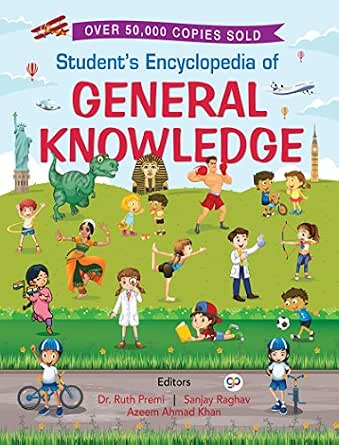 | Best Broad Overview for Young Learners | Product Type: Reference book | Target Audience: Students, teachers, and parents | Subject Focus: General Knowledge | VIEW LATEST PRICE | See Our Full Breakdown |
| Legal Terminology: QuickStudy Laminated Reference Guide |  | Best Durable Quick-Reference for Law Students | Format: Laminated reference guide | Subject: Legal terminology | Series: QuickStudy | VIEW LATEST PRICE | See Our Full Breakdown |
| Roget’s Student Thesaurus |  | Best for Vocabulary Expansion in Essays | Type: Thesaurus | Brand: Roget’s | Audience: Students | VIEW LATEST PRICE | See Our Full Breakdown |
| Shop Reference for Students & Apprentices, Volume 1 |  | Best Practical Guide for Vocational Training | Volume: 1 | Audience: Students & Apprentices | Subject: Shop Reference | VIEW LATEST PRICE | See Our Full Breakdown |
| Everyday Mathematics Grade 3 Student Reference Book |  | Best Curriculum-Aligned Math Companion | Grade: 3 | Format: Student reference book | Curriculum: Everyday Mathematics | VIEW LATEST PRICE | See Our Full Breakdown |
| NYPL Science Desk Reference (The New York Public Library Series) |  | Best Broad Science Overview | Series: The New York Public Library Series | Format: Desk Reference | Subject: General Science | VIEW LATEST PRICE | See Our Full Breakdown |
| Webster’s Word Power Essential Students’ Companion: General Knowledge of the English Language |  | Best for Vocabulary Building | Subject: English Language | Focus: General Knowledge | Series: Webster’s Word Power | VIEW LATEST PRICE | See Our Full Breakdown |
| Anatomy: QuickStudy Laminated Reference Guide |  | Best Compact Visual Aid | Format: Laminated Reference Guide | Subject: Anatomy | Series: QuickStudy | VIEW LATEST PRICE | See Our Full Breakdown |
| A Dictionary of Science (Oxford Quick Reference) |  | Best Portable Terminology Guide | Series: Oxford Quick Reference | Subject: Science Terminology | Organization: Alphabetical | VIEW LATEST PRICE | See Our Full Breakdown |
| Houghton Mifflin Essential Desk Reference Set, 3-Book Paperback Set |  | Best All-Round Language Toolset | Format: Paperback Set | Number of Books: 3 | Included Books: Dictionary, Thesaurus, Style Guide | VIEW LATEST PRICE | See Our Full Breakdown |
| Webster’s Dictionary Set for Students, Bundle of 12 Mini Dictionaries |  | Best for Classroom Group Work | Set size: 12 mini dictionaries | Intended use: Students, classrooms, and libraries | Format: Bundle | VIEW LATEST PRICE | See Our Full Breakdown |
| Everything You Need to Know About World History Homework: A Desk Reference for Students and Parents (Grades 4‑6) | 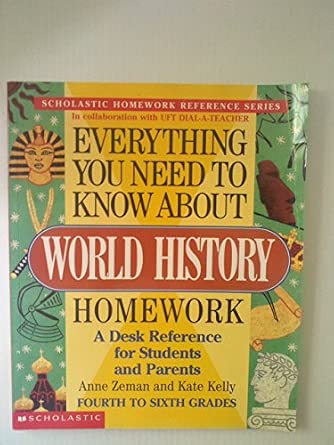 | Best for Elementary Homework Support | Target Grades: 4th to 6th | Subject: World History | Series: Scholastic Homework Reference Series | VIEW LATEST PRICE | See Our Full Breakdown |
| Oxford Family Encyclopedia: The Ultimate Single-Volume Reference for Home, School and Office |  | Best All-Around Home Reference | ASIN: 019521367X | Format: Single-volume reference | Publisher: Oxford University Press | VIEW LATEST PRICE | See Our Full Breakdown |
| Medical Terminology: The Basics — QuickStudy Laminated Reference Guide |  | Best Compact Study Aid | Format: Laminated reference guide | Length: 6 pages | Organization: Alphabetical entries in color-separated tables | VIEW LATEST PRICE | See Our Full Breakdown |
| reference books for student | Format | Subject | Series |
|---|---|---|---|
| Student’s Encyclopedia of Gene | — | — | |
| Legal Terminology: QuickStudy | Laminated reference guide | Legal terminology | QuickStudy |
| Roget’s Student Thesaurus | — | — | |
| Shop Reference for Students & | Shop Reference | Shop Reference | |
| Everyday Mathematics Grade 3 S | Student reference book | Mathematics | — |
| NYPL Science Desk Reference | Desk Reference | General Science | The New York Public Library Series |
| Webster’s Word Power Essential | Companion Guide | English Language | Webster’s Word Power |
| Anatomy: QuickStudy Laminated | Laminated Reference Guide | Anatomy | QuickStudy |
| A Dictionary of Science | Compact Dictionary | Science Terminology | Oxford Quick Reference |
| Houghton Mifflin Essential Des | Paperback Set | — | — |
| Webster’s Dictionary Set for S | Bundle | — | — |
| Everything You Need to Know Ab | Paperback | World History | Scholastic Homework Reference Series |
| Oxford Family Encyclopedia: Th | Single-volume reference | — | — |
| Medical Terminology: The Basic | Laminated reference guide | — | — |
More Details on Our Top Picks
Student’s Encyclopedia of General Knowledge
This volume serves as a general knowledge hub, designed to bridge the gap between textbook learning and broader curiosity. Unlike the specialized Legal Terminology: QuickStudy Laminated Reference Guide, which targets a specific professional vocabulary, this encyclopedia casts a wide net, making it ideal for students who need quick answers across diverse subjects. The inclusion of teachers and parents in the audience suggests a user-friendly layout that avoids overly academic jargon. However, the lack of detailed content specifications means buyers must rely on the title’s promise of breadth. It is less effective than the Everyday Mathematics Grade 3 Student Reference Book for focused skill-building, but superior for trivia and cross-curricular support. The primary tradeoff is depth versus variety; you gain access to many topics but sacrifice the granular detail found in subject-specific encyclopedias.
Pros:- Covers a wide range of general knowledge topics
- Designed with teachers and parents in mind
- Serves as a versatile homework aid
- Accessible language for younger readers
Cons:- Lacks specific details on content depth or edition updates
- May not provide sufficient detail for advanced academic work
- Broad scope can mean shallower explanations than specialized texts
Best for: Parents and educators seeking a single-volume source for diverse homework questions across multiple subjects.
Not ideal for: Students needing deep, subject-specific expertise or detailed academic citations for research papers.
- Product Type:Reference book
- Target Audience:Students, teachers, and parents
- Subject Focus:General Knowledge
- Format:Print
- Volume:Single
- Educational Level:K-12 General
Our verdict“Choose this if you need a versatile, easy-to-understand reference for varied student questions rather than deep subject-specific study.”
Legal Terminology: QuickStudy Laminated Reference Guide
For students navigating the dense vocabulary of law school, this laminated guide offers a portable and durable solution. It stands in sharp contrast to the Student’s Encyclopedia of General Knowledge, which provides broad context, by offering immediate, focused definitions of legal terms. The laminated format is a critical advantage, allowing students to write directly on the sheet or use it in high-traffic environments without fear of damage. However, its narrow scope means it is useless for general education, unlike the Roget’s Student Thesaurus which aids creative writing. The tradeoff is clear: you gain rapid access to specific legal jargon but lose the narrative explanation found in textbooks. This is not a learning tool but a memory aid for those already studying the material.
Pros:- Laminated surface resists wear and tear
- Highly portable for quick lookup
- Focused exclusively on legal terminology
- Ideal for rapid definition recall
Cons:- Extremely narrow subject matter
- Lacks contextual examples or case law
- Not suitable for introductory learning
Best for: Law students or paralegals needing a rugged, pocket-sized cheat sheet for legal jargon during exams or internships.
Not ideal for: General students or those needing explanatory context rather than bare-bones definitions.
- Format:Laminated reference guide
- Subject:Legal terminology
- Series:QuickStudy
- Durability:High
- Portability:High
- Writing Surface:Yes
Our verdict“Buy this for its durability and specificity if you already know the basics of law and need a quick definition helper.”
Roget’s Student Thesaurus
This thesaurus is a staple for students struggling to find the right word, offering synonym-rich entries that help refine academic writing. Compared to the Everyday Mathematics Grade 3 Student Reference Book, which supports numerical literacy, this tool focuses entirely on linguistic precision. It is more specialized than the Student’s Encyclopedia of General Knowledge, serving a specific writing need rather than general inquiry. The main drawback is its reliance on the user to choose the correct nuance; without a dictionary nearby, students might misuse words. It lacks the visual aids found in the Shop Reference for Students & Apprentices, relying solely on text. This makes it perfect for essay writing but less useful for technical or scientific contexts where precise terminology is standardized.
Pros:- Extensive list of synonyms and antonyms
- Helps improve writing style and variety
- Standardized Roget’s classification system
- Compact and easy to keep on a desk
Cons:- Does not provide word definitions
- Requires a dictionary for context
- Limited utility for technical subjects
Best for: High school and college students focused on improving essay writing and vocabulary variety.
Not ideal for: Students needing definitions, grammar rules, or technical terminology for science and math.
- Type:Thesaurus
- Brand:Roget’s
- Audience:Students
- Content:Synonyms and Antonyms
- Format:Print
- Language:English
Our verdict“Essential for students who need to vary their word choice in essays, provided they also have a dictionary for definitions.”
Shop Reference for Students & Apprentices, Volume 1
This book addresses a niche often ignored by general academic references: hands-on technical skills. While the Legal Terminology: QuickStudy Laminated Reference Guide serves theoretical law, this volume supports apprenticeships and trade schools. It is far more practical than the Roget’s Student Thesaurus, focusing on application rather than language. The content likely includes diagrams and step-by-step instructions, making it superior to text-heavy encyclopedias for learning mechanical or industrial processes. However, being Volume 1, it may require purchasing additional volumes for complete coverage, unlike the self-contained Student’s Encyclopedia of General Knowledge. This is a specialized tool for those entering the trades, not for general education.
Pros:- Targeted at vocational and trade education
- Likely includes practical diagrams and instructions
- Supports hands-on learning environments
- Specific to shop and industrial applications
Cons:- Volume 1 implies incomplete standalone coverage
- Narrow audience limits general utility
- May be outdated depending on publication date
Best for: Vocational students and apprentices needing technical diagrams and procedural guides for shop classes.
Not ideal for: Students in liberal arts or sciences who have no need for industrial or mechanical reference.
- Volume:1
- Audience:Students & Apprentices
- Subject:Shop Reference
- Format:Print
- Education Type:Vocational/Trade
- Series:Shop Reference
Our verdict“Select this if you are in a trade program and need a reliable, volume-based technical reference for shop work.”
Everyday Mathematics Grade 3 Student Reference Book
Designed specifically for the Everyday Mathematics curriculum, this book is a targeted tool for Grade 3 students. Unlike the Student’s Encyclopedia of General Knowledge, which offers broad trivia, this reference aligns strictly with classroom lessons and homework. It is more focused than the Roget’s Student Thesaurus, providing mathematical strategies and examples relevant to third-grade standards. The primary limitation is its grade-specific nature; it becomes obsolete as the student advances, whereas general references like the NYPL Science Desk Reference have longer shelf lives. Parents should buy this only if their child’s school uses this specific curriculum, as it may not align with other math programs.
Pros:- Aligns directly with Everyday Mathematics curriculum
- Provides age-appropriate math strategies
- Supports specific Grade 3 learning objectives
- Helps parents understand classroom methods
Cons:- Limited to a specific grade level
- Useless if school uses a different curriculum
- Short lifespan as student progresses
Best for: Parents of third-graders enrolled in the Everyday Mathematics program who need to support homework.
Not ideal for: Students in schools using different math curricula or those needing general math help beyond Grade 3.
- Grade:3
- Format:Student reference book
- Curriculum:Everyday Mathematics
- Subject:Mathematics
- Publisher:McGraw-Hill
- Target Age:8-9 Years
Our verdict“Purchase this exclusively if your child uses the Everyday Mathematics curriculum in Grade 3, as it is highly specialized.”
NYPL Science Desk Reference (The New York Public Library Series)
This volume stands out for its authoritative breadth across scientific disciplines, making it a reliable starting point for students needing quick facts without deep theoretical immersion. Unlike the Oxford Quick Reference Dictionary of Science, which focuses strictly on terminology definitions, this desk reference provides narrative context and structured articles that help learners connect concepts. The New York Public Library branding adds a layer of trustworthiness that generic compilations often lack. However, the print format is a significant limitation in fast-moving fields like physics or biology, where data can become obsolete within a few years. It serves best as a foundational lookup tool rather than a primary study resource for advanced coursework.
Pros:- Broad coverage of scientific subjects allows for interdisciplinary quick reference.
- Organized layout facilitates fast information retrieval in study settings.
- Credibility is backed by the reputable New York Public Library series.
- Compact size fits easily on a desk alongside other study materials.
Cons:- Print format risks becoming outdated as new scientific research emerges.
- Limited depth makes it insufficient for specialized or advanced textbook needs.
Best for: High school and early college students needing a trusted, general overview of scientific topics for homework or general curiosity.
Not ideal for: Advanced science majors or researchers who require up-to-date data and specialized, in-depth technical explanations.
- Series:The New York Public Library Series
- Format:Desk Reference
- Subject:General Science
- Publisher:New York Public Library
- Use Case:Quick Lookup
- Depth:General Overview
Our verdict“This is the ideal choice for students who need a trustworthy, general scientific overview for quick homework lookups rather than deep technical study.”
Webster’s Word Power Essential Students’ Companion: General Knowledge of the English Language
Targeted specifically at language acquisition, this companion focuses on general English knowledge and vocabulary expansion. When compared to the Houghton Mifflin Essential Desk Reference Set, it offers a more singular focus on word usage rather than bundling multiple reference types. This makes it less versatile for general research but more effective for students struggling with lexical precision in essays. The lack of detailed specifications suggests a straightforward, no-frills approach to language learning. It is best suited for those who find Roget’s Student Thesaurus too broad and need guided instruction on proper word application in academic writing.
Pros:- Focused specifically on English language general knowledge and vocabulary.
- Serves as a dedicated companion for language-based learning needs.
- Simplifies the learning process by avoiding unrelated reference topics.
Cons:- Limited scope prevents use for non-language academic subjects.
- Lacks detailed specifications or content breakdowns in available data.
Best for: Students focused on improving vocabulary, grammar, and general English language proficiency for writing assignments.
Not ideal for: Students who need a multi-purpose reference set covering science, history, and other non-language subjects.
- Subject:English Language
- Focus:General Knowledge
- Series:Webster’s Word Power
- Target Audience:Students
- Format:Companion Guide
- Content Type:Vocabulary and Grammar
Our verdict“Choose this if your primary academic hurdle is English vocabulary and grammar, rather than needing a broad multi-subject reference.”
Anatomy: QuickStudy Laminated Reference Guide
This laminated guide prioritizes portability and durability, making it perfect for students who need to study anatomy on the go or in messy lab environments. Unlike the NYPL Science Desk Reference, which offers narrative text, this guide relies on visual diagrams and concise summaries for rapid recall. The laminated format allows it to survive spills and heavy handling, a clear advantage over paperback dictionaries like the Houghton Mifflin set. However, the limited space means it cannot provide the deep physiological explanations found in full textbooks. It functions best as a supplemental memory aid rather than a standalone learning resource.
Pros:- Laminated format ensures durability against spills and wear in labs.
- Compact size allows for easy portability to classes or study groups.
- Visual layout aids in quick memorization of anatomical structures.
Cons:- Limited space prevents in-depth textual explanations of systems.
- Specific topic coverage is not detailed in available product data.
Best for: Biology or pre-med students who need a durable, visual quick-reference for anatomical structures during lab sessions.
Not ideal for: Students who require detailed physiological explanations or textual descriptions of bodily systems.
- Format:Laminated Reference Guide
- Subject:Anatomy
- Series:QuickStudy
- Durability:High (Laminated)
- Portability:High
- Content Style:Visual and Concise
Our verdict“This is the best pick for students who need a tough, visual cheat sheet for anatomy exams and lab work.”
A Dictionary of Science (Oxford Quick Reference)
This dictionary excels in alphabetic accessibility, offering concise definitions that are ideal for students who need to decode scientific jargon quickly. Compared to the NYPL Science Desk Reference, it sacrifices narrative context for speed and portability, fitting easily into a backpack. The Oxford brand ensures definitions are precise and academically acceptable. However, the lack of illustrations is a notable drawback for visual learners who might prefer the diagrams in the QuickStudy Anatomy guide. It is strictly a terminology tool, not a learning resource, making it perfect for checking specific terms during lectures or reading assignments.
Pros:- Comprehensive coverage of key scientific terminology across disciplines.
- Portable size allows for easy reference anywhere on campus.
- Clear, concise definitions are written in accessible language.
- Alphabetical organization speeds up lookup significantly.
Cons:- Limited depth means it cannot replace detailed textbooks.
- Few or no illustrations hinder visual understanding of concepts.
- May omit advanced or highly specialized technical terms.
Best for: Students across various scientific disciplines who need fast, accurate definitions of terms during class or while reading.
Not ideal for: Visual learners or students who need contextual explanations of how scientific concepts interact.
- Series:Oxford Quick Reference
- Subject:Science Terminology
- Organization:Alphabetical
- Format:Compact Dictionary
- Publisher:Oxford University Press
- Depth:Concise Definitions
Our verdict“This is the go-to choice for students who prioritize fast, reliable definitions over deep contextual learning.”
Houghton Mifflin Essential Desk Reference Set, 3-Book Paperback Set
This three-book set offers unmatched versatility for writing-focused students by combining a dictionary, thesaurus, and style guide. Unlike the single-focus Webster’s Word Power, this set covers definition, synonymy, and usage in one package. The slipcase packaging keeps the compact paperbacks organized, while the 60,000 definitions and 35,000 synonyms provide substantial lexical resources. However, the 248-page style guide is relatively short, meaning it may lack the thoroughness of dedicated writing manuals. It is a strong value proposition for students who need a complete writing toolkit without purchasing individual volumes separately.
Pros:- Combines dictionary, thesaurus, and style guide in one cohesive set.
- Includes 60,000 definitions and 35,000 synonyms for extensive vocabulary support.
- Compact books are organized in a protective slipcase for easy storage.
- Offers significant value compared to buying three separate reference books.
Cons:- The included style guide is limited to 248 pages.
- Paperback format may wear out faster with heavy daily use.
Best for: English, journalism, or humanities students who need a complete toolkit for writing, editing, and vocabulary expansion.
Not ideal for: Students who only need a science reference or those who prefer digital tools for their flexibility and searchability.
- Format:Paperback Set
- Number of Books:3
- Included Books:Dictionary, Thesaurus, Style Guide
- Dictionary Definitions:60,000
- Thesaurus Synonyms:35,000
- Packaging:Slipcase
- Publisher:Houghton Mifflin
Our verdict“This set is the best value for students who want a complete, physical reference system for improving their academic writing.”
Webster’s Dictionary Set for Students, Bundle of 12 Mini Dictionaries
This bundle stands out for its sheer quantity, offering twelve independent copies in a single purchase. Unlike the Webster’s Word Power Essential Students’ Companion, which serves as a general language guide, these are dedicated dictionary tools meant for simultaneous student access. The compact mini format allows easy distribution across desks, making it ideal for group activities where every student needs immediate lookup capability. However, the lack of detailed content descriptions is a significant tradeoff; you cannot verify the depth of definitions or age-appropriateness before buying. While the Houghton Mifflin Essential Desk Reference Set offers curated multi-subject content, this set prioritizes volume over specific curricular alignment. It is a logistical solution for teachers needing multiple copies rather than a single, deep reference source.
Pros:- Includes 12 dictionaries for group or classroom use
- Compact mini format fits easily on student desks
- Suitable for library lending programs
- Eliminates wait times for dictionary access
Cons:- Description does not specify the contents or features of each dictionary
- Quality of individual mini-books is unknown due to lack of detail
- Not suitable for deep research or advanced vocabulary needs
Best for: Classroom teachers or librarians needing multiple copies for simultaneous student use during group activities.
Not ideal for: Individual students or parents who need a single, high-quality reference with verified content depth.
- Set size:12 mini dictionaries
- Intended use:Students, classrooms, and libraries
- Format:Bundle
- Brand:Webster
- Type:Dictionary
- Target Audience:Educational institutions
Our verdict“This set is the practical choice for educators managing large classes who prioritize access quantity over individual book quality.”
Everything You Need to Know About World History Homework: A Desk Reference for Students and Parents (Grades 4‑6)
This desk reference is engineered for the specific friction point of elementary history homework, bridging the gap between student confusion and parental uncertainty. Compared to the NYPL Science Desk Reference, which offers broad scientific facts, this book targets curriculum alignment for grades 4-6 with timelines and study tips. The dual-audience design is its strongest feature, offering clear guidance for parents who may not remember historical contexts. However, its narrow grade range means it becomes obsolete quickly; a sixth grader will outgrow it, whereas the Oxford Family Encyclopedia remains useful for years. It is less about broad knowledge acquisition and more about solving immediate homework problems within a standard school framework.
Pros:- Covers key world-history concepts in a concise, easy-to-navigate format
- Designed for both students and parents, supporting collaborative study
- Aligned with typical elementary curriculum standards
- Part of the reputable Scholastic Homework Reference Series
Cons:- Limited to grades 4-6, so older or younger learners may find it less useful
- Focuses on homework help rather than deep historical exploration
- Paperback format may wear out with frequent classroom or home use
Best for: Parents of 4th to 6th graders who need structured help with world history assignments and curriculum alignment.
Not ideal for: High school students or advanced learners who need broader historical analysis beyond basic facts.
- Target Grades:4th to 6th
- Subject:World History
- Series:Scholastic Homework Reference Series
- Format:Paperback
- Audience:Students and Parents
- Organization:By topic
- Features:Timelines and study tips
Our verdict“This is the targeted solution for parents struggling to assist with specific middle-grade history homework tasks.”
Oxford Family Encyclopedia: The Ultimate Single-Volume Reference for Home, School and Office
This single-volume encyclopedia offers the breadth of coverage that specialized guides like the A Dictionary of Science cannot match. It serves as a comprehensive starting point for diverse inquiries, from biology to geography, making it a cornerstone for any student’s home library. Unlike the Webster’s Dictionary Set, which focuses on language, this book provides contextual knowledge and articles. The Oxford brand implies a standard of editorial rigor and accuracy that generic bundles lack. However, as a single volume, it cannot offer the depth of multi-volume sets. It is best used for initial fact-checking and general understanding, after which students might need to consult more specialized references for detailed project work.
Pros:- Designed for home, school, and office use
- Single-volume format saves shelf space
- Covers a wide range of general knowledge topics
- Backed by Oxford’s editorial reputation
Cons:- Limited depth compared to multi-volume encyclopedias
- May not cover niche or highly specialized subjects in detail
- Physical size can be cumbersome for young children to handle
Best for: Families seeking a durable, multi-subject reference book for general knowledge and initial research.
Not ideal for: Students needing in-depth, scholarly analysis on a single narrow topic for advanced projects.
- ASIN:019521367X
- Format:Single-volume reference
- Publisher:Oxford University Press
- Use Case:Home, School, Office
- Scope:General Knowledge
- Type:Encyclopedia
Our verdict“This encyclopedia is the reliable foundational reference for households that want one book to answer most general questions.”
Medical Terminology: The Basics — QuickStudy Laminated Reference Guide
This laminated guide is designed for rapid decoding of medical language, focusing on prefixes, roots, and suffixes. Unlike the full-length textbooks often required for medical courses, or the Anatomy: QuickStudy Laminated Reference Guide which focuses on structure, this tool is purely linguistic. The color-separated tables allow for quick visual association of term components, which is critical for students memorizing complex vocabulary. Its durability is a major advantage over paper books, surviving the wear and tear of frequent pocket use. However, with only six pages, it lacks context and examples found in larger references. It is a supplementary tool for immediate lookup during study sessions, not a standalone learning resource.
Pros:- Laminated pages are designed for durability
- Compact format for quick reference
- Explains prefixes, roots, and suffixes
- Covers terminology relevant to several medical study fields
Cons:- Limited to six pages
- A quick reference guide rather than a full-length book
- Lacks contextual examples or clinical applications
Best for: Health science students needing a durable, pocket-sized tool for quick terminology breakdowns.
Not ideal for: Students who need detailed explanations, clinical examples, or comprehensive disease definitions.
- Format:Laminated reference guide
- Length:6 pages
- Organization:Alphabetical entries in color-separated tables
- Topics:Medical word foundations, human body, terminology sets
- Durability:Laminated
- Portability:Pocket-sized
- Feature:Glossary included
Our verdict“This guide is the essential companion for medical students who need to quickly dissect complex terms on the fly.”

How We Picked
I evaluated these titles based on three primary criteria: accessibility, durability, and curricular relevance. Accessibility was judged by how easily a student could locate information without prior knowledge of the book’s structure, favoring those with clear indexes and visual aids. Durability was assessed by binding type and paper quality, with laminated guides ranking higher for elementary use and hardcovers for long-term home library collections.
Curricular relevance meant prioritizing books that align with common school subjects like science, history, and language arts. I ranked products higher if they offered cross-referencing capabilities or covered multiple related topics, reducing the need for a student to flip between multiple books. Options that felt like outdated textbooks with dense, unorganized text were placed lower, as they hinder rather than help independent study.
| reference books for student | Series |
|---|---|
| Student’s Encyclopedia of Gene | — |
| Legal Terminology: QuickStudy | QuickStudy |
| Roget’s Student Thesaurus | — |
| Shop Reference for Students & | Shop Reference |
| Everyday Mathematics Grade 3 S | — |
| NYPL Science Desk Reference | The New York Public Library Series |
| Webster’s Word Power Essential | Webster’s Word Power |
| Anatomy: QuickStudy Laminated | QuickStudy |
| A Dictionary of Science | Oxford Quick Reference |
| Houghton Mifflin Essential Des | — |
| Webster’s Dictionary Set for S | — |
| Everything You Need to Know Ab | Scholastic Homework Reference Series |
| Oxford Family Encyclopedia: Th | — |
| Medical Terminology: The Basic | — |
Factors to Consider When Choosing Reference Books For Students
Selecting the right reference material requires looking beyond the title to understand how the information is structured and presented. Here are the key factors I considered when evaluating these resources.Scope vs. Depth of Coverage
A major decision point is whether you need a broad overview or a niche focus. General knowledge encyclopedias cover a little bit of everything, which is ideal for elementary students working on diverse projects. However, for high schoolers studying specific fields like anatomy or legal terminology, a general book will lack the necessary precision. I found that subject-specific guides often provide better support for advanced coursework because they use the correct technical language students encounter in class. If your student struggles with specific subjects, prioritize depth over breadth to avoid confusion.
Format and Physical Durability
Reference books live hard lives on desks and in backpacks. Laminated reference guides are resistant to spills and tearing, making them a smart choice for younger students or messy study environments. In contrast, paperback dictionaries and thesauruses can suffer from loose pages if handled frequently. Hardcover encyclopedias offer longevity but are heavy and less portable. I recommend matching the format to the user’s maturity level; a sturdy laminated card might be more practical for a third-grader than a fragile paperback dictionary.
Age Appropriateness and Reading Level
Not all reference books are written for the same reading level. A Grade 3 mathematics reference will confuse a high school student with its simplified explanations, while an adult-level medical terminology guide will frustrate a beginner. I looked at the complexity of the definitions and the density of the text. For younger children, books with illustrations and simple sentence structures are far more effective tools for learning. Always check the recommended grade range, as a mismatch here renders the book useless regardless of its content quality.
Searchability and Index Quality
The primary function of a reference book is to help a student find answers quickly. Strong indexing and cross-referencing systems are critical features that save time during homework sessions. Some books rely on alphabetical order alone, which fails if the student doesn’t know the exact term. Visual indexes or categorized sections, as seen in the NYPL Science Desk Reference, allow for browsing and discovery. A poorly indexed book is a barrier to learning, so prioritize titles that offer multiple ways to locate information.
Integration with Digital Resources
While print is the focus here, modern reference books often include access to online portals or QR codes for supplemental content. This hybrid approach can keep material current without requiring a new purchase. I noted which books offer these digital extensions, as they can provide updated statistics or interactive diagrams that static print cannot. However, do not rely solely on digital access; the physical book must stand alone as a complete resource in case of connectivity issues or device restrictions at school.
Frequently Asked Questions
Are laminated reference guides better than paperback dictionaries for daily homework?
Laminated guides are superior for durability and quick fact-checking, but they lack the depth of a paperback dictionary. A laminated QuickStudy guide is perfect for a student who needs to quickly glance at a formula or definition during a test-prep session. However, it will not help a student who needs to understand etymology or nuanced usage examples. For comprehensive language support, a paperback dictionary is still necessary. I suggest using laminated guides as supplemental tools alongside a core dictionary rather than replacements.
How do I choose between a general encyclopedia and subject-specific books?
Choose a general encyclopedia if your student needs help across multiple subjects, such as for general trivia or elementary school projects. These books provide a starting point for research but rarely offer enough detail for high school essays. Subject-specific books are better when a student is struggling in a particular area, such as anatomy or science. If your budget allows, a general encyclopedia for the home library and specific guides for current weak subjects is a strategic approach. This ensures breadth for curiosity and depth for academic performance.
Is it worth buying a multi-book set like the Webster’s Dictionary Bundle?
Multi-book sets offer variety but can lead to redundancy if the content overlaps significantly. The Webster’s Dictionary Set is valuable if you have multiple children with different grade levels or if you want specific mini-dictionaries for different subjects on hand. However, if the books are nearly identical in content, you are paying for duplication rather than utility. I recommend checking the table of contents for overlap. These sets are best for households with multiple students or for teachers who need varied resources for different classroom stations.
Can reference books replace online search engines for student research?
They cannot fully replace online engines for current events or niche topics, but they are far better for verifying foundational knowledge. Search engines often return unverified or biased information, whereas curated books like the Oxford Quick Reference series are edited for accuracy. Reference books teach students how to structure information and understand context, which is a skill search engines do not provide. I view them as complementary tools; use books for core concepts and definitions, and the internet for up-to-date data and further exploration.
What is the best way to store multiple reference books to ensure they get used?
Storage location dictates usage. If reference books are buried in a bookshelf, they will be ignored. I recommend keeping the most frequently used titles, like a thesaurus or math reference, on the student’s desk or in an easily accessible bin. Encyclopedias and less frequently used guides can go on a nearby shelf. Visible placement reduces the friction of starting research. If a book is hard to reach, a student will likely default to their phone or tablet, bypassing the structured learning these books offer.
Conclusion
Choosing the right reference books for students depends largely on the student’s age and specific academic hurdles. For most families, the Oxford Family Encyclopedia serves as the best overall choice due to its versatility and visual appeal. If you are on a tight budget but need reliable support for writing, the Roget’s Student Thesaurus is the best value pick, offering essential vocabulary tools without unnecessary bulk. For beginners or younger children, the Everyday Mathematics Grade 3 Student Reference Book provides a gentle introduction to structured learning. If you need specialized support for pre-professional tracks, the Medical Terminology: The Basics guide is the best premium option for niche accuracy. Ultimately, the best book is one that is accessible, durable, and aligned with your student’s current curriculum needs.