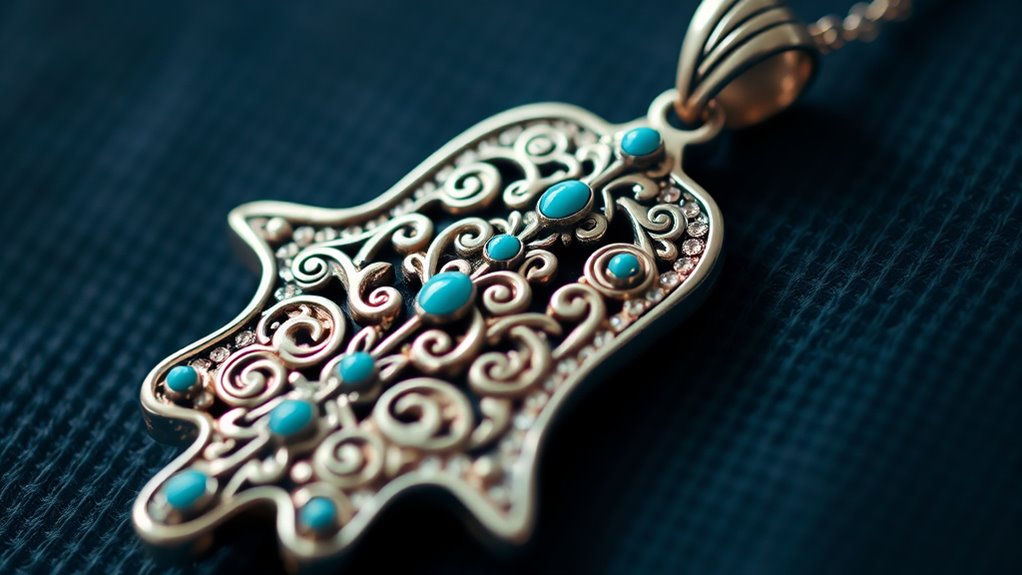

The Hamsa hand is a powerful protective symbol in Middle Eastern art, believed to ward off evil and negative energies. Its open hand design, often with an eye in the center, represents safety, hope, and resilience across cultures. Today, you’ll see it in jewelry, decor, and tattoos, blending tradition with modern style. If you want to learn more about its deep roots and cultural significance, there’s much more to explore ahead.
Key Takeaways
- The Hamsa hand is a prominent protective symbol in Middle Eastern art, believed to ward off the evil eye.
- Its design often includes an eye in the center, symbolizing spiritual protection and vigilance.
- The symbol originates from Middle Eastern and North African cultures, reflecting centuries of tradition.
- It appears in various forms such as jewelry, wall hangings, and carvings, emphasizing its cultural significance.
- The Hamsa’s enduring symbolism represents safety, blessing, hope, and resilience across Middle Eastern artistic expressions.
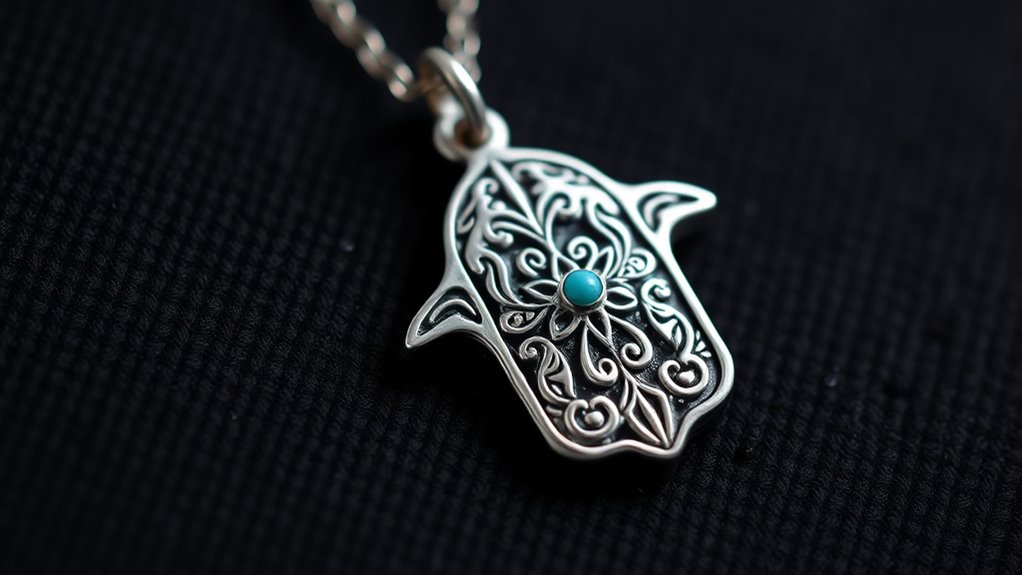
The Hamsa Hand is a powerful symbol believed to offer protection against harm and negative energies. This iconic emblem has traveled through centuries and across cultures, especially in the Middle East and North Africa, where it holds deep cultural significance. When you see the Hamsa, you’re witnessing more than just an artistic motif; you’re observing a symbol rooted in history, spirituality, and tradition. Its design often features an open hand, sometimes with an eye in the center, believed to ward off the evil eye and bring good luck. In many cultures, the Hamsa is considered a universal sign of protection, and its presence is thought to shield individuals from misfortune and malevolent spirits. Its cultural significance varies, but the core idea remains consistent: it’s a talisman meant to provide safety and blessing. Whether worn as jewelry, displayed in homes, or incorporated into artwork, the Hamsa serves as a reminder of hope and resilience.
In recent years, modern interpretations of the Hamsa have gained popularity worldwide, blending traditional symbolism with contemporary aesthetics. Artists and designers now incorporate it into fashion, home decor, and tattoos, giving it a fresh look while preserving its protective purpose. These modern renditions often simplify the intricate details, emphasizing minimalist lines and stylized forms that appeal to current tastes. Despite the stylistic changes, the core meaning remains intact—people continue to see the Hamsa as a symbol of protection, luck, and spiritual well-being. Its adaptability to modern design helps it resonate with a global audience, transcending cultural boundaries and making it a universal emblem of positivity.
You might notice the Hamsa in various forms—beaded bracelets, wall hangings, or engraved into everyday objects—each carrying the same message of safeguarding energy. Its widespread appeal lies in its ability to connect ancient beliefs with contemporary life, offering comfort and a sense of security. As it evolves with modern interpretations, the Hamsa remains an enduring symbol of hope, protection, and cultural richness. Whether you’re drawn to its traditional roots or its modern reinterpretation, the Hamsa continues to serve as a meaningful emblem that bridges history, spirituality, and personal well-being.
Frequently Asked Questions
What Are the Origins of the Hamsa Hand?
You might find it fascinating that the Hamsa Hand has ancient origins, dating back thousands of years across Middle Eastern and North African cultures. It serves as a powerful piece of cultural symbolism, believed to ward off evil and bring good luck. Its roots are linked to various civilizations, including Egyptian, Jewish, and Islamic traditions, making it a universal symbol of protection and spiritual connection.
How Is the Hamsa Hand Used in Modern Culture?
The Hamsa Hand has become a shining star in modern culture, like a beacon guiding your style. You see it everywhere—from fashion accessories like jewelry and charms to popular tattoos symbolizing protection and good luck. People wear it to connect with its ancient power while making a personal statement. Its timeless appeal transforms it into a versatile emblem, blending tradition with contemporary fashion trends seamlessly.
Are There Different Styles of Hamsa Hand Across Regions?
Yes, there are regional variations of the Hamsa hand influenced by cultural differences. You’ll notice styles differ across regions like North Africa, the Middle East, and parts of Asia, reflecting local artistic traditions. These variations include different symbols, colors, and motifs that embody unique cultural influences. By observing these styles, you can see how the Hamsa adapts to various cultural contexts while maintaining its protective significance.
What Materials Are Commonly Used to Craft Hamsa Symbols?
Imagine crafting a guardian from diverse materials—ceramic tiles that shimmer like vibrant mosaics or metal jewelry that catches the light like a protective amulet. You’ll find the Hamsa hand fashioned from clay, glass, wood, or silver, each material adding its own energy. These choices allow you to create enduring symbols, whether as delicate jewelry or striking wall art, each carrying the protective power of the Hamsa.
Can the Hamsa Hand Be Combined With Other Protective Symbols?
Yes, you can combine the Hamsa hand with other protective symbols to enhance its spiritual protection and cultural symbolism. For example, pairing it with the evil eye, Star of David, or Om symbol creates a powerful blend of meanings, amplifying its protective qualities. This fusion allows you to personalize your jewelry or decor, making it a unique talisman that reflects your cultural beliefs and spiritual protection needs.
Conclusion
As you explore the Hamsa Hand’s rich history, you realize it’s more than just a symbol — it’s a powerful protector. But what secrets does it still hold beneath its ancient surface? Keep your eyes open and your mind curious, because this timeless emblem might just reveal more than you ever expected. Its true significance could be hidden in plain sight, waiting for you to uncover the next layer of its mysterious story.