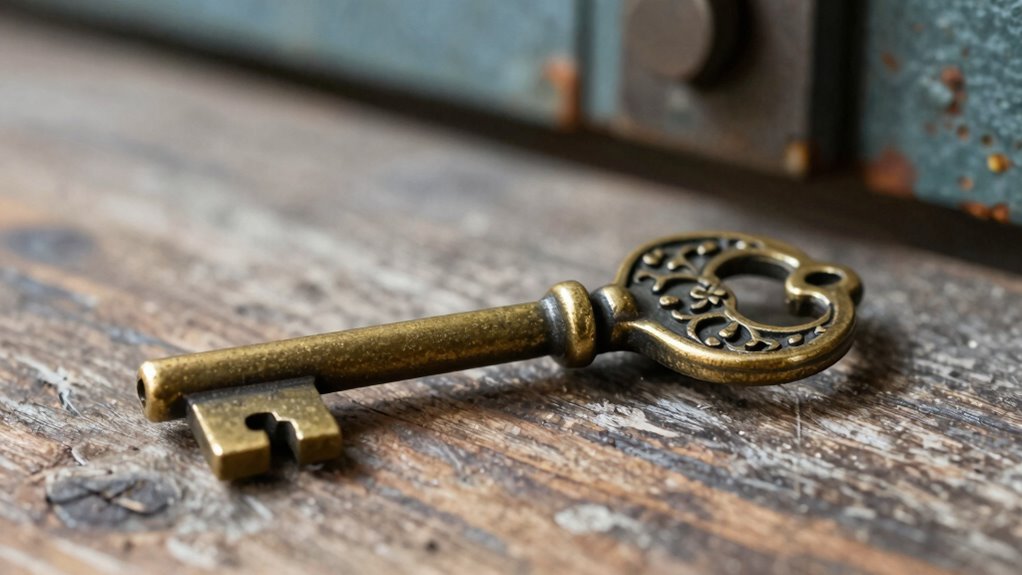

A key is a powerful symbol in art and storytelling because it represents more than just an object; it signifies mystery, power, and transformation. When you see a key, it invites curiosity about what lies beneath the surface, opening secrets or hidden truths. It can symbolize authority, control, or new opportunities, reflecting themes of discovery and shift. If you keep exploring, you’ll uncover even deeper meanings behind this intriguing symbol.
Key Takeaways
- Keys represent access to hidden knowledge, secrets, or new opportunities in art and stories.
- They symbolize power, authority, and control across cultural and historical contexts.
- Keys embody transition, unlocking personal insight, spiritual awakening, or freedom from confinement.
- They serve as narrative clues, guiding characters and audiences toward discovery or resolution.
- Keys evoke curiosity and layered meanings, inviting reflection on trust, responsibility, and transformation.
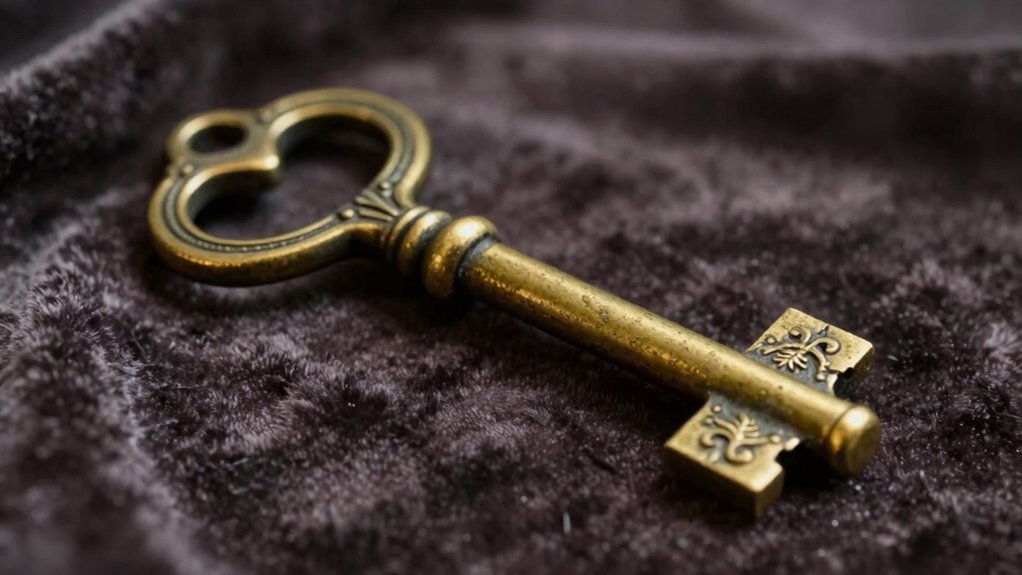
Have you ever wondered why keys frequently appear in art and stories? It’s because they hold a special power that goes beyond their practical use. Keys are rich with hidden meanings, carrying symbolism that can evoke mystery, access, or even danger. When you see a key in a piece of art or a narrative, it often signals that there’s something more beneath the surface—something waiting to be unlocked. This idea of unlocking secrets or revealing truths resonates deeply across cultures, giving keys a profound cultural significance. They become more than just tools; they transform into symbols of discovery, empowerment, and transition. You might notice this in stories where a key unlocks a hidden door, revealing a secret world or a long-lost memory. In art, keys can symbolize the unlocking of personal insight, spiritual awakening, or the opening of new opportunities. Their layered meanings make them a compelling motif that invites curiosity and reflection. Moreover, the symbolism of keys has persisted through history, emphasizing their role as powerful representations of trust, authority, and transition. The cultural significance of keys stretches back through centuries and across civilizations. In many traditions, a key is a symbol of authority and trust. Think of the keys to a city or a royal palace—these represent power and control. In religious contexts, keys often symbolize divine authority or spiritual access, like the keys of Saint Peter in Christian tradition, which denote the authority to open the gates of heaven. In some cultures, a key might be used in rituals to ward off evil or to protect valuables, emphasizing its role as a safeguard. You may also see keys in folklore, where they’re given to heroes or heroines as tokens of responsibility or as clues to solving mysteries. The universal appeal of the key lies in its ability to embody the idea of transition—moving from one state to another, from ignorance to knowledge, or from confinement to freedom. Additionally, the cultural importance of keys highlights their role in shaping societal hierarchies and beliefs. The history of keys reveals their evolution from simple metal objects to complex symbols of power and spiritual significance. This evolution of symbols underscores how objects can develop layered meanings over time, enriching their cultural importance. This cultural significance makes keys powerful symbols that resonate deeply with human experiences. When you encounter a key in art or storytelling, you’re invited to look deeper. It’s not just about the object itself but what it represents—hidden meanings that often relate to unlocking potential, secrets, or new chapters in life. The symbolism of the key taps into universal themes of discovery, trust, and transformation. Its cultural importance underscores its role as a bridge between worlds, ideas, or states of being. Whether in a painting, a novel, or folklore, the key continues to be an evocative symbol that captures our imagination and invites us to explore what lies beyond the surface.
As an affiliate, we earn on qualifying purchases.
Frequently Asked Questions
How Did the Key Become a Symbol in Different Cultures?
You might find that the key became a symbol in different cultures due to its historical significance as a gateway to secrets, power, or safety. Cultural variations show that some see it as a mark of authority, while others associate it with mystery or unleashing potential. Throughout history, societies have used keys to represent access, control, or knowledge, making them powerful symbols that resonate across diverse traditions and stories.
Are There Specific Colors of Keys That Symbolize Particular Ideas?
Like a painter choosing colors, you’ll find that specific key colors carry symbolic meanings. A gold key often signifies wealth or divine power, while a black key can symbolize mystery or secrecy. Cultural variations influence these interpretations; for example, red keys may represent passion or luck in some cultures. These colors deepen the story’s layers, making the key a versatile symbol that taps into universal and cultural ideas.
What Are Some Famous Artworks Featuring Keys?
You’ll notice famous artworks like Magritte’s “The Key” and Hieronymus Bosch’s intricate scenes featuring keys. These artistic representations emphasize symbolic meanings such as mystery, access, or secrets. Keys in art often invite viewers to explore deeper messages or hidden truths, making them powerful symbols. Their presence adds layers of interpretation, encouraging you to contemplate what’s behind locked doors or within hidden worlds, enriching the artwork’s narrative.
How Do Keys Symbolize Power Versus Mystery?
You might think keys only unlock secrets, but they also symbolize power, revealing potential in individuals or society. When you see a key in art or stories, it often represents authority or control over something valuable. Conversely, it also hints at mystery, suggesting hidden truths waiting to be uncovered. The dual symbolism invites you to explore what’s behind the door, whether it’s power you seek or secrets you wish to access.
Can Keys Represent Emotional or Personal Transformation?
Keys can symbolize emotional or personal transformation by representing your journey of opening potential and revealing hidden parts of yourself. When you find or use a key, it’s like unlocking secrets within, opening new chapters of growth. This powerful symbol encourages you to embrace change, confront your inner mysteries, and move forward. Ultimately, a key signifies the courage to unlock your true self and unlock the possibilities ahead.
Conclusion
You now see how the key symbolizes access, mystery, and transformation in art and stories. It’s no wonder over 70% of fairy tales feature keys as symbols of revealing secrets or new beginnings. Whether in paintings or tales, the key invites you to explore hidden depths and new possibilities. So, next time you see a key, remember it’s more than just an object — it’s a powerful symbol of discovery and change.