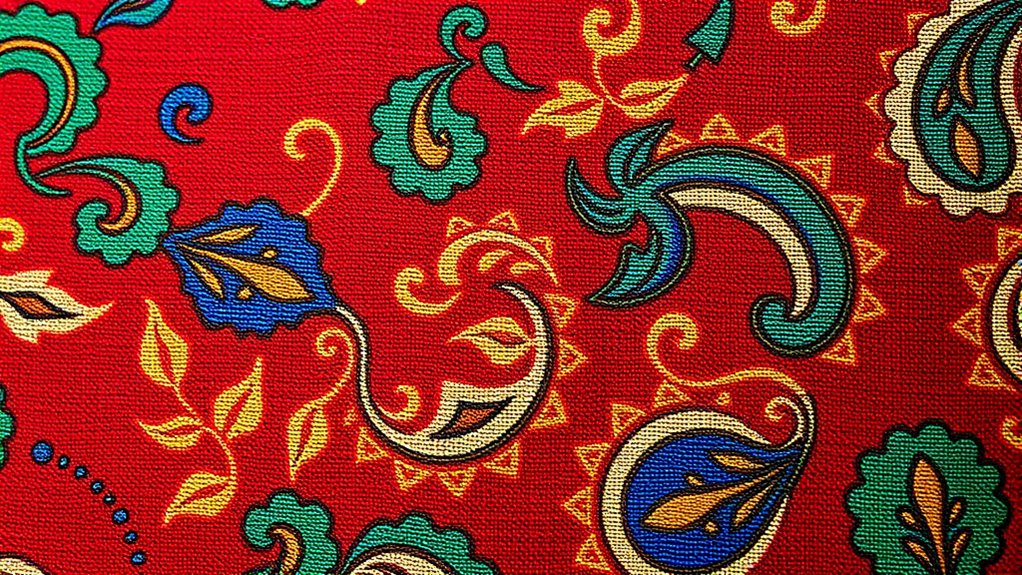

Paisley patterns, with their teardrop shapes, originate from Persian and Indian textile traditions. They symbolize fertility, prosperity, and divine protection, reflecting spiritual meanings tied to regional craft techniques. The pattern traveled through trade and was adapted into textiles showcasing craftsmanship and symbolism. Today, you’ll find paisley on clothing and accessories, still carrying its rich history and cultural significance. If you want to uncover more about its fascinating origins and evolution, keep exploring these patterns’ story.

Get school and study supplies delivered free — and shop member deals
- Fast, free delivery on millions of items
- Access to Prime Big Deal Days deals on October 6–7
- Prime Video, Amazon Music and more included
Key Takeaways
- Paisley patterns originate from Persian and Indian textile traditions, symbolizing fertility, prosperity, and divine protection.
- The pattern, known as “boteh” in Persia, has spiritual meanings linked to life forces and growth.
- Techniques like Kashmiri weaving and natural dyes contribute to the pattern’s cultural and artisanal significance.
- European manufacturers in Scotland popularized paisley in the 18th-19th centuries through textile printing and mass production.
- Today, paisley remains a symbol of cultural heritage, often used in fashion to connect to its rich historical and spiritual roots.

Have you ever wondered about the origins of the intricate paisley patterns that often adorn fabrics and fashion? These swirling, teardrop-shaped motifs are more than just decorative elements; they carry rich symbolism in fashion and reveal fascinating regional textile techniques. When you see paisley on a scarf, a dress, or a shawl, you’re witnessing a design deeply rooted in cultural history, with meanings that go far beyond aesthetics.
The symbolism in fashion associated with paisley is complex and varied. In many cultures, especially in Persia and India, the pattern is connected to spirituality and life forces. The paisley shape, resembling a stylized mango or almond, often symbolizes fertility, growth, and abundance. In India, especially in the region of Kashmir, paisley motifs are woven into luxurious textiles like shawls, representing prosperity and divine protection. When you wear a paisley garment, you’re often embracing these meanings, whether consciously or not, linking yourself to a tradition of symbolism that has persisted for centuries.
Understanding regional textile techniques enriches your appreciation even further. The origins of paisley are deeply tied to specific craft traditions. In Persia, the design was originally known as “boteh,” a motif created through intricate weaving and dyeing processes. When the pattern traveled to India via trade routes, local artisans adopted and adapted it using regional techniques like Kashmiri weaving and embroidery. These techniques involved meticulous craftsmanship, often using natural dyes and hand-spun yarns, which gave the fabric its unique texture and vibrant colors. Later, during the 18th and 19th centuries, European manufacturers, especially in Scotland, began producing paisley textiles through a process called textile printing, which allowed for mass production and popularization of the pattern across Western fashion.
As an affiliate, we earn on qualifying purchases.
Frequently Asked Questions
How Did Paisley Patterns Become Popular Worldwide?
You might find that paisley patterns became popular worldwide through textile production innovations and design evolution. When European traders imported Indian textiles, the intricate designs caught widespread attention. Over time, designers adapted paisley shapes, making them fashionable in Europe and beyond. As mass production grew, these patterns spread across cultures, cementing their status as a global design icon. Your appreciation for paisley now connects to its rich history and style transformation.
What Materials Are Traditionally Used in Paisley Textiles?
You’ll find that traditional paisley textiles often feature soft cotton or fine wool, chosen for their durability and comfort. Artists typically use vibrant fabric dyes to bring the intricate patterns to life, while weaving techniques add texture and depth. These materials combine to create the rich, detailed designs that make paisley so mesmerizing, blending craftsmanship and color in a timeless dance that’s appreciated worldwide.
Are Paisley Patterns Associated With Specific Holidays or Events?
You’ll find paisley patterns often linked to festive symbolism and cultural celebrations, especially in regions like Scotland and India. During holidays and special events, people wear or display paisley designs to honor tradition and add a touch of elegance. The intricate, teardrop shape is seen as a symbol of life and fertility, making it a meaningful choice for festivities, weddings, and cultural gatherings that celebrate heritage and joy.
How Do Different Cultures Interpret the Paisley Motif?
You see the paisley motif, and its symbolic significance varies across cultures. In Persia, it represents life and eternity, while in India, it’s linked to fertility and spirituality. Western interpretations often emphasize fashion and elegance, yet regional variations highlight differing meanings—like its association with prosperity in Scotland. Despite differences, the pattern’s intricate design connects diverse cultures through shared symbolism, blending tradition and modernity in a timeless motif.
Can Paisley Patterns Be Customized or Personalized?
Yes, you can definitely customize or personalize paisley patterns. Many brands and designers offer custom design options, allowing you to choose colors, size, and placement of the pattern. Personalization options include adding initials, special symbols, or unique motifs to make the pattern more meaningful. Whether for clothing, accessories, or home decor, customizing paisleys lets you create a unique piece that reflects your style and personality.
Conclusion
Now that you know the rich history and cultural significance behind paisley patterns, don’t you find it fascinating how a simple design can tell such a story? Every swirl and teardrop carries centuries of tradition, blending East and West in a beautiful tapestry. So, next time you see or wear paisley, remember it’s more than just a pattern—it’s a symbol of cultural exchange and timeless artistry. Isn’t that a pattern worth celebrating?
Halloween Picks
halloween
As an affiliate, we earn on qualifying purchases.