A crown of thorns symbolizes suffering, sacrifice, and humility. It reminds you of the pain and hardship endured for a higher purpose, much like Jesus Christ’s crucifixion. This symbol highlights strength through resilience and quiet endurance in the face of adversity. It also challenges you to reflect on the responsibilities and sacrifices that come with true greatness and leadership. If you continue exploring, you’ll discover even deeper meanings behind this powerful emblem.
Key Takeaways
- Represents Jesus Christ’s suffering, sacrifice, and humility in Christian tradition.
- Symbolizes the burdens and responsibilities of leadership and greatness.
- Reflects emotional, spiritual, and physical hardship endured willingly for a higher purpose.
- Signifies strength, resilience, and moral virtue through enduring pain silently.
- Serves as a reminder that true nobility involves sacrifice and humble service.
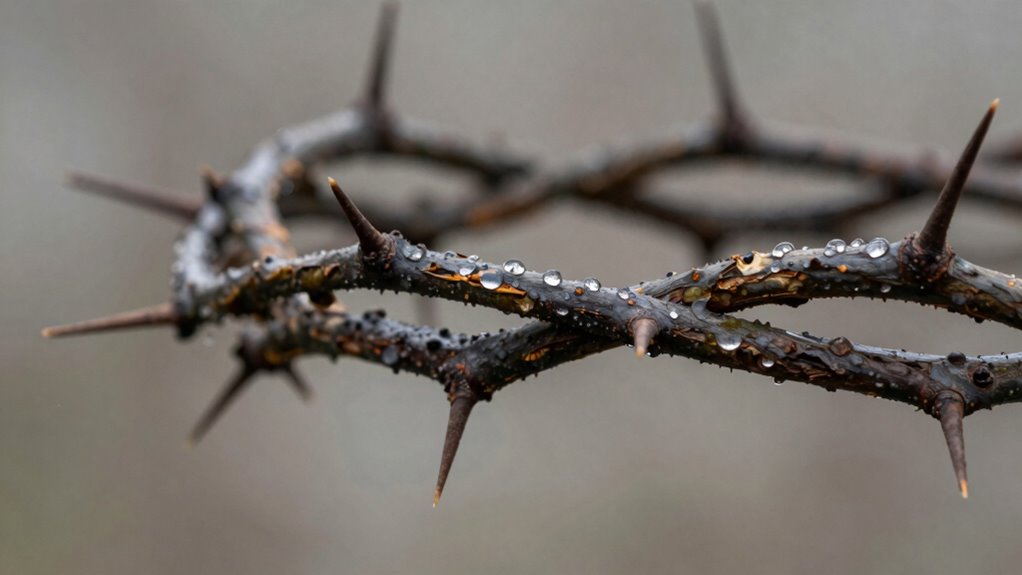
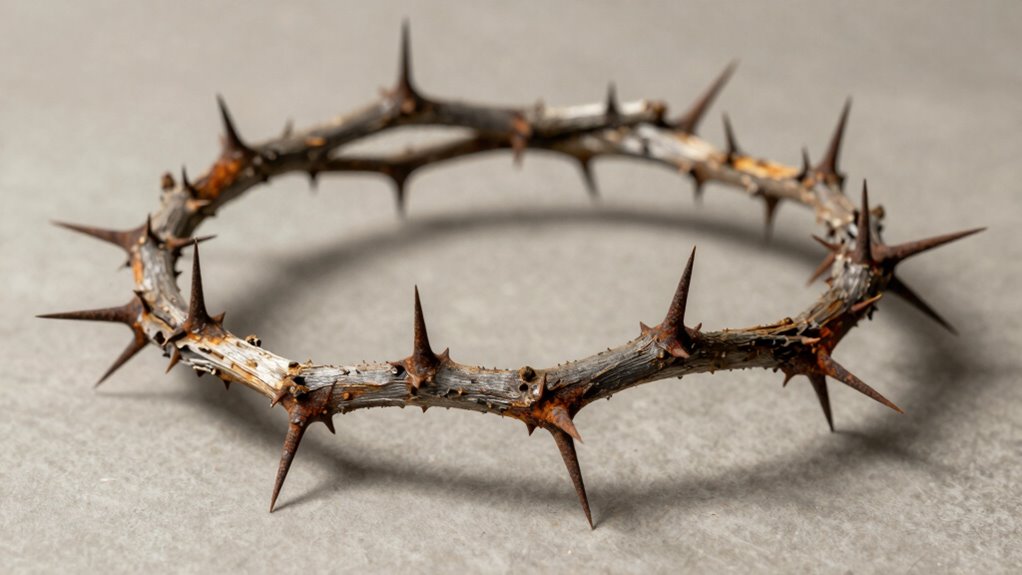
The Crown of Thorns is a powerful symbol with deep religious and cultural significance, often representing suffering, sacrifice, and humility. When you see this crown, you’re reminded of its profound connection to the story of Jesus Christ’s crucifixion, where it was placed on his head as a mockery of kingship. Yet, over time, it has also come to embody a broader understanding of royal symbolism—one that highlights the burdens and sacrifices that come with leadership and authority. Unlike a regal crown adorned with jewels, the Crown of Thorns signals the pain that often accompanies greatness and the humility required to bear it.
The Crown of Thorns symbolizes suffering, sacrifice, and humility in leadership and spiritual strength.
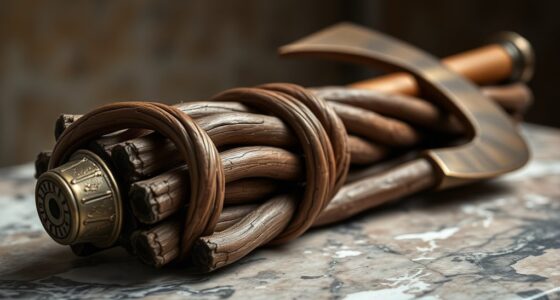
You can interpret the crown as a visual metaphor for pain and sacrifice. It isn’t just a symbol of physical suffering but also a reflection of emotional and spiritual hardship. When you think about the prickly thorns digging into the forehead, it’s easy to imagine the intense discomfort endured by those who face hardship willingly, often for a higher purpose. The crown’s painful nature underscores the idea that true sacrifice involves enduring suffering, sometimes silently and without complaint, to serve a greater good. The crown of thorns also reminds you that symbolic representations can carry profound meanings beyond their immediate appearance, influencing how you view resilience and humility. Recognizing how symbols like this can serve as visual metaphors helps deepen your understanding of their power and significance.
In a cultural context, the Crown of Thorns challenges notions of power and authority. It strips away the idea that leadership is about comfort or privilege, instead emphasizing the responsibilities and sacrifices that come with being a figure of influence. When you view this symbol, it encourages you to reflect on the cost of greatness—how true leadership often involves suffering and the willingness to endure hardship for the benefit of others. This understanding aligns with the religious symbolism of sacrifice and humility that the crown represents. Understanding the symbolic significance behind the crown can deepen your appreciation for moral strength and integrity in leadership. The crown’s pain becomes a sign of strength, humility, and unwavering dedication, qualities that define true royalty in a spiritual or moral sense.
Ultimately, the Crown of Thorns compels you to contemplate the deeper meanings of sacrifice and humility. It’s more than just a symbol of suffering; it’s a reminder that greatness is often intertwined with pain and that true leadership involves bearing burdens quietly and with dignity. Whether viewed through a religious lens or as a universal message, this symbol invites you to recognize that sacrifice is a crucial part of growth, and humility is a key virtue in facing life’s challenges. The Crown of Thorns embodies the idea that true nobility lies not in comfort, but in the strength to endure and serve despite hardship.

Thalireth Crown of Thorns Cross Necklace Religious Christian Gothic Cross Pendant Necklace First Communion Baptism Goth Jewelry Gifts for Men Women Christmas New Year Gift
Necklace for men:This men’s cross necklace is made of high-quality alloy, durable and hypoallergenic with a long-lasting finish….
As an affiliate, we earn on qualifying purchases.
As an affiliate, we earn on qualifying purchases.
Frequently Asked Questions
What Materials Are Traditionally Used to Make a Crown of Thorns?
You’ll find that a crown of thorns is traditionally made from thorny branches, often from plants like the Jerusalem thorn or similar, chosen for their sharp, resilient qualities. In medieval relics, these materials symbolize suffering and sacrifice, connecting to botanical symbolism of pain and endurance. The thorns evoke the suffering of Christ, emphasizing spiritual resilience and the profound symbolism of sacrifice embedded in religious art.
How Has the Symbolism of the Crown of Thorns Evolved Over Time?
You see the crown of thorns as more than just a symbol; it’s a raw, emotional reminder of sacrifice and suffering. Over time, its sacred symbolism has deepened, representing resilience amid hardship. Its historical significance has transformed from a brutal instrument of humiliation to a powerful emblem of faith and redemption. As you reflect on it, the crown’s evolution touches your soul, urging you to find strength in life’s struggles.
Are There Cultural Differences in the Interpretation of the Crown of Thorns?
You’ll find that cultural differences influence how the crown of thorns is interpreted, especially in art. In medieval Christian symbolism, it represents suffering and sacrifice, but other cultures may see it as a symbol of martyrdom or resilience. These varying interpretations shape how artists depict it, emphasizing different themes based on cultural values. So, understanding these differences helps you appreciate the rich, diverse meanings behind this powerful symbol.
What Are Common Artistic Depictions of the Crown of Thorns?
In artistic depictions, you see the crown of thorns often portrayed as a jagged, rough circle atop Christ’s head, emphasizing suffering. Medieval religious art highlights its painful symbolism, while contemporary spiritual works may interpret it more abstractly, representing sacrifice and redemption. Artists use stark contrasts and vivid imagery to evoke emotion, making the crown a powerful symbol of sacrifice, pain, and spiritual endurance across different eras and styles.
How Does the Crown of Thorns Relate to Modern Spiritual Practices?
Like a lighthouse guiding ships, the crown of thorns illuminates your spiritual path today. You might use it as a symbol in meditative practices, helping you focus on suffering and redemption. In healing rituals, it reminds you of resilience through pain and sacrifice. Its powerful imagery encourages reflection on personal growth and compassion, making it a meaningful tool in modern spiritual practices to foster inner strength and empathy.

EUEAVAN Orthodox Cross Necklace for Women IC XC NIKA Jesus Christ Medallion Pendant Greek Byzantine Cross Necklace Eastern Religious Jewelry Christian Catholic Gift
Orthodox Cross Necklace – In God We Trust , May the God be with you.Celebrate your faith with…
As an affiliate, we earn on qualifying purchases.
As an affiliate, we earn on qualifying purchases.
Conclusion
You might think the Crown of Thorns is just a painful accessory, but it’s so much more. It symbolizes sacrifice, suffering, and redemption—reminding you of the depth of love and resilience. It’s easy to see it as just a symbol of pain, but it’s also a powerful emblem of hope and strength in adversity. Embracing its meaning helps you understand that even in suffering, there’s a path toward growth and renewal.

Empath Protection Bracelet Healing Energy Crystals Bracelets for Women, Healing Spiritual Crystal Bracelets Anxiety Relief Bracelet Emotional Gifts Hope Bracelets for Women Jewelry Gift
【Protection Bracelet】This dainty empath protection bracelet contains 5 nature healing stone: Moonstone,Labradorite, Hematite,Smoky Quartz,Black Tourmaline,When you wear this…
As an affiliate, we earn on qualifying purchases.
As an affiliate, we earn on qualifying purchases.

Shirdi Sai Baba Sairam Yantra Kavach Pendant – Foster Humility, Patience, And Inner Peace, Faith in Higher Powers
Properties and Benefits: This pendant represents devotion to Shirdi Sai Baba, an iconic figure in Indian spirituality. Wearing…
As an affiliate, we earn on qualifying purchases.
As an affiliate, we earn on qualifying purchases.