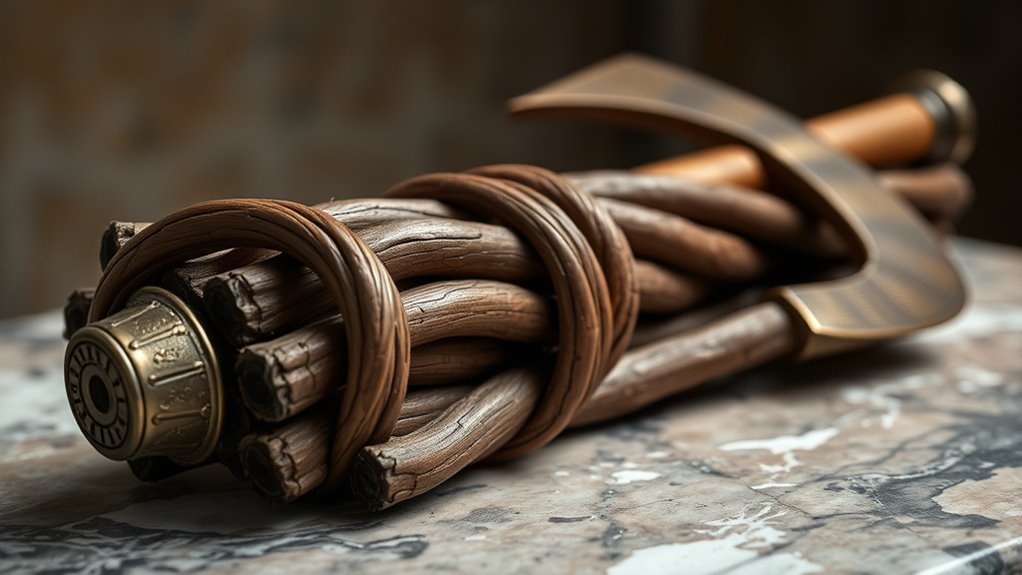

The fasces, once a Roman symbol of authority, unity, and civic virtue, has transformed over centuries to reflect changing political ideals. During the Renaissance, it symbolized republicanism and strength, but in the 20th century, it was adopted by fascist regimes, linking it to authoritarian power and oppression. Today, its meaning sparks debate due to its complex history and modern associations. To understand how this symbol evolved and what it represents now, explore the fascinating history behind it.
Key Takeaways
- The fasces originated as a Roman symbol of authority, unity, and civic virtue representing strength and discipline.
- Its meaning evolved during the Renaissance and Enlightenment, emphasizing republican ideals over imperial power.
- In the 20th century, fascist regimes adopted the fasces to symbolize authoritarian strength and totalitarian rule.
- Today, the fasces is controversial, associated both with Roman heritage and oppressive political regimes.
- Its shifting symbolism highlights how historical context shapes the perception of political icons over time.
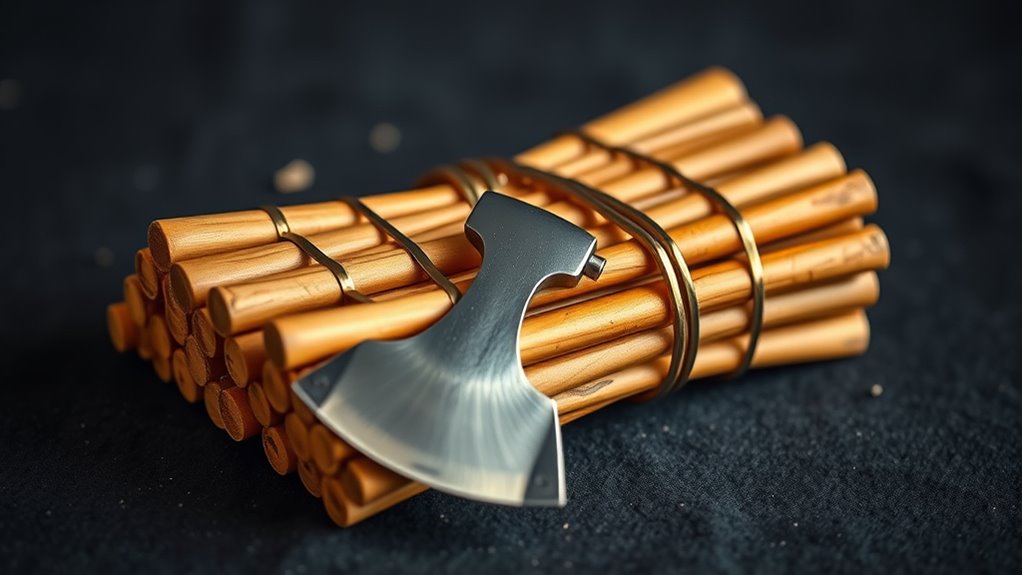
Have you ever wondered how a symbol from ancient Rome has come to spark modern debates? The fasces, a bundle of rods bound around an axe, originated as a Roman emblem representing authority, unity, and power. Over centuries, its symbolism has evolved, carrying different political significance depending on the context. Originally, the fasces embodied the strength of collective Roman authority—an image of discipline, order, and the unity of the state. As the symbol traveled through history, its meanings shifted, influenced by the changing political landscape. During the Renaissance and Enlightenment, the fasces became a symbol of republicanism and civic virtue, emphasizing the importance of unity and strength in governance. Its symbolism evolution reflected a *changeover* from imperial power to ideals of liberty and collective strength, used by various political movements across Europe.
In the 20th century, the fasces took on a more complex and controversial role. It became associated with fascist regimes, most notably Mussolini’s Italy, where it was adopted as a symbol of authoritarian strength and unity under state control. This political significance transformed the fasces from a symbol of civic virtue into one linked with dictatorial power and suppression. When you see the fasces in modern times, especially on government buildings or flags, it often sparks debate because of this history. Many recognize its origins in Roman authority and see it as a symbol of order and discipline; others associate it with oppressive regimes and totalitarianism. This *duality* underscores how symbols can be reinterpreted over time, depending on the context and the prevailing political sentiments. Understanding its symbolic evolution helps clarify why it remains a powerful and contested emblem today.
Today, the fasces remains a potent emblem, but its meaning isn’t fixed. Its symbolism evolution allows it to serve as a reminder of both the virtues and the dangers of centralized power. When you encounter it in modern symbols or architecture, it prompts questions about authority, unity, and the importance of understanding history’s influence on contemporary iconography. Its political significance continues to be debated, especially as societies grapple with the legacy of past regimes and what symbols should represent moving forward. The fasces exemplifies how a symbol can undergo transformation—shifting from a sign of Roman civic strength to a contentious emblem loaded with historical baggage. Recognizing this transformation helps you appreciate the nuanced ways symbols shape, reflect, and challenge political narratives throughout history.
Top picks for "fasc roman authority"
Open Amazon search results for this keyword.
As an affiliate, we earn on qualifying purchases.
Frequently Asked Questions
How Did the Fasces Symbolize Authority in Ancient Rome?
You see that the fasces symbolize authority in ancient Rome through Roman symbolism, representing power and unity. The bundle of rods with an axe embodies imperial authority, showing strength through collective force. When you observe the fasces, you recognize how Romans used this emblem to convey the authority of magistrates and rulers, emphasizing their right to enforce laws and maintain order, making it a potent symbol of Roman imperial power.
What Are the Variations of Fasces in Different Cultures?
Think of the fasces as a symbol that travels like a story across cultures. You’ll see cultural adaptations where nations incorporate the fasces’ elements, such as in Italy’s Fascist emblem or in symbols representing strength and unity elsewhere. These symbolic variations reflect different values and histories, showing how a single motif can evolve uniquely, echoing the way stories change as they pass through diverse societies.
How Has the Fasces Been Used in Modern Political Imagery?
You see the fasces used in modern political propaganda and art to symbolize authority and unity. Politicians and artists incorporate it to evoke strength or to connect with historical power. Sometimes, it appears in posters or sculptures, reminding viewers of authority’s legacy. Yet, its use can also spark controversy, as it’s linked to oppressive regimes. You notice how its meaning shifts depending on context, making it a potent, complex symbol today.
What Is the Significance of the Axe in the Fasces?
Think of the axe in the fasces as the lightning bolt in a storm—powerful and commanding. Its symbolic representation signifies authority and strength, highlighting the state’s readiness to enforce laws. The ceremonial significance emphasizes unity and justice, reminding us of the state’s protective role. The axe’s presence underscores the potential for decisive action, making it a potent emblem of sovereignty and the force behind governance.
Are Fasces Still Used as Official Symbols Today?
You might notice fasces appearing in modern governmental emblems, but their use is often controversial due to fascist symbolism. Many countries have adopted the fasces as a symbol of authority and unity, yet its association with fascist regimes causes debate. While it’s still used in some official contexts, you should be aware of its complex history and the differing opinions on whether it’s appropriate in today’s symbols of power.
Conclusion
So, now that you understand the fasces’ journey from ancient Rome to modern times, it’s clear how symbols hold powerful meanings that can change over centuries. Do you realize how a simple bundle of rods can represent authority, unity, and even controversy? As you see these symbols today, remember their complex history and the questions they raise. Isn’t it fascinating how symbols can evolve, yet still carry the weight of their past?