The Labrys, an ancient double-headed axe, is a powerful symbol from Minoan civilization, representing divine authority, spiritual transformation, and duality like life and death. It was more than just a weapon; it held religious and cultural significance, often seen in art and rituals. Its imagery highlights themes of power, sacred connections, and leadership. To understand its rich history and deeper meanings, explore how this ancient symbol continues to influence cultures today.
Key Takeaways
- The labrys is a double-headed axe originating from Minoan Crete, symbolizing divine authority and sacred power.
- Its double blades represent duality, such as life and death or earth and sky, emphasizing spiritual transformation.
- Widely depicted in Minoan art and rituals, the labrys held religious and ceremonial significance beyond its practical use.
- The symbol influenced later cultures, representing authority, protection, and divine connection across civilizations.
- Today, the labrys remains a potent emblem of spiritual insight, sovereignty, and cultural legacy.
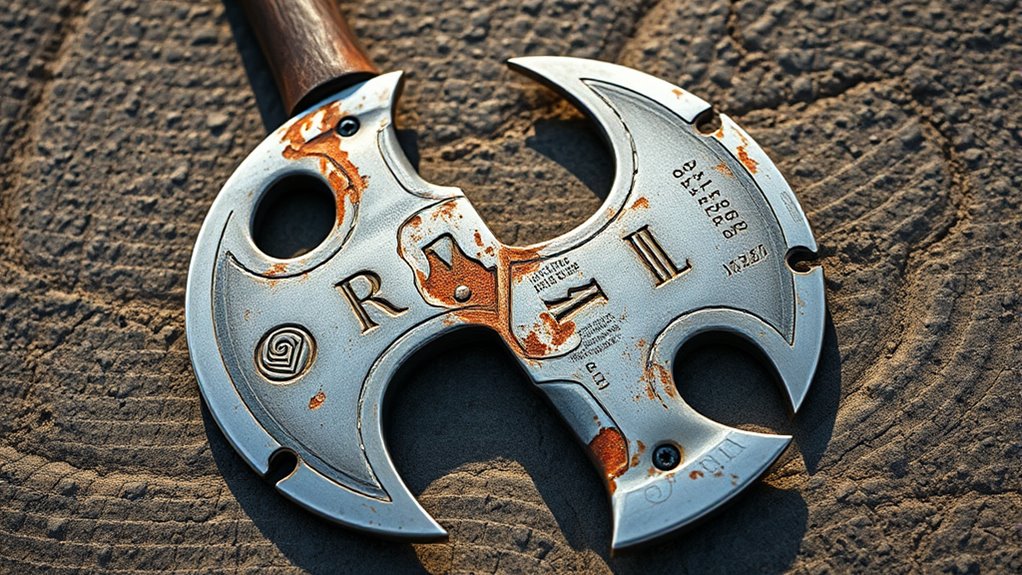
The labrys, an ancient double-headed axe, holds a powerful symbolic history that dates back thousands of years. If you explore its origins, you’ll discover that it’s closely linked to the Minoan civilization, which thrived on the island of Crete during the Bronze Age. The Minoans revered the labrys as more than a weapon; it served as a potent symbol with deep cultural and religious significance. To understand its importance, you need to realize that for the Minoans, the labrys represented divine authority, strength, and the sacred connection between humans and the gods. It was often associated with ritual practices, especially those involving initiation and fertility rites, making it a central element in their spiritual life.
The labrys symbolizes divine authority, spiritual connection, and sacred rituals in Minoan culture.
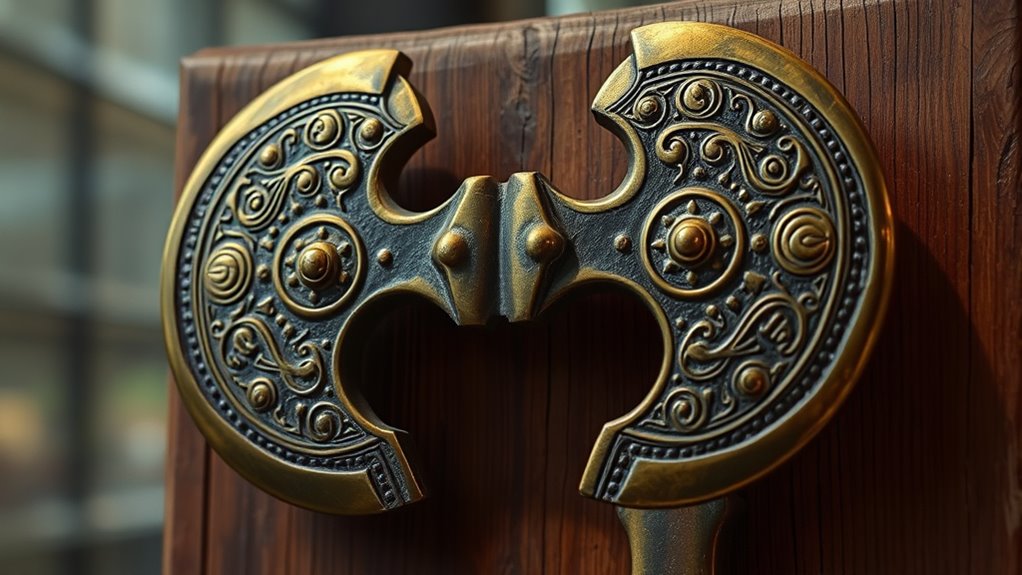
As you investigate further, you’ll see that the symbolic meanings of the labrys extend beyond its practical use as an axe. In Minoan art and architecture, the labrys appears frequently, often depicted in frescoes and carvings. Its double-headed design is thought to symbolize duality — such as life and death, earth and sky, or the material and spiritual worlds. This duality indicates that the labrys was viewed as a tool for spiritual transformation, perhaps used in ceremonies to connect humans with divine forces or to mark significant transitions. Its prominent display in Minoan religious contexts suggests that it was seen as a sacred emblem, embodying the power of the gods and the authority of priest-kings or priestesses.
You might also notice that the labrys’s symbolic meanings persisted beyond Minoan culture, influencing later civilizations in the Aegean and beyond. Its image often appears in archaeological finds and artifacts, underscoring its lasting significance. The double-headed axe became a universal symbol of authority, protection, and divine power, often associated with leadership and ritual authority. When you study its symbolism, you see that it’s not just about the physical object but about what it represented to those ancient peoples — a conduit to the divine realm, a symbol of sovereignty, and a reminder of the sacred duties carried out by religious figures.
In essence, the labrys’s symbolic meanings are rooted in its cultural context, especially within the Minoan civilization. It embodies complex ideas about power, spirituality, and the connection between humans and the divine. Today, the labrys remains a potent symbol, reminding us of its ancient origins and the profound cultural significance it held for early civilizations. Its enduring legacy speaks to the universal human fascination with symbols that represent authority, spiritual insight, and the mysteries of life.

Double Axe ancient Greek bronze labrys reproduction miniature sculpture
Ancient Greek double axe or Labrys is the term for a symmetrical doubleheaded axe originally from ancient Crete…
As an affiliate, we earn on qualifying purchases.
As an affiliate, we earn on qualifying purchases.
Frequently Asked Questions
What Is the Origin of the Labrys in Different Cultures?
You’ll find the labrys originated in the Minoan civilization, where it symbolized power and religion. In Greek symbolism, it often represented authority and the goddess’s strength. Cultures across the ancient Aegean adopted it, associating it with divine or royal significance. The double-headed axe’s design and meaning evolved, but its core symbolism of protection, fertility, and spiritual authority remained consistent across these diverse societies.
Are There Modern Uses or Symbols Derived From the Labrys?
You’ll find that the labrys is now a powerful modern feminist symbol and LGBTQ+ pride emblem. Notably, over 60% of contemporary feminist movements adopt the labrys to represent strength and empowerment. It’s often seen in pride parades and activist artwork, highlighting its enduring significance. This symbol continues to inspire and unify communities fighting for equality, making it a meaningful icon in contemporary social and political movements.
How Was the Labrys Used in Ancient Rituals?
You see, in ancient rituals, the labrys held great ceremonial significance, symbolizing power and divine authority. During ritual practices, you’d observe it used in ceremonies dedicated to gods or goddesses, often as a sacred emblem or offering. Priests or priestesses wielded the double-headed axe to invoke protection, fertility, or spiritual strength, making it a essential part of their ceremonial traditions and spiritual symbolism in ancient cultures.
What Materials Were Traditionally Used to Make Labrys Axes?
You’re in for a treat—materials for labrys axes vary, but they often involved metal forging to create sturdy ceremonial artifacts. Usually, bronze or copper was used, sometimes combined with precious materials like gold or silver for special pieces. These axes were carefully crafted, symbolizing power and ritual importance. The craftsmanship was meticulous, ensuring each piece was both functional and sacred, embodying the spiritual essence of the ancient cultures that valued them.
Is the Labrys Associated With Any Specific Deities or Mythologies?
You’ll find that the labrys is closely linked to goddess worship and mythological symbolism. It’s often associated with Minoan and Greek goddesses like Hera and Artemis, representing female power, fertility, and protection. In myths, the double-headed axe symbolizes duality, strength, and divine authority. When you see the labrys, it’s a powerful emblem of feminine divinity and spiritual significance rooted in ancient mythologies.

Phaistos Disc Museum Replica 1700 B.C. – Handmade Ceramic Minoan Palace Artifact, Hand-Painted in Greece
Authentic Minoan Replica Faithful reproduction of the famous Phaistos Disc from Southern Crete, dating to around 1700 B.C.,…
As an affiliate, we earn on qualifying purchases.
As an affiliate, we earn on qualifying purchases.
Conclusion
As you reflect on the labrys, it’s fascinating how a simple double-headed axe can symbolize both power and peace, chaos and order. Just like its dual blades, it embodies contrasts that shape human history—war and worship, destruction and devotion. In embracing its complexity, you see how ancient symbols still resonate today, reminding you that beneath every sharp edge lies a story of balance, where strength and harmony coexist in the echoes of time.

25 Pcs Alloy Double-Headed Axe Pendants, Viking Or Medieval Style Charms
Viking And Medieval Theme: A set of 25 charms shaped like a powerful double-headed battle axe, perfect for…
As an affiliate, we earn on qualifying purchases.
As an affiliate, we earn on qualifying purchases.

SHINY CRAFTS® Handcrafted Decorative Viking Axe with Leather-Wrapped Handle & Sheath – Engraved Blade – Ceremonial Collectible Gift for Men, Warriors, History Buffs, Cosplay & Display (VBA-06)
– ⚔️ Artisan Engraved Blade – Features intricate engravings on the axe head, showcasing traditional craftsmanship ideal for…
As an affiliate, we earn on qualifying purchases.
As an affiliate, we earn on qualifying purchases.