
The Native American Medicine Wheel symbolizes interconnectedness, balance, and life’s natural cycles across physical, emotional, mental, and spiritual domains. It’s more than a simple circle; it’s a sacred tool used in ceremonies, healing, and teaching, connecting you to nature, ancestors, and spiritual forces. By understanding its quadrants and directions, you can embrace ongoing growth and harmony. Continuing your exploration will reveal the deeper spiritual significance and how this powerful symbol guides personal and community well-being.
Key Takeaways
- The Medicine Wheel symbolizes interconnectedness, balance, and cycles of nature, guiding spiritual, emotional, mental, and physical well-being.
- It is used in ceremonies and healing practices to foster harmony within individuals and with the universe.
- The four quadrants represent directions, qualities, seasons, and life aspects, emphasizing holistic health.
- It connects communities to cultural heritage, spiritual principles, and natural cycles, promoting respect and balance.
- The Medicine Wheel serves as a visual reminder of ongoing personal growth and the importance of maintaining harmony in life.
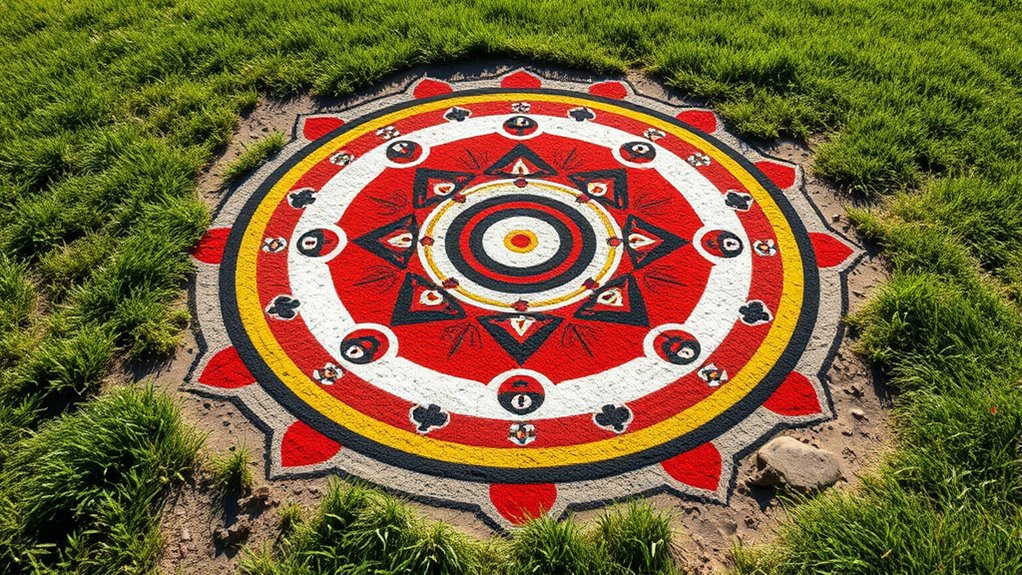
Have you ever wondered how Native American cultures view balance and harmony in life? Many believe that maintaining this harmony is essential for both personal well-being and spiritual growth. The Medicine Wheel is a powerful symbol that embodies this understanding, representing the interconnectedness of all aspects of life. It’s more than just a circle; it’s a tool for spiritual healing and a reflection of the cultural significance placed on balance. When you look at the Medicine Wheel, you’re seeing a visual reminder of the natural order, the cycles of nature, and the ways in which different elements come together to create wholeness. The wheel’s four quadrants often correspond to directions—north, south, east, and west—each associated with specific qualities, seasons, and aspects of life, such as physical, emotional, mental, and spiritual health. This structure encourages you to contemplate the harmony between these elements and to seek balance in your life.
In Native American traditions, the Medicine Wheel holds profound cultural significance. It’s used in ceremonies, teachings, and healing practices that emphasize spiritual healing. When you participate in a Medicine Wheel ceremony, you’re engaging in a sacred process that helps realign your spirit, foster inner peace, and restore harmony within yourself and with the universe. The wheel’s symbolism underscores that healing isn’t just physical but also emotional and spiritual, requiring attention to every facet of your being. Many tribes see the Medicine Wheel as a sacred map—an ancient guide that connects individuals to the natural world, ancestors, and spiritual forces. It reminds you that healing and growth are ongoing journeys, rooted in respecting nature’s cycles and your place within them.
The cultural significance of the Medicine Wheel extends beyond individual healing. It’s a symbol of community, tradition, and shared knowledge. When you learn about its meaning and use, you connect with a rich cultural heritage that emphasizes respect, balance, and harmony. It teaches that life is a continuous cycle of change and that embracing this flow is key to spiritual well-being. By understanding the deeper symbolism of the Medicine Wheel, you gain insight into how Native American cultures view the importance of maintaining harmony within yourself and with the world around you. It’s a reminder that true health involves nurturing all aspects of your being, guided by spiritual principles rooted in centuries of tradition.
Top picks for "native american medicine"
Open Amazon search results for this keyword.
As an affiliate, we earn on qualifying purchases.
Frequently Asked Questions
How Does the Medicine Wheel Vary Among Different Tribes?
You’ll notice that tribal variations and regional symbolism shape how each tribe uses the medicine wheel. Different tribes adapt its design, colors, and meanings to reflect their unique spiritual beliefs and environments. While the core concept remains the same—connecting the cycle of life—you’ll see differences in how tribes interpret directions, elements, and lessons, making the medicine wheel a diverse and meaningful symbol across Native American cultures.
Can the Medicine Wheel Be Used for Modern Therapy?
Yes, you can use the medicine wheel for modern therapy. It serves as a powerful tool for healing practices and personal growth, helping you explore balance in your physical, emotional, mental, and spiritual aspects. By reflecting on its symbolism, you gain insights into your well-being, foster self-awareness, and promote holistic healing. Incorporating the wheel into your journey can deepen your understanding of yourself and support your ongoing development.
What Materials Are Traditionally Used to Create Medicine Wheels?
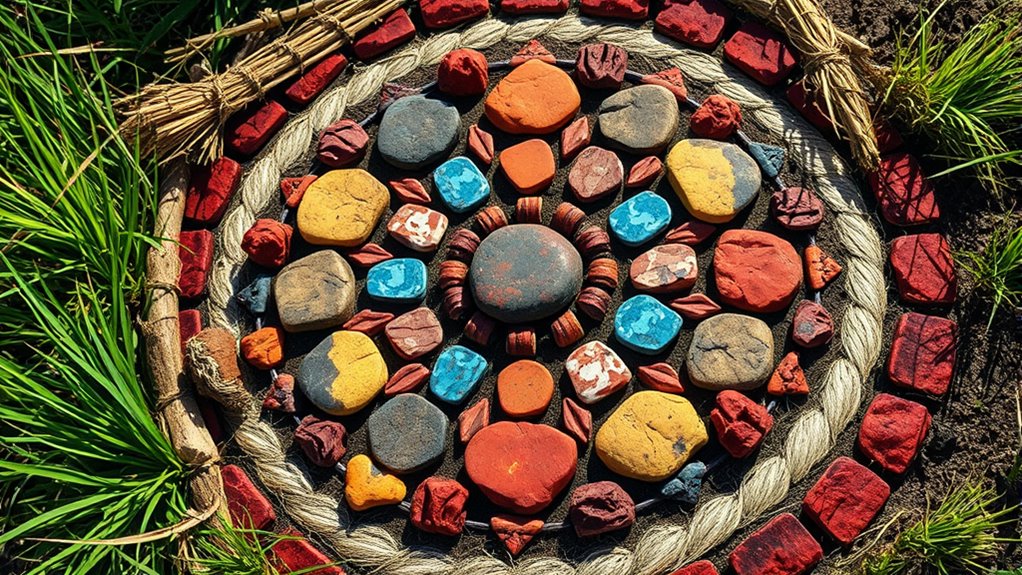
Like the sacred stones of ancient temples, traditional materials for creating medicine wheels include sacred stones, shells, and natural elements. You often find these elements carefully arranged in a circular pattern, representing harmony and balance. These materials hold spiritual significance, connecting you to the earth and ancestors. Using natural, locally sourced items, you honor tradition while creating a meaningful, sacred space that reflects the spiritual teachings of the Medicine Wheel.
Are There Specific Rituals Associated With the Medicine Wheel?
Yes, there are specific rituals associated with the medicine wheel. You participate in sacred rituals and spiritual ceremonies that honor the wheel’s symbolism, often involving prayer, offerings, and meditation. These ceremonies may vary among tribes but generally aim to connect you with nature, spiritual guides, and the universe. Engaging in these rituals helps you align with the wheel’s teachings, fostering healing, balance, and spiritual growth.
How Is the Medicine Wheel Incorporated Into Contemporary Ceremonies?
You incorporate the medicine wheel into contemporary ceremonies by using it as a focal point for spiritual healing and community gatherings. Participants often stand around the wheel, engaging in prayers, drumming, and storytelling that honor its symbolism. The wheel helps foster unity, reflection, and renewal, allowing individuals and communities to connect with their traditions and spiritual energies while promoting healing and harmony during these modern ceremonies.
Conclusion
As you reflect on the Native American Medicine Wheel, you see it as both a symbol of unity and a guide for personal growth. Its circular design reminds you that life is continuous, yet each direction offers unique lessons. In embracing its symbolism, you find balance amid chaos, connection amid diversity. Like the wheel itself, your journey is ongoing—bringing clarity through ancient wisdom while propelling you forward into new understanding.