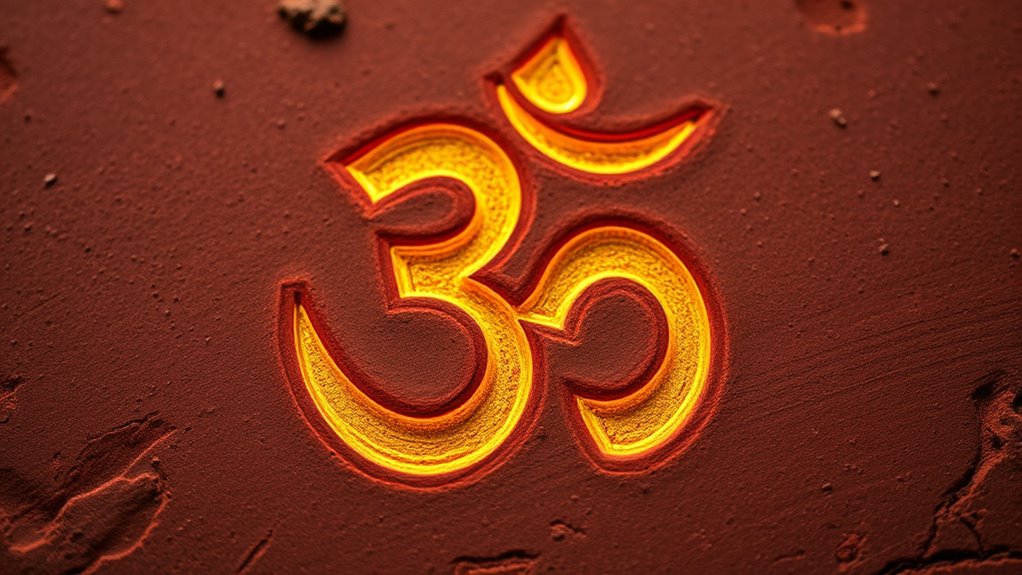
The Aum or Om symbol is a sacred sound and visual representation at the heart of Hinduism. It embodies the essence of the universe and connects you to universal consciousness through chanting and symbols. Its variations reflect different states of awareness and spiritual truths. By understanding its significance, you can explore how this powerful sound acts as a gateway to cosmic mysteries. If you look further, you’ll discover how Om reinforces spiritual harmony and inner peace.
Key Takeaways
- Om symbolizes the universal consciousness and the essence of all existence in Hinduism.
- Its visual form varies, often representing waking, dreaming, and deep sleep states.
- Chanting Om aligns practitioners with the fundamental vibration of the universe, fostering spiritual growth.
- Om serves as a gateway to cosmic mysteries and interconnectedness within Hindu spiritual practice.
- The symbol appears in temples, jewelry, and meditation tools, reinforcing its sacred significance.
Have you ever wondered what the symbol Aum or Om truly represents in Hinduism? It’s more than just a visual mark; it’s a powerful sound and symbol that embodies the essence of the universe. When you hear or chant Om, you connect with the core of existence, the universal consciousness that underpins everything. This sound holds deep mantra significance in Hindu spiritual practices, serving as a sacred vibration that aligns your mind, body, and spirit. It’s believed to be the primal sound from which all creation originated, symbolizing the unity of the physical and spiritual spheres. By reciting Om, you’re not only invoking divine energy but also tuning into the cosmic rhythm that sustains life itself.
Om embodies the universe’s essence, connecting you to divine energy and cosmic harmony through sacred sound and symbol.
The symbol variations of Om are as diverse as the traditions within Hinduism. You’ll notice that it appears in different scripts and artistic styles, each with subtle nuances that reflect specific spiritual meanings. For instance, in some representations, the curves and dots of the Om symbol symbolize different states of consciousness—waking, dreaming, and deep sleep—highlighting its role as a thorough representation of human experience. Other variations emphasize the sound’s vibrational quality, illustrating how Om encompasses the entire spectrum of existence. These symbol variations are more than mere artistic expressions; they serve as visual reminders of the profound spiritual truths that Om embodies. When you see these different forms, you’re witnessing a visual language that communicates the depth of Hindu philosophy and the significance of this sacred sound.
Understanding the mantra significance of Om can deepen your spiritual practice. Chanting Om isn’t just about repetition; it’s about resonating with the universe’s fundamental vibration. As you vocalize it, you create a sacred space within yourself, fostering inner peace and clarity. Many practitioners believe that regular recitation can lead to spiritual awakening, mental stability, and a sense of connection to the divine. The symbol variations of Om serve as tangible representations of these principles, helping you focus your mind and elevate your consciousness. Whether inscribed on temples, meditation mats, or jewelry, the Om symbol acts as a constant reminder of the sacred sound’s profound importance.
In essence, Om is more than a symbol or a sound; it’s a gateway into understanding the universe’s deepest mysteries. Its mantra significance and the variations in its form invite you to explore the interconnectedness of all things and to find harmony within yourself. When you incorporate Om into your spiritual journey, you participate in a timeless tradition rooted in the very fabric of Hindu belief, connecting you to the infinite source of creation.
Top picks for "symbol sacr sound"
Open Amazon search results for this keyword.
As an affiliate, we earn on qualifying purchases.
Frequently Asked Questions
What Is the Historical Origin of the Aum Symbol?
You might find that the Aum symbol’s origin traces back to ancient India, where it emerged as a sacred mantra in early Vedic texts. Its evolution reflects a deep spiritual significance, symbolizing the universe and consciousness. Over time, the symbol evolved from simple chant into a visual representation of divine energy, embodying the essence of mantra origins and spiritual symbolism in Hindu traditions.
How Is the Aum Symbol Used in Daily Hindu Rituals?
You use the Aum symbol in daily Hindu rituals by chanting mantras that include this sacred sound, helping you connect spiritually. You might see it displayed prominently in temple decorations, serving as a reminder of the divine. During prayers and meditation, you often focus on the Aum to center yourself and invoke spiritual energy, making it an integral part of your spiritual practice and daily devotion.
Are There Different Variations of the Aum Symbol Across Regions?
Think of the Aum symbol as a chameleon, changing colors across regions. You’ll notice regional stylistic differences, like variations in strokes or embellishments, reflecting local artistic traditions. Cultural adaptations also influence its appearance, blending unique cultural symbols into the design. These variations help you see how different communities honor the sacred sound, making each Aum symbol a personal, regional masterpiece that connects spirituality with local identity.
What Is the Significance of the Aum Sound in Meditation Practices?
You use the Aum sound in meditation to deepen your practice and facilitate spiritual awakening. As a powerful mantra, it helps quiet your mind and connect you with the universe’s energy. During mantra meditation, chanting Aum creates vibrations that align your mind and body, fostering a sense of calm and spiritual growth. Its significance lies in awakening your inner consciousness and fostering a profound sense of unity with the divine.
Can the Aum Symbol Be Found Outside Hinduism?
Like a universal whisper, the Aum symbol extends beyond Hinduism, embodying interfaith symbolism and cultural adaptations worldwide. You might see it in yoga studios, Buddhist temples, or even on jewelry, reflecting its broad spiritual appeal. Its presence signifies a shared quest for harmony and inner peace, transcending religious boundaries. This symbol’s versatility reminds you that sacred sounds and symbols often unite diverse traditions in a common human experience.
Conclusion
Remember, the Aum/Om symbol isn’t just a sound but a gateway to inner peace and spiritual awakening. As the saying goes, “Still waters run deep,” reminding you that true understanding comes from embracing the sacred silence within. By connecting with this powerful symbol, you honor your spiritual journey and find harmony amidst life’s chaos. Keep listening to that sacred sound, and let it guide you toward enlightenment and serenity.