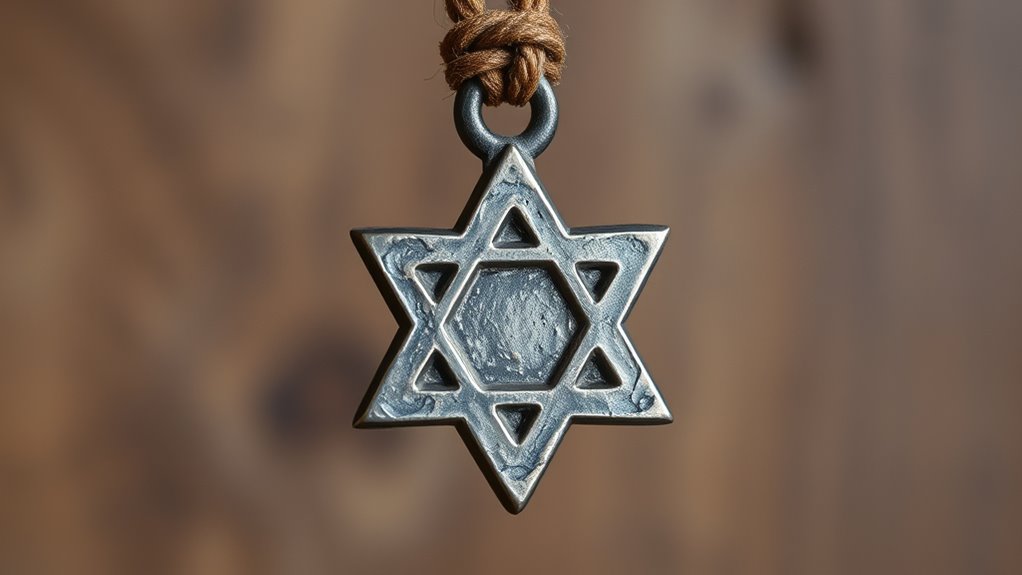

The Star of David is a powerful symbol of Jewish identity, representing a long history rooted in both religious and cultural traditions. It features two overlaid triangles forming a hexagram, symbolizing harmony between divine and human spheres, as well as unity and protection. Originally appearing as a decorative motif, it became an emblem of resilience and community during periods of persecution and Zionism. To discover how its meaning has evolved and its significance today, explore further.
Key Takeaways
- The Star of David is a geometric symbol formed by two overlapping triangles, representing the harmony of divine and human realms.
- It gained prominence in the 17th century as a badge of Jewish identity during periods of persecution.
- The symbol signifies unity, protection, faith, resilience, and the interconnectedness of opposing forces.
- Historically used as a decorative motif, it became a universal emblem of Jewish identity and nationalism in the 19th century.
- Today, it embodies Jewish cultural heritage, spiritual resilience, and continues to symbolize faith and collective identity worldwide.

The Star of David, a widely recognized symbol of Judaism, has a rich history rooted in both religious and cultural traditions. As you explore its interpretation and meaning, you discover that this six-pointed figure isn’t just a decorative emblem; it embodies profound spiritual and historical significance. Its geometric design, formed by overlaying two triangles, has been interpreted in various ways over centuries, from representing the harmony between divine and human domains to symbolizing the interplay of opposing forces like good and evil, or heaven and earth. Many see it as a visual representation of unity and protection, serving as a reminder of faith and resilience throughout Jewish history.
Historically, the significance of the Star of David has evolved. While it was used as a decorative motif in medieval Jewish communities, it didn’t initially serve as a definitive religious symbol. It gained prominence in the 17th century, particularly as a badge of identity during times of persecution, reinforcing communal bonds and spiritual resilience. Its adoption into Jewish culture became more widespread by the 19th century, especially as communities sought symbols that could represent their collective identity amidst adversity. During this period, the Star of David also gained political importance, becoming a symbol of Jewish nationalism and unity, especially with the rise of Zionism in the late 1800s. Today, it’s emblazoned on synagogues, flags, and jewelry, serving as a universal emblem of Jewish identity.
You might also note that the Star of David’s historical significance extends beyond religious contexts. It’s become a powerful cultural symbol that unites Jews worldwide, regardless of their geographic or denominational differences. Its presence in modern times reminds you of the resilience and continuity of Jewish traditions through centuries of challenge and change. The symbol’s interpretation and meaning continue to evolve, but its core message remains rooted in faith, hope, and collective identity. Whether seen as a spiritual emblem or a cultural insignia, the Star of David holds a special place in history, symbolizing the enduring spirit of the Jewish people and their rich heritage. As you reflect on its origins, you gain a deeper appreciation for how symbols like this shape identity, foster community, and preserve history across generations.

VASSAGO Star of David Pendant Necklace Solomon Six-Pointed Star Talisman Stainless Steel Hexagram Jewish Israel Jewelry for Men (silver)
Unique Design: This Star of David with Cross Necklace beautifully merges two powerful symbols of faith, creating a…
As an affiliate, we earn on qualifying purchases.
As an affiliate, we earn on qualifying purchases.
Frequently Asked Questions
When Did the Star of David First Become Associated With Judaism?
You might not realize, but the Star of David became associated with Judaism during medieval origins, around the 12th to 17th centuries. Early symbolism linked the shape to Jewish communities, especially in mystical and religious contexts. Its use grew over time, eventually becoming a prominent symbol of Jewish identity and faith. This association solidified through historical events, making it a powerful emblem representing Judaism today.
Are There Different Variations of the Star of David Symbol?
You’ll find many variations of the Star of David, with over 300 geometric and artistic interpretations worldwide. These include different arrangements of overlapping triangles and unique artistic styles reflecting cultural influences. Some versions emphasize symmetry, while others incorporate additional symbols or colors. This diversity highlights how the symbol evolves across communities, allowing for personal and collective expressions of faith and identity through various artistic and geometric variations.
How Is the Star of David Used in Modern Jewish Practices?
You see the Star of David used in modern Jewish practices as a powerful symbol of cultural identity and religious heritage. During Jewish rituals, it often appears on menorahs, prayer books, and synagogue decorations, reminding you of your connection to tradition. Many wear jewelry featuring the star to express pride, and it’s prominently displayed during celebrations like Hanukkah and Bar/Bat Mitzvahs, reinforcing your bond to the Jewish community and its history.
What Are Some Common Misconceptions About the Star of David?
You might think the Star of David is just a Jewish emblem, but many myth misconceptions and symbolic misunderstandings cloud its true meaning. Some believe it’s an ancient symbol of Judaism, yet it only gained prominence in the Middle Ages. Others see it as a symbol of divine protection, but it actually represents the connection between God and humanity. Don’t believe everything you hear—clarity beats myths every time.
Does the Star of David Have Significance in Other Cultures or Religions?
You’ll find that the Star of David has significance beyond Judaism, serving as an interfaith symbol in some contexts. Its geometric shape and symbolism have been adapted culturally across various groups, sometimes representing protection or unity. While primarily associated with Jewish identity, you might see it incorporated into cultural adaptations or interfaith symbols, highlighting its broader influence and the shared themes of spirituality, protection, and connection across different religions and cultures.

Lavishe Rhodium Plated 925 Sterling Silver Hebrew Chai Jewish Necklace for Women Plain Finish, 18"
Chai Symbol: The silver hebrew chai charm necklace used as a good luck amulet since ancient times.
As an affiliate, we earn on qualifying purchases.
As an affiliate, we earn on qualifying purchases.
Conclusion
As you reflect on the Star of David, its ancient roots remind you of deep tradition, yet its modern symbolism sparks new understanding. Like a bridge connecting past and present, this emblem embodies faith and unity, standing firm amidst changing times. You see how history’s echoes shape today’s identity, making the Star of David more than just a symbol—it’s a powerful link between heritage and hope, guiding you through centuries of meaning in a single, shining star.

MANZHEN Gold Silver Jewish Star of David Bracelet Stainless Steel Dainty 14K Real Gold Plated Charm Bracelet for Women (silver)
Material: Stainless steel 100% won't make your wrist green, these 14k gold bracelets are made of high quality…
As an affiliate, we earn on qualifying purchases.
As an affiliate, we earn on qualifying purchases.

Star of David Rings for Men Round Signet Ring Adjustable Star of David Rings (Style A)
【Inspired Design】This striking ring showcases the powerful star of david at its center with carvings david's star on…
As an affiliate, we earn on qualifying purchases.
As an affiliate, we earn on qualifying purchases.