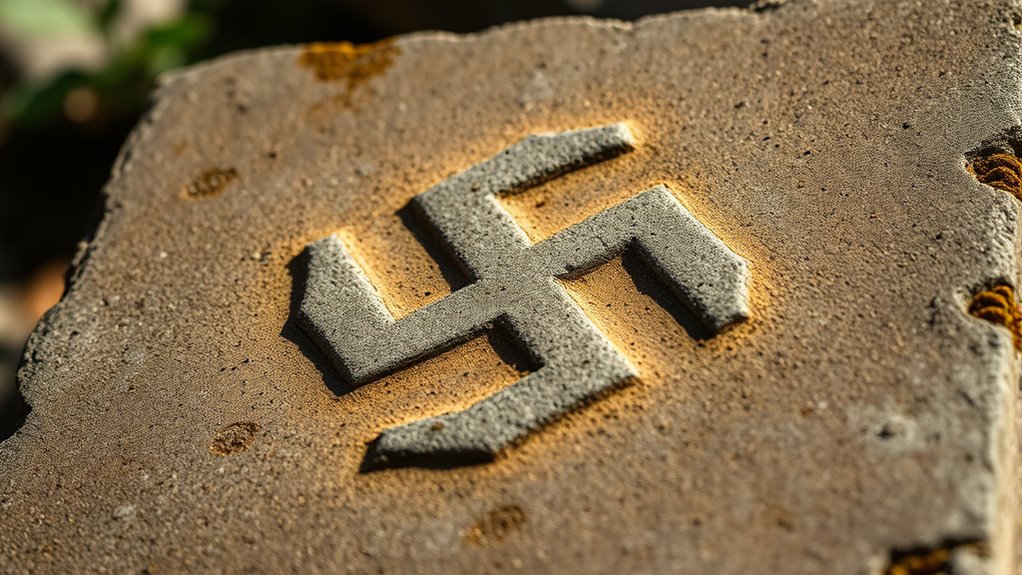

The swastika is an ancient symbol that has been around for over 3,000 years, symbolizing good fortune, prosperity, and spiritual power across many cultures like Hinduism, Jainism, and Buddhism. Its meaning varies depending on the context and culture, often representing harmony and eternity. Unfortunately, its positive associations were overshadowed in the 20th century when it was linked to hatred and oppression. If you continue exploring, you’ll discover how its history is even more complex and fascinating.
Key Takeaways
- The swastika is an ancient symbol representing good fortune, prosperity, and spiritual power in Hindu, Jain, and Buddhist cultures.
- Its meaning varies across cultures, symbolizing harmony and eternity in some, while being a sacred emblem in religious rituals.
- In the 20th century, it was appropriated by the Nazi Party, becoming associated with hatred, oppression, and atrocities in Western contexts.
- Despite its negative associations in the West, it remains a sacred and positive symbol in India and Southeast Asia.
- The swastika’s complex history reflects its multifaceted significance, emphasizing the importance of understanding cultural and historical contexts.

The swastika is an ancient symbol with a rich and complex history that spans thousands of years and diverse cultures. Its symbolic meanings have shifted dramatically over time, reflecting different cultural contexts and beliefs. To understand its significance, you need to recognize that the swastika has been a symbol of good fortune, prosperity, and spiritual power in many societies. In Hinduism, Jainism, and Buddhism, for example, it’s a sacred emblem representing auspiciousness and the cycle of life. These cultural variations show how the symbol was revered and integrated into religious rituals, architecture, and art, often symbolizing harmony and the eternal nature of the universe.
However, the symbol’s history isn’t solely positive. You might notice that in Western cultures, especially during the 20th century, the swastika’s meaning changed drastically. Its adoption by the Nazi Party in Germany transformed it into a symbol associated with hatred, intolerance, and oppression. This dark chapter in history overshadowed its earlier positive meanings for many people around the world. When you see the swastika in this context, it’s essential to understand that its connotations are heavily influenced by historical and cultural circumstances. The same symbol that once represented good luck can evoke feelings of fear and anger because of its association with atrocities committed during World War II.
Despite this, many cultures still recognize the swastika’s original symbolic meanings. In India and Southeast Asia, it remains a sacred sign, often woven into religious ceremonies and traditional art. Its cultural variations demonstrate that symbols are not static; they evolve with human history and societal values. As you explore the swastika’s history, keep in mind that its significance depends heavily on context. While it has been a positive emblem in some parts of the world, in others it carries a heavy load of historical trauma. Respecting these differences allows you to appreciate the symbol’s complexity without reducing it to a single, simplified meaning. Ultimately, understanding the swastika involves recognizing its multifaceted nature—how it’s been embraced, transformed, and misunderstood across different cultures and eras.
Frequently Asked Questions
How Has the Swastika’s Meaning Evolved Over Different Cultures?
You see, the swastika’s meaning has undergone cultural reinterpretations and symbolic transformations over time. Originally a symbol of good luck and spiritual significance in many ancient cultures, it was later misappropriated, especially in the 20th century, as a symbol of hate. Today, some communities work to reclaim its positive roots, but its history remains a complex blend of diverse cultural meanings and transformations.
Are There Modern Movements That Adopt the Swastika Symbol?
You should know that some modern movements adopt the swastika as part of their symbolism, often sparking controversy due to cultural appropriation and its association with hate groups. While some groups reclaim its original meaning, others misuse it to promote their agendas. Be aware that its use today heavily depends on context, with many viewing it as a symbol of hate rather than a positive or spiritual sign.
How Do Different Religions Interpret the Swastika?
You’ll find that different religions interpret the swastika based on its cultural symbolism and religious significance. In Hinduism, Buddhism, and Jainism, it’s a sacred symbol representing good luck, spiritual growth, and prosperity. However, in some Western contexts, it’s often associated with negative historical connotations. To understand its true meaning, consider the cultural and religious context, recognizing that its significance varies widely across traditions and history.
What Are the Legal Restrictions on Displaying the Swastika?
You might face severe legal restrictions when displaying the swastika, especially in countries like Germany where display regulations ban it entirely due to its Nazi association. These laws are strict and unforgiving, aiming to prevent hate crimes and protect public order. Be aware that laws vary worldwide; some places permit its display for cultural or religious reasons, but in many jurisdictions, displaying it can lead to hefty fines or even imprisonment.
How Do Historians Distinguish Between Its Various Historical Uses?
You can distinguish the swastika’s various uses by examining its symbolic distinctions and archaeological evidence. Historians analyze the context, design, and cultural background of artifacts, noting differences like clockwise or counterclockwise rotations. They also study archaeological findings from different regions and eras, which help identify whether the symbol represented religious, cultural, or political meanings. This careful analysis allows you to understand its complex, multifaceted history across civilizations.
Conclusion
As you reflect on the swastika’s swirling lines, remember it’s more than just a symbol—it’s a timeless compass guiding us through history’s storms. Its ancient roots remind us of the power of symbols to carry meaning across cultures and eras. Like a spinning wheel, it symbolizes cycles of renewal and change. Embrace this complex history, and let the swastika serve as a reminder to seek understanding beneath the surface’s shadows.