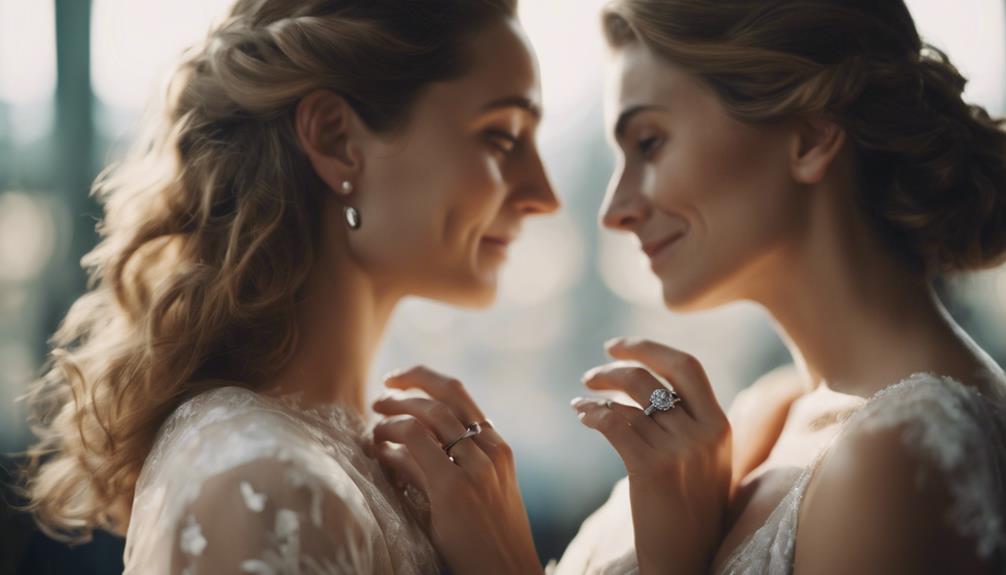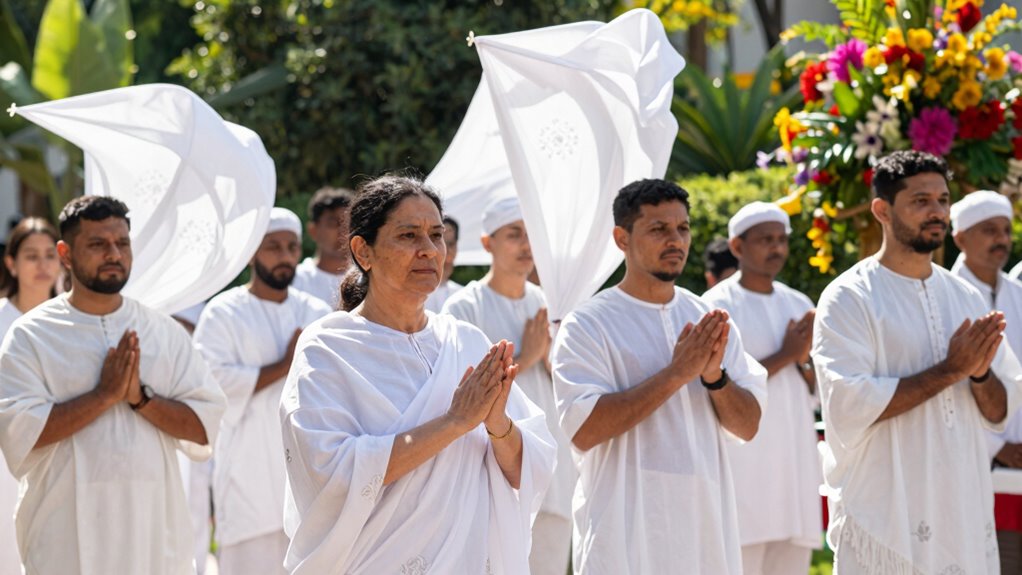
In ceremonies around the world, white typically symbolizes purity, spiritual renewal, and new beginnings. You’ll see it in weddings, where it represents innocence and a fresh start, or in funerals, signifying mourning and respect. White also plays a key role in religious rites, emphasizing cleansing and divine connection. Its rich symbolism connects you to cultural values and centuries of tradition. To understand more about how white’s meanings shape special moments, keep exploring this fascinating subject.
Key Takeaways
- White symbolizes purity, innocence, and spiritual cleansing in various cultural and religious ceremonies worldwide.
- It signifies new beginnings, renewal, and hope during rites of passage and life transitions.
- In mourning practices, white often represents respect, solemnity, and the cycle of life and death.
- Traditional attire in ceremonies uses white to reinforce cultural values and divine connection.
- White’s historical role underscores its universal significance in honoring collective beliefs and shared identity.
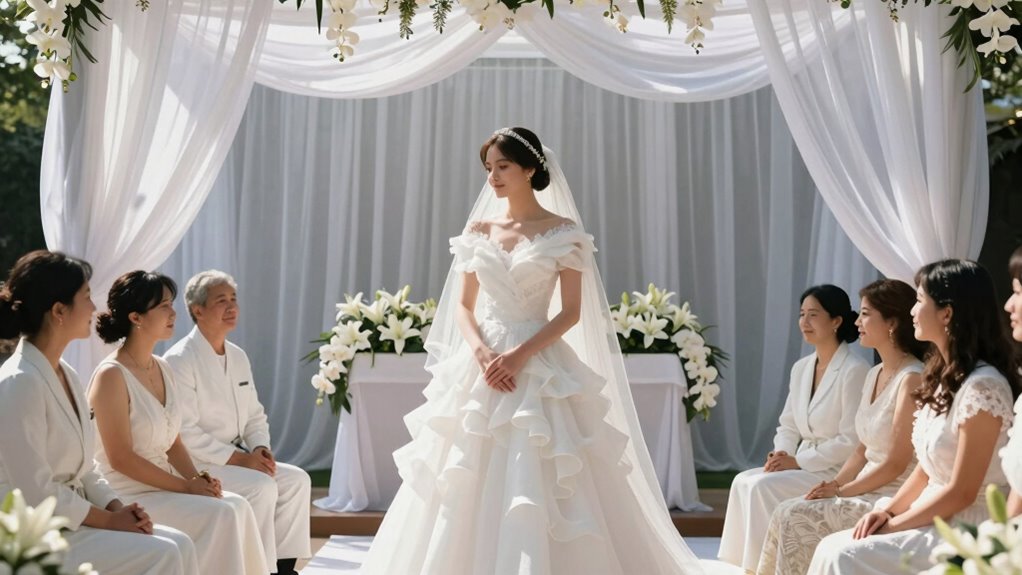
White is a color deeply rooted in ceremonial traditions worldwide, symbolizing purity, peace, and new beginnings. It’s a hue that instantly communicates a sense of solemnity and hope, making it a natural choice for significant life events. When you see white in ceremonies, it often carries powerful cultural symbolism, representing the purity of soul, innocence, or spiritual cleansing. This symbolism influences the way people dress and decorate for important occasions, emphasizing a collective desire for renewal or harmony. In many cultures, wearing white isn’t just about fashion; it’s a reflection of deep-rooted values and beliefs. This is especially evident in traditional attire, where the color takes on added significance. For example, in Western weddings, brides typically wear white gowns to symbolize purity and a fresh start. The white dress becomes a visual representation of the bride’s shift into a new phase of life, embodying hope and innocence. Similarly, in some Asian cultures, white traditional attire is worn during funerals, signifying mourning and respect for the departed. Here, the color’s association with spiritual purity and the soul’s journey to the afterlife is central, and the attire reflects a cultural understanding of life’s cycle. In other parts of the world, white garments are integral to religious ceremonies, such as baptisms or initiation rites, where the clean, unblemished color underscores spiritual cleansing and rebirth. The choice of white in these contexts isn’t accidental; it’s a deliberate expression of cultural symbolism that transcends appearance. It links individuals to their cultural heritage and shared beliefs. You might notice that in some ceremonies, white is paired with specific accessories or traditional elements that reinforce its significance. These details often carry their own symbolism, emphasizing purity, unity, or divine connection. Additionally, some societies incorporate color symbolism into the design of their ceremonial attire, further amplifying its meaning. These details often carry their own symbolism, emphasizing purity, unity, or divine connection. Whether it’s a wedding, a religious rite, or a rite of passage, the use of white in traditional attire and decorations serves to unify participants under a common understanding of the occasion’s importance. The universal appeal of white’s symbolism makes it a versatile and powerful color in ceremonial settings. Its presence connects you to centuries of tradition and cultural identity, reminding you that ceremonies aren’t just about individual milestones but also about honoring collective beliefs and values. Additionally, understanding the cultural significance of white helps to appreciate its enduring role across diverse societies. The historical roots of white symbolism reveal how deeply embedded this color is in human history, influencing customs and rituals over millennia. Recognizing how white’s symbolism varies across different cultures enriches our understanding of its universal appeal and enduring importance in ceremonies worldwide. For many societies, white continues to serve as a symbol of renewal, reinforcing its timeless relevance. In every corner of the world, white’s cultural symbolism continues to shine through, shaping the way people celebrate, mourn, and renew their spirits.

Popilush Wedding Dresses for Bride Lace Sleeveless V Neck Maxi Shapewear Dress Evening Split Beach Bride Dresses White
Built-In Support & Streamlined Silhouette: This evening dress features internal contouring panels that offer gentle waist definition, creating…
As an affiliate, we earn on qualifying purchases.
As an affiliate, we earn on qualifying purchases.
Frequently Asked Questions
How Did White Become Associated With Purity Globally?
White became associated with purity globally through its symbolism of cleanliness, innocence, and new beginnings. You see this in weddings, where white dresses represent purity, and in religious ceremonies symbolizing spiritual cleansing. Cultural interpretations vary, but the common thread is white’s connection to a fresh start and moral virtue. Over time, these associations spread across societies, making white a universal color for purity in various traditions and rituals.
Are There Cultures Where White Symbolizes Mourning Instead of Celebration?
Yes, in some cultures, white symbolizes mourning instead of celebration. For example, in certain Asian countries like India and China, white is part of white funeral traditions and is worn as cultural mourning attire. You’ll notice that, unlike Western customs, where black signifies grief, these cultures use white to honor the deceased and symbolize spiritual purity, emphasizing the peaceful passage of the soul rather than festivity.
What Are the Historical Origins of White Robes in Religious Ceremonies?
You might find white robes in religious ceremonies rooted in ancient rituals symbolizing purity and divine connection. Historically, they originated in royal attire, where white signified authority and sacredness, and later evolved into ritual garments. These robes serve as a bridge between the mortal and spiritual worlds, emphasizing cleanliness and spiritual renewal. The enduring use of white highlights the pursuit of purity, transcending social classes and time periods.
How Does White Symbolism Vary in Modern Wedding Ceremonies Worldwide?
You’ll notice that in modern wedding ceremonies worldwide, white symbolizes purity, innocence, and new beginnings, but its cultural interpretations vary. In Western cultures, white is linked to bridal purity and celebration, while in some Asian traditions, it can also represent mourning. Color symbolism influences wedding attire choices globally, reflecting local beliefs and values. As a result, white’s meaning adapts to cultural contexts, enriching the diversity of wedding rituals worldwide.
Are There Specific White Shades Used for Different Ceremonies?
Imagine a painter’s palette, each shade of white whispering its own story. For ceremonies, you’ll notice specific white fabrics—like pure, icy white for purity or warm ivory for tradition—chosen carefully. Dye traditions influence these shades, making some whites richer and others softer. You select these hues intentionally, as each white shade symbolizes different meanings, weaving cultural significance into the fabric of your special event.

Masonic Funeral White Apron | Premium Canvas Fabric with Black Ribbon – Handcrafted Traditional Regalia 14 Inches X 16 Inches
Premium Quality: Made from durable, high-grade white canvas for a clean and dignified appearance.
As an affiliate, we earn on qualifying purchases.
As an affiliate, we earn on qualifying purchases.
Conclusion
So, next time you see someone dressed in white at a ceremony, remember its powerful symbolism across cultures—purity, peace, and new beginnings. Isn’t it fascinating how a simple color can carry such deep meaning worldwide? It’s a reminder that we all share common hopes and values, even in our differences. Embracing these diverse traditions can inspire us to see the universal threads that connect us all. After all, isn’t that what truly unites humanity?

BLESSUME Medieval Wicca Pagan Ritual Robe with Belt (L, White)
Material: Durable Uniform Cloth,Polyester, PU Leather
As an affiliate, we earn on qualifying purchases.
As an affiliate, we earn on qualifying purchases.

Toulite White Matte Choir Robes Adults Religious Angel Costume for Priest Pope Surplice Baptism Wedding Church(40'')
You Will Receive: 1 piece unisex round neck surplice, washable and easy to nurse, suitably match with your…
As an affiliate, we earn on qualifying purchases.
As an affiliate, we earn on qualifying purchases.