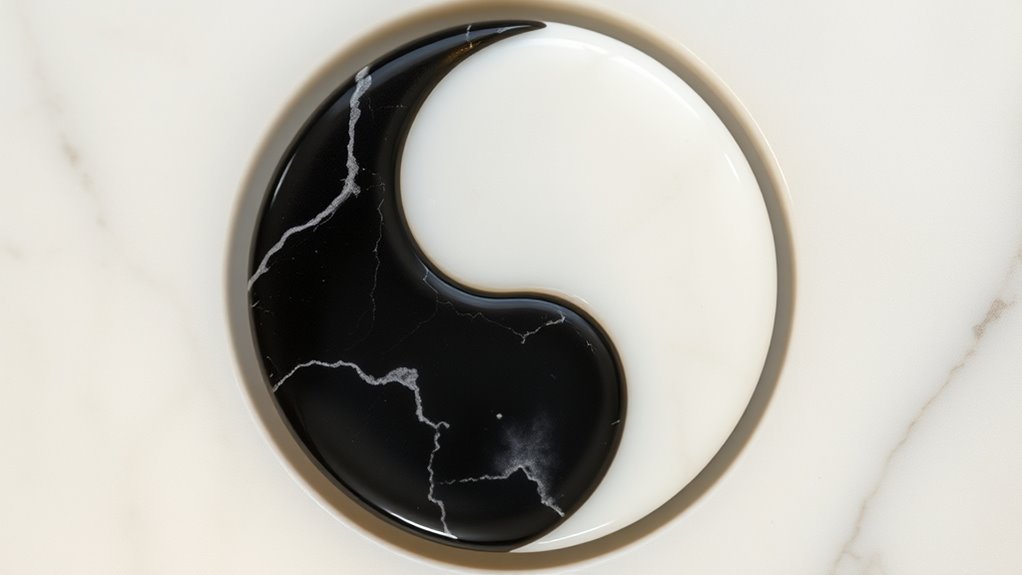

In Chinese philosophy, Yin and Yang symbolize the interconnected forces of contrast and harmony that shape the universe. You’ll see these principles in daily life, as opposing qualities like light and dark, active and passive, constantly shifting and balancing. Rather than being separate, they form a dynamic, fluid relationship that emphasizes the importance of balance through change. If you continue exploring, you’ll discover how this ancient concept influences many aspects of harmony and well-being today.
Key Takeaways
- Yin and Yang represent interconnected and opposing forces that create balance and harmony in the universe.
- They are fluid, relative concepts that emphasize constant change and the interdependence of dualities.
- The philosophy views the world as a dynamic energy dance, where harmony emerges from the ebb and flow of opposites.
- Practical applications include fostering harmony in relationships, decision-making, and self-care through understanding duality.
- Embracing duality and balance in Chinese philosophy promotes patience, adaptability, and acceptance of natural rhythms.

Have you ever wondered how seemingly opposite forces can coexist and complement each other? In Chinese philosophy, this idea is embodied in the concept of Yin and Yang, illustrating how balance and harmony arise from duality principles. Instead of viewing opposites as conflicting, you learn to see them as interconnected parts of a whole. Yin and Yang represent contrasting qualities — darkness and light, passive and active, cold and hot — but they’re not separate entities. They form a dynamic relationship, constantly shifting and balancing one another, creating a stable harmony that sustains life and the universe.
As you explore this concept, you realize that Yin and Yang are not static or absolute but fluid and relative. For example, what’s Yin in one context might be Yang in another. This fluidity emphasizes the importance of balance in your daily experiences. It suggests that harmony isn’t about eliminating differences but about understanding their interdependence. When you embrace duality principles, you recognize that conflict and cooperation are two sides of the same coin. By maintaining awareness of this interplay, you can navigate life’s challenges more effectively, appreciating that opposing forces can coexist peacefully if balanced properly.
Understanding Yin and Yang also invites you to see the world as a constant dance of energies, where harmony emerges from the ebb and flow of these dualities. It’s like the sun and moon, day and night, or activity and rest — each necessary for the other’s existence. This perspective encourages you to foster patience and adaptability, knowing that periods of change and imbalance are natural parts of life. Instead of resisting these shifts, you learn to flow with them, trusting that balance will be restored over time.
In practical terms, applying these principles can help you cultivate a more harmonious approach to relationships, work, and self-care. Recognizing the dual nature of things allows you to find middle ground, avoid extremes, and create a sense of equilibrium. Whether it’s managing stress, making decisions, or understanding others, the balance harmony inherent in Yin-Yang guides you toward a more integrated and peaceful state of being. Ultimately, this philosophy teaches you that harmony isn’t about perfection but about embracing the duality within yourself and the world, and learning to find the right balance amidst constant change.

Ceramic Stone Yin Yang Bead Neckace Jewelry
Durable will last a lifetime
As an affiliate, we earn on qualifying purchases.
As an affiliate, we earn on qualifying purchases.
Frequently Asked Questions
How Does Yin-Yang Influence Modern Chinese Medicine Practices?
Yin-yang influences modern Chinese medicine by emphasizing the importance of balance and harmony within your body. Practitioners focus on restoring the natural energy flow, or Qi, to treat ailments. They use techniques like acupuncture, herbal remedies, and massage to rebalance yin and yang, aiming to promote overall wellness. This approach helps address health issues holistically, ensuring your body’s energy remains in harmony for ideal functioning.
Are There Cultural Variations in Interpreting Yin-Yang Across Asia?
Imagine a flowing river, symbolizing balance and harmony. You’ll notice that cultural interpretations and regional differences shape how yin-yang is understood across Asia. In Japan, it emphasizes harmony and social cohesion, while in Korea, it highlights the balance between tradition and modernity. These variations reflect regional beliefs and customs, showing how different cultures adapt the core idea of yin-yang to fit their unique values and perspectives.
What Are Common Misconceptions About Yin-Yang Philosophy?
You might think yin-yang is just about balance or duality, but many misconceptions oversimplify its depth. It’s not only about opposing forces; it also emphasizes interconnectedness and harmony in change. Some believe it’s static or that one side is always good and the other bad. In reality, yin-yang represents dynamic, fluid relationships, encouraging you to see how contrasting elements work together to create harmony rather than conflict.
How Is Yin-Yang Applied in Chinese Art and Architecture?
You see yin-yang in Chinese art and architecture as a dance of balance and harmony. Walls curve softly like flowing water, contrasting sharp rooftops, embodying aesthetic symbolism. Gardens blend light and shadow, creating a peaceful rhythm. Structures are designed to reflect the duality of nature—serene yet dynamic—highlighting the importance of balance. This harmony guides the creation of spaces that feel both lively and tranquil, capturing yin-yang’s essence beautifully.
Can Yin-Yang Principles Be Integrated Into Western Scientific Frameworks?
You can integrate Yin-Yang principles into Western scientific frameworks by exploring concepts like quantum duality and ecological balance. Embracing the idea that seemingly opposite forces are interconnected helps you understand complex systems holistically. By applying Yin-Yang, you acknowledge dynamic balance in nature and science, encouraging you to see dualities as complementary rather than conflicting, fostering innovative approaches that respect interconnectedness and harmony across disciplines.

OBSUN Yin Yang Bracelet for Women, Feng Shui Good Luck Bracelet, Fengshui Wealth and Luck Bracelets (Yin Yang)
【Yin Yang】The ancient yin symbolizes your patience, and yang your courage. Wear this bracelet to harmonize your energy…
As an affiliate, we earn on qualifying purchases.
As an affiliate, we earn on qualifying purchases.
Conclusion
You now see how yin and yang embody balance and harmony in Chinese philosophy. By understanding their interplay, you recognize that life’s dualities aren’t in conflict but interconnected. As the saying goes, “One cannot exist without the other,” reminding you that embracing both aspects leads to harmony. Keep this balance in mind, and you’ll find a deeper appreciation for the natural flow of life and the world around you.

The Ultimate Guide to Yin Yang (The Ultimate Series)
As an affiliate, we earn on qualifying purchases.
As an affiliate, we earn on qualifying purchases.

macago Vintage Taichi Decor Round Metal Sign Taichi Yin and Yang Wall Art Rustic Wreath Wall Decoration for Indoor Outdoor Home Porch Window Decor 8 Inch
PRODUCT SIZE : Our Round Metal Tin Sign, Measuring 8 X 8 Inches(20cmx20cm), This Size Is Usually Used…
As an affiliate, we earn on qualifying purchases.
As an affiliate, we earn on qualifying purchases.