TL;DR

Prime made for students and young adults
- Fast, free delivery for dorm and study essentials
- Prime Video and Amazon Music included
- Member-only deals
An Astral Codex Ten essay asks why trepanation appears in archaeological skulls across several regions and proposes trauma treatment and cultural overgeneralization as explanations. The account is a hypothesis, not a settled archaeological consensus; the source gives no single study establishing its headline prevalence estimate.
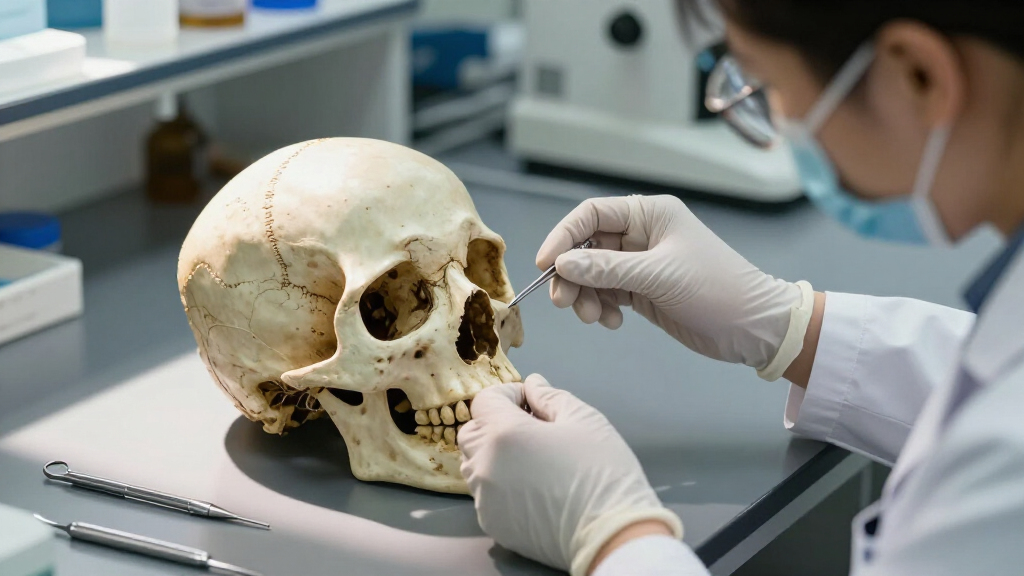
An Astral Codex Ten essay examines why some prehistoric skulls bear openings made by trepanation and proposes that the procedure began as a response to serious head injuries before being used for other complaints. The account describes evidence from multiple regions, but its explanations for the practice’s prevalence and decline are the author’s hypotheses, not conclusions established in the supplied material by a named archaeological study.
The essay frames the puzzle around an estimate that 5% to 10% of skulls dating from roughly 10,000 BC to 3,000 BC show evidence of trepanation. It says finds occur in Europe and South America, with scattered examples elsewhere. The source does not identify the archaeological datasets or explain the populations and sampling methods behind that estimate, so it should not be read as a measured rate for all people who lived in that period.
As one possible medical purpose, the author points to epidural hematoma, in which blood builds up inside the skull after an injury and raises pressure. Opening the skull can relieve that pressure. The essay argues that this emergency use may have produced dramatic recoveries, which people without a modern understanding of the condition could interpret as evidence that the procedure treated other illnesses too. Its proposed explanation for broader use is overgeneralization, alongside injury treatment.
The essay also offers a possible reason some patients survived: it says practitioners may have removed bone while stopping at the dura, a protective membrane, rather than going deeper toward the brain. It suggests the scalp’s blood supply and differences between ancient and modern bacteria may also have affected infection risk. These are explanations advanced in the essay; the source material does not provide clinical or microbiological evidence to establish how often each factor applied.
How Trauma May Have Shaped Practice
The subject matters because it challenges a simple account of prehistoric medicine as either uniformly ineffective or inexplicably advanced. Trepanated skulls with signs of healing indicate that at least some people survived the procedure for a period afterward. That evidence does not, on its own, establish why the openings were made, what symptoms patients had, or how frequently the operation succeeded.
The essay’s argument connects physical evidence in bone with a possible history of medical reasoning: a treatment that occasionally helped a severe injury may have gained a wider reputation. That is a plausible line of interpretation, but readers should distinguish it from what the skulls directly show. The wider question also bears on how early communities responded to injury, pain and illness when their explanations of the body differed from modern medicine.
The account is not a reason to treat trepanation as a safe or general remedy. Its discussion concerns historical practice and an emergency condition, while modern surgery is conducted under medical standards and clinical judgment. The source provides no evidence supporting elective trepanation for mental function or other ailments.
As an affiliate, we earn on qualifying purchases.
From Ancient Openings to Modern Surgery
Trepanation means making an opening in the skull. The essay describes it as common in archaeological material from parts of Europe and South America, while noting scattered cases in other regions. It rejects cultural diffusion as a complete explanation, arguing that the practice appears in geographically separated populations and that the examples span a long period. The source does not provide a site-by-site chronology with which to test that account.
The author distinguishes ancient trepanation’s proposed broad use from the continued medical use of a functionally related operation. In the essay’s account, surgeons today may open the skull to relieve pressure from a hematoma, while the high prevalence the author associates with prehistory did not continue. It proposes that fewer head injuries as settled societies developed meant fewer dramatic recoveries to reinforce the procedure’s perceived usefulness.
The source also mentions the International Trepanation Advocacy Group, or ITAG, as an example of modern advocacy for elective trepanation. The author says its online trail appears to go quiet sometime between 2015 and 2020. The supplied excerpt includes a statement attributed to founder Peter Halvorson, but does not establish the group’s later status or independently verify its claims about benefits.
“At age 57, I’ve been trepanned now for thirty years.”
— Peter Halvorson, as quoted in the essay
What the Skull Evidence Cannot Establish
The supplied source does not identify the studies behind the 5% to 10% estimate, specify how skulls were selected, or show whether the figure applies across particular regions and time periods. It also does not cite a systematic review confirming the geographic distribution described. The estimate therefore remains a claim within the essay’s framing, not a verified global prevalence figure here.
Healed bone can indicate survival after an opening, but the material supplied does not establish the patient’s original diagnosis, the reason for the operation, or the length of survival. The proposed roles of hematoma treatment, pain relief, spiritual beliefs and placebo effects are interpretations. Likewise, the author’s claims about ancient bacteria and how practitioners handled the dura are not supported in the excerpt by cited evidence.
The source does not establish that violence declined uniformly with the rise of civilization or that this change caused trepanation to become less common. Nor does the excerpt provide a reliable date for the practice’s decline across different societies. Halvorson’s statements are attributed advocacy claims, and the essay’s report that ITAG activity faded is not a confirmed account of the organization’s current status.
Evidence Needed to Test the Explanation
The essay offers an interpretation rather than announcing a new excavation, study or clinical finding. The next step for evaluating its account would be to compare the prevalence claim with published archaeological datasets, including how researchers date skulls, identify deliberate openings and account for preservation and sampling differences.
Evidence about the openings themselves could help test whether they were associated with injuries, disease or other indications, while regional timelines could clarify whether the practice spread between communities or developed independently. The supplied material does not say that such a review is underway, and it gives no scheduled publication or research milestone.
For now, the clearest conclusion is limited: the essay describes prehistoric trepanation across several regions and puts forward head-trauma treatment and later generalization as possible explanations. Whether those factors account for the reported frequency, survival patterns and decline remains unresolved in the source.
Key Questions
What is trepanation?
Trepanation is the creation of an opening in the skull. The essay discusses archaeological evidence of the procedure and says modern surgeons use a functionally related operation in some cases to relieve pressure from a hematoma.
Why does the essay say prehistoric people underwent trepanation?
The author proposes two explanations: treating serious head injuries, including possible epidural hematomas, and extending a procedure believed to work for those injuries to other ailments. The essay presents these as hypotheses, not established findings.
Did 5% to 10% of prehistoric people have skull openings?
The essay gives an estimate of 5% to 10% of skulls from about 10,000 BC to 3,000 BC. The supplied source does not name the underlying datasets or establish that this figure represents all prehistoric people or every region.
Did trepanation disappear?
The essay says it became much less common but did not vanish entirely: it describes occasional later examples and a modern medical procedure used to relieve hematoma pressure. It does not provide a detailed chronology for the decline across societies.
Does the source show that elective trepanation improves mental function?
No. It quotes an advocacy group founder describing claimed benefits, but the supplied material does not provide independent clinical evidence that elective trepanation improves mental function or is safe as a general treatment.
Source: rss
Halloween Picks
halloween
As an affiliate, we earn on qualifying purchases.