

In modern communication, the ellipsis often suggests hesitation, ambiguity, or emotional nuance that words alone can’t fully express. You might notice it signaling a pause for effect, conveying uncertainty, or hinting at hidden feelings. It softens statements and helps bridge gaps when tone or body language is missing. By understanding these subtle cues, you can better interpret the layered meanings behind messages—if you pay attention, there’s more to discover about its true function.

Get school and study supplies delivered free — and shop member deals
- Fast, free delivery on millions of items
- Access to Prime Big Deal Days deals on October 6–7
- Prime Video, Amazon Music and more included
Key Takeaways
- Ellipses indicate hesitation, uncertainty, or a pause, adding emotional nuance to digital messages.
- They suggest that additional meaning or context is implied beyond the explicit words.
- Ellipses serve as a softener to tone, preventing directness or confrontation.
- They can convey suspense, reflection, or unspoken feelings in conversations.
- The interpretation of ellipses often depends on context and relationship dynamics.
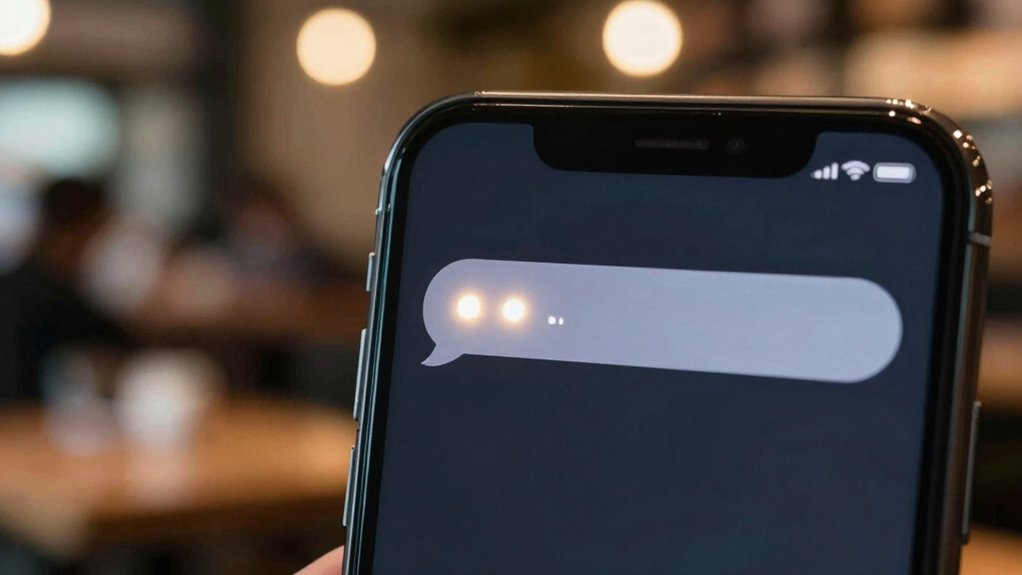
Have you ever noticed how people often leave out words or phrases in digital conversations, relying on context to fill in the gaps? That’s where the ellipsis — the three dots — comes into play. It’s a subtle yet powerful tool that signals more than what’s explicitly written. When you see an ellipsis in a message, it often hints at tone ambiguity; the tone isn’t always straightforward, and the dots suggest there’s more beneath the surface. They can convey hesitation, sarcasm, uncertainty, or even a pause for effect. You’re expected to read between the lines, making message inference essential to understanding the true intent behind the words.
Ellipses hint at hidden meanings, requiring message inference to uncover tone and emotional nuance in digital conversations.
In digital communication, the ellipsis acts as a cue that the sender’s tone may be ambiguous. Unlike face-to-face conversations, where vocal cues and body language clarify emotions, text messages lack that immediate context. So, the ellipsis becomes a bridge or a buffer, signaling that the message might carry a layer of meaning not directly expressed. For example, a simple statement like “That’s just great…” can be read differently depending on the tone you infer. It might be genuine excitement, or it could be sarcasm. The dots leave room for interpretation, placing the onus on you to decipher the emotional nuance based on the context and your relationship with the sender.
Message inference becomes a *vital* skill when interpreting ellipses. You’re often left to decide whether the dots indicate a pause, a trailing thought, or something more complex, like discomfort or annoyance. The ellipsis invites you to read into the message, filling in emotional gaps that aren’t explicitly stated. This makes conversations more layered and, at times, more ambiguous. It’s a way to communicate vulnerability or hesitation without outright stating it, leaving space for subtlety. Additionally, understanding the contextual cues in digital communication helps clarify the intended tone behind those ellipses. Recognizing that the ellipsis can serve as a tone indicator is essential for accurate message interpretation.
Furthermore, some users employ ellipses as a form of emotional masking, subtly concealing their true feelings or intentions. You might notice that some use ellipses to soften a statement or to suggest that they’re holding back something. Others might employ it to build suspense or to imply that there’s an unstated thought behind their words. This reliance on context and message inference means that your understanding of tone ambiguity can *considerably* influence how you interpret the message’s true meaning. In the digital age, the ellipsis isn’t just punctuation; it’s a nuanced conversational device that shapes how you perceive intent, emotion, and the overall mood of online exchanges.
digital communication tone indicator
As an affiliate, we earn on qualifying purchases.
As an affiliate, we earn on qualifying purchases.
Frequently Asked Questions
How Has the Ellipsis Evolved Over Digital Communication Platforms?
You’ll notice the ellipsis has evolved from its historical origins to fit digital communication. Originally used in print to indicate omission, today it’s often typographic variations like three dots or a single character, conveying pauses, hesitation, or an unfinished thought. On digital platforms, it’s become more versatile, sometimes implying sarcasm or suspense. This evolution reflects its adaptation, making it a flexible tool for nuanced expression in modern conversations.
Can the Ellipsis Convey Tone or Emotion Effectively?
Yes, the ellipsis can effectively convey tone nuances and emotional cues in your messages. When you use it, you hint at hesitation, sarcasm, or a lingering thought, giving your communication depth. It allows you to express subtle emotional cues that might be lost in plain text. Just remember, overusing it can confuse your message, so use it thoughtfully to enhance your tone and emotional expression.
Are There Cultural Differences in Interpreting Ellipses?
Imagine an open window inviting different breezes—that’s how cultural nuances influence how you interpret ellipses. In some cultures, they symbolize hesitation or politeness, while in others, they hint at unspoken emotions or continuation. This interpretive diversity means you might see an ellipsis as a pause or a sign of ambiguity, depending on your background. Recognizing these subtle differences helps you communicate more empathetically across cultural boundaries.
How Does the Ellipsis Influence Message Ambiguity?
The ellipsis adds contextual nuance, making your message more open to reader interpretation. It can suggest hesitation, trailing thoughts, or an unfinished idea, which introduces ambiguity. By doing so, it invites your audience to read between the lines, often making communication feel more personal or nuanced. However, it can also lead to misunderstandings if your intent isn’t clear, since the reader relies heavily on context and their interpretation.
Are There Any Grammatical Rules for Using Ellipses in Online Writing?
Think of ellipses as delicate bridges in your writing, guiding flow with subtlety. In online writing, formal tone and punctuation guidelines suggest you use ellipses sparingly to signal pauses or unfinished thoughts. No strict rules exist, but avoid overuse to prevent confusion. When used correctly, they add nuance, inviting reader interpretation. Keep your ellipses purposeful, like a gentle whisper, and your message remains clear yet expressive.
Conclusion
So, next time you see those three dots trailing off, remember—they’re not just silent pauses. In modern communication, the ellipsis hints at unspoken truths, lingering doubts, or even just a desire to hold back. Ironically, in a world obsessed with clarity, those three dots often say more than words ever could. Maybe it’s the universe’s way of reminding us that sometimes, silence really does speak volumes—more than we’d like to admit.
Halloween Picks
halloween
As an affiliate, we earn on qualifying purchases.