

Shadows are symbolically rich in myth and literature because they represent the mysteries, inner conflicts, and dualities of human nature you often see in stories. They embody the unknown, hidden fears, and suppressed desires that challenge characters’ growth. Shadows highlight the complex relationship between light and darkness within individuals, signaling internal struggles and transformation. If you keep exploring, you’ll discover how shadows reveal deeper truths about human life and self-discovery.

Get school and study supplies delivered free — and shop member deals
- Fast, free delivery on millions of items
- Access to Prime Big Deal Days deals on October 6–7
- Prime Video, Amazon Music and more included
Key Takeaways
- Shadows represent the mysterious and unknown, highlighting themes of concealment, fear, and internal conflict in myths and stories.
- They symbolize human duality, reflecting the coexistence of good and evil within individuals.
- Shadows serve as metaphors for inner struggles, prompting characters to confront their hidden fears and desires.
- They act as gateways to the subconscious, revealing deeper truths about life, death, and the psyche.
- Shadows symbolize transformation, encouraging self-awareness and integration of darker aspects for personal growth.
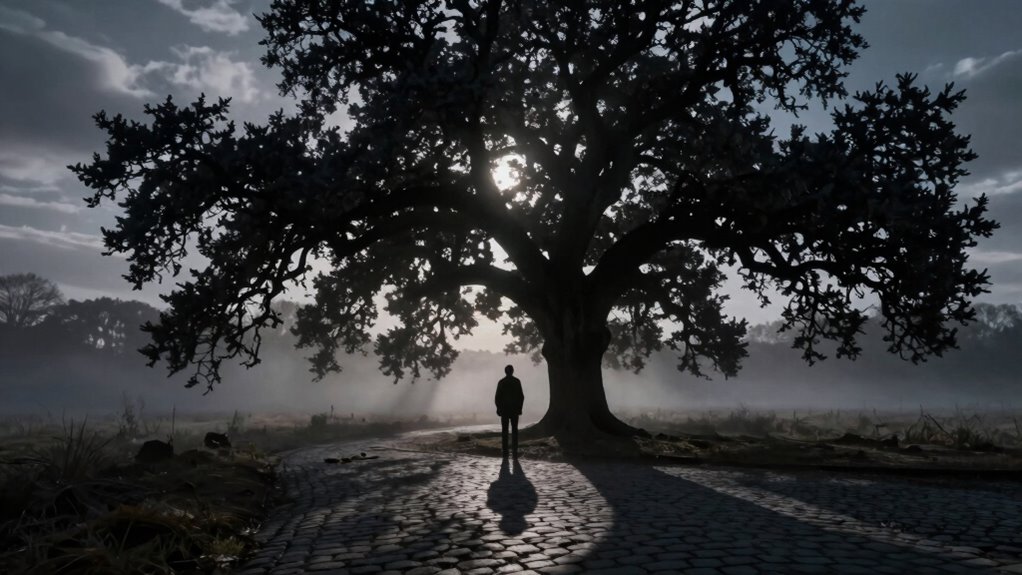
Have you ever noticed how shadows often symbolize mystery, fear, or the unknown in myths and stories? They serve as a visual reminder that not everything in life is clear or easily understood. In literature, shadows are more than just dark patches cast by objects; they embody the complex dance between light and darkness within ourselves. You might find that characters confronting their shadows are grappling with inner conflict—struggling to reconcile the good and bad parts of their nature. This internal battle makes shadows potent symbols of the human condition, representing hidden fears, suppressed desires, or unresolved guilt. When a story shows a character stepping into the shadowed depths, you sense that they are confronting something crucial to their growth or self-understanding.
Shadows also symbolize the duality of existence, showcasing that light and darkness coexist within everyone. Light often signifies clarity, truth, or goodness, while darkness hints at secrets, danger, or moral ambiguity. When mythmakers depict shadows, they highlight this tension—reminding you that no one is purely virtuous or entirely wicked. The interplay of light and darkness in stories emphasizes that human nature is complex, layered, and sometimes contradictory. You may notice that in many myths, heroes must face their shadows to attain wisdom or enlightenment. These moments of inner conflict mirror life’s challenges—where you’re called to confront your fears, question your beliefs, or accept parts of yourself you’d rather hide.
Furthermore, shadows in mythology often symbolize the unknown aspects of life and death. They evoke curiosity and fear about what lies beyond the visible domain. They also serve as a symbolic representation of the subconscious mind, revealing hidden aspects of a character’s psyche. The shadow becomes a gateway to mysteries that can’t be fully understood but must be acknowledged. This is where psychological symbolism plays a crucial role in understanding mythology and literature, as shadows often reflect internal struggles. An understanding of archetypal symbols can deepen your appreciation of how stories explore universal themes. When stories portray characters venturing into shadowed spaces, they’re symbolically exploring their deepest fears and uncertainties, which ultimately lead to transformation. This journey through darkness isn’t just about danger; it’s about uncovering hidden truths and embracing the full spectrum of your existence.
In essence, shadows in myth and literature serve as a powerful mirror to your inner world. They symbolize the ongoing struggle between light and darkness, truth and concealment, good and evil within you. As you engage with these stories, you’re reminded that embracing your shadows isn’t about succumbing to fear, but about understanding and integrating the parts of yourself that you might prefer to ignore. Shadows, in their richness and ambiguity, invite you to explore the depths of your own inner conflict and discover the light that emerges from facing your darkness.
meditation and mindfulness journal
As an affiliate, we earn on qualifying purchases.
As an affiliate, we earn on qualifying purchases.
Frequently Asked Questions
How Do Shadows Differ Across Various Cultural Mythologies?
You’ll see shadows differ across mythologies through their association with mythical duality and cultural symbolism. In some cultures, shadows represent spirits or ancestors, embodying the unseen or spiritual world. In others, they symbolize evil or hidden truths, reflecting duality within human nature. These variations reveal how shadows serve as powerful metaphors, highlighting cultural beliefs about life, death, and the unseen forces shaping human existence.
Are Shadows Always Considered Negative in Literature?
Shadows aren’t always negative in literature; they often symbolize darkness symbolism and hidden fears. You might see shadows representing mystery, inner conflict, or the unknown, rather than just evil or negativity. They can evoke curiosity or serve as a metaphor for aspects of yourself you haven’t acknowledged. So, shadows have a rich, nuanced symbolism that depends on context, often reflecting complex emotions or concealed truths rather than solely negative connotations.
What Psychological Theories Explain Our Fascination With Shadows?
Imagine your subconscious reflection lurking in the shadows, revealing hidden fears. Psychological theories, like Jung’s concept of the shadow self, explain your fascination by suggesting it represents parts of you you haven’t embraced. This allure comes from your desire to understand and integrate these hidden aspects. Shadows symbolize the mystery within, drawing you to explore your inner depths and confront fears lurking just beneath consciousness.
How Have Shadows Been Used in Visual Storytelling Beyond Literature?
In visual storytelling, you see shadows used through shadow play and silhouette symbolism to create mystery and emphasize characters’ emotions. Shadow play captivates viewers by transforming simple outlines into storytelling devices, while silhouettes convey identity, anonymity, or moral ambiguity. These techniques evoke powerful symbolism, drawing your attention to underlying themes and adding depth to scenes. Shadows become more than visual effects—they serve as expressive tools that deepen your engagement with the story.
Do Shadows Have Any Scientific Basis in Symbolism or Myth?
You might be surprised, but shadows do have a scientific basis in symbolism and myth. Around 80% of cultures associate shadows with symbolic darkness and the unknown, linking them to mythological symbolism like spirits or ancestral presence. Shadows embody the mystery, fear, or protection in stories, reflecting our subconscious. Their elusive, ever-changing nature makes them powerful symbols, blending science with myth to deepen stories and cultural meanings.
Conclusion
As you reflect on shadows’ symbolism in myth and literature, it’s fascinating to realize how their presence often feels like a coincidence—mirroring hidden truths or unspoken fears lurking just beneath the surface. It’s as if shadows naturally emerge when stories seek to explore the unknown or the suppressed. So, next time you encounter a shadow in a tale, remember, it might just be a coincidence, or perhaps, it’s the universe’s subtle way of revealing what’s truly beneath the surface.
Halloween Picks
halloween
As an affiliate, we earn on qualifying purchases.