

In literature and faith, thorns symbolize pain, hardship, and sacrifice that you must endure to grow spiritually or personally. They remind you that true strength often comes through struggle and obstacles you face. Thorns also highlight life’s beauty intertwined with pain, encouraging humility and resilience. They serve as protections or boundaries, symbolizing the trials that challenge and transform you. Keep exploring, and you’ll discover even deeper meanings behind these powerful symbols.

Get school and study supplies delivered free — and shop member deals
- Fast, free delivery on millions of items
- Access to Prime Big Deal Days deals on October 6–7
- Prime Video, Amazon Music and more included
Key Takeaways
- Thorns represent pain, hardship, and sacrifice, symbolizing obstacles characters must endure and overcome.
- In Christianity, thorns signify suffering and spiritual trials, exemplified by the crown of thorns worn by Jesus.
- They illustrate life’s duality, where beauty (like roses) is intertwined with pain and danger.
- Thorns embody humility, fragility, and resilience, reminding of the importance of enduring suffering with faith.
- They serve as metaphors for protection, boundaries, and the challenges involved in spiritual growth and salvation.
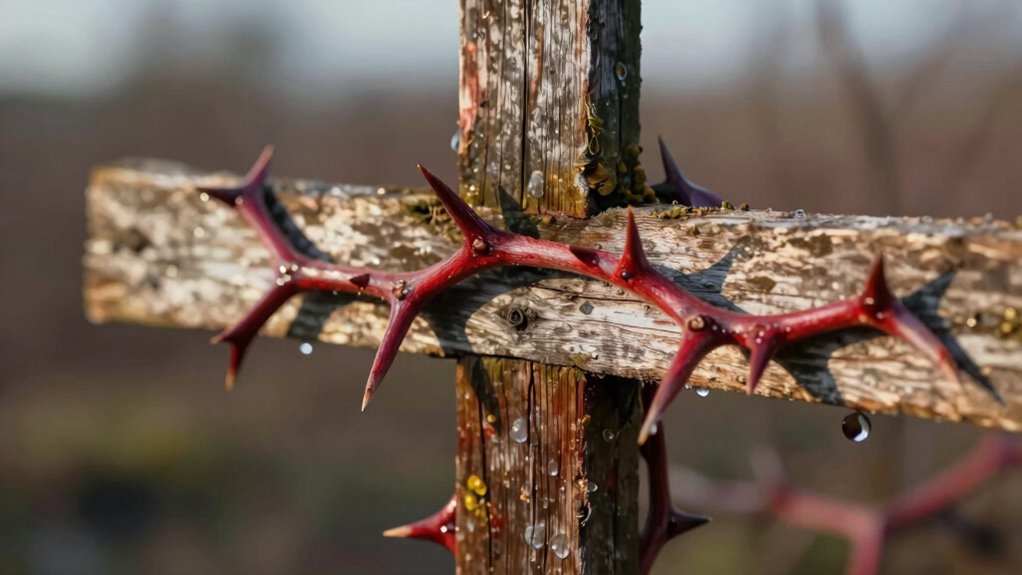
Have you ever wondered why thorns appear so frequently in literature and religious symbolism? It’s because they carry a powerful, layered meaning that resonates across different contexts. Thorns serve as a symbolic representation of pain, hardship, and sacrifice, making them a potent tool in storytelling and spiritual teachings. When you see a thorn, it often signifies more than just a prickly plant; it points to deeper themes of suffering and endurance. In literature, authors use thorns to symbolize obstacles that characters must overcome, emphasizing human resilience in the face of adversity. They remind you that growth often comes through struggle, and that pain can serve as a catalyst for transformation. Similarly, in religious symbolism, thorns are deeply connected to spiritual concepts, especially in Christianity. The crown of thorns worn by Jesus Christ is a stark reminder of suffering and sacrifice, illustrating that spiritual enlightenment often involves hardship. This imagery helps believers reflect on the idea that true faith is sometimes forged through suffering, and that pain can have a redemptive quality. The thorn motif also appears in other faith traditions, where it represents spiritual trials or divine tests. These symbols invite you to see suffering not merely as punishment, but as an essential part of spiritual growth and purification. Thorns also symbolize the dual nature of life: beauty intertwined with pain. While a rose may be adorned with lovely petals, its thorns warn you of the underlying danger or difficulty. This contrast reminds you that life’s most meaningful experiences often involve a mix of pleasure and pain, growth and challenge. furthermore, the imagery of thorns in sacred texts emphasizes humility and the acknowledgment of human fragility. They serve as a reminder that spiritual strength isn’t about avoiding pain, but about enduring it with faith and perseverance. By incorporating thorn symbolism, writers and religious figures encourage you to reflect on the nature of suffering and its role in personal and spiritual development. The thorn’s sharpness also signifies protection, boundary, and the need to guard what’s sacred. When you encounter thorns in stories or scripture, recognize them as symbols that invite deeper contemplation on the struggles that define human existence. They represent the complex interplay between suffering and salvation, pain and enlightenment, reminding you that growth often involves enduring the prick of hardship. Ultimately, thorns in literature and faith serve as powerful visual metaphors that deepen your understanding of life’s challenges and the resilience required to overcome them.
religious crown of thorns necklace
As an affiliate, we earn on qualifying purchases.
As an affiliate, we earn on qualifying purchases.
Frequently Asked Questions
Are Thorns Always Associated With Negative Symbolism?
Thorn symbolism in art isn’t always negative; it can also represent resilience, protection, or spiritual growth. Biblical references to thorns, like the Crown of Thorns, symbolize suffering and sacrifice, but also divine sovereignty. While thorns often evoke pain or hardship, they can also highlight strength and transformation. So, in literature and faith, thorns carry complex meanings, reflecting both struggles and the potential for spiritual or personal development.
How Do Different Cultures Interpret Thorns Symbolically?
Different cultures interpret thorn symbolism uniquely; some see thorns as protection or resilience, while others view them as suffering or divine punishment. Evidence suggests that in ancient Egypt, thorns symbolized hardship and spiritual growth, whereas in Christian tradition, they represent suffering and sacrifice. You’ll find that cultural interpretations of thorns often reflect deeper societal values, emphasizing resilience, suffering, or protection in ways that resonate within each specific cultural context.
Can Thorns Represent Resilience or Protection?
Yes, thorns can symbolize resilience or protection. In medieval symbolism, thorns often represent spiritual protection, guarding sacred or vulnerable spaces. They also symbolize resilience, as they stand firm against harsh conditions, enduring despite adversity. When you see thorns, think of their role in safeguarding and their ability to withstand challenges, embodying strength and resilience that can inspire you to face your own obstacles with courage and persistence.
Are There Historical Figures Linked to Thorn Symbolism?
Did you know that medieval symbolism often linked thorns to spiritual suffering? Historical figures like Saint Catherine of Siena wore thorn crowns to symbolize her devotion and endured suffering for faith. Biblically, thorns represent hardship and sin, with Jesus crowned in thorns during the crucifixion. These examples show how thorns symbolize both suffering and resilience, connecting faith, history, and personal sacrifice through centuries of symbolism.
How Do Thorns Relate to Personal Growth or Transformation?
Thorns relate to personal growth and spiritual transformation by symbolizing the challenges and pain you face along your journey. When you encounter thorns, it’s a reminder that growth often comes through adversity. Embracing these obstacles helps you develop resilience and deepen your spiritual understanding. Overcoming thorny struggles can lead to profound transformation, turning pain into wisdom and guiding you toward a more authentic, enlightened self.
Conclusion
Remember, the devil’s in the details, and thorns remind us of life’s challenges and spiritual trials. In literature and faith, they symbolize pain, sacrifice, and perseverance—serving as a reminder that growth often comes through struggle. So, next time you face a thorny situation, embrace it as part of your journey, because as the saying goes, “What doesn’t kill you makes you stronger.” Keep pushing forward, and let those thorns be your guide.
Halloween Picks
halloween
As an affiliate, we earn on qualifying purchases.