In symbolic fiction, windows and doors represent more than just physical objects—they symbolize opportunities, barriers, and emotional thresholds you may face. Windows often reflect curiosity, longing, or restrictions, revealing what’s out of reach or kept hidden. Doors symbolize choices, new beginnings, or obstacles you must overcome. How characters interact with these symbols reveals their internal struggles and hopes. If you explore further, you’ll uncover deeper meanings behind these powerful symbols and how they shape story themes.

Prime made for students and young adults
- Fast, free delivery for dorm and study essentials
- Prime Video and Amazon Music included
- Member-only deals
Key Takeaways
- Doors symbolize opportunities, barriers, and transitions, reflecting internal conflicts and choices characters face.
- Windows represent longing, curiosity, and limitations, often highlighting what is out of reach or restricted.
- Both doors and windows serve as metaphors for change, emotional states, and the unknown in symbolic fiction.
- Interactions with these objects reveal characters’ internal struggles, fears, or desires.
- Writers use doors and windows to evoke hope, hesitation, and thematic exploration of personal growth and obstacles.
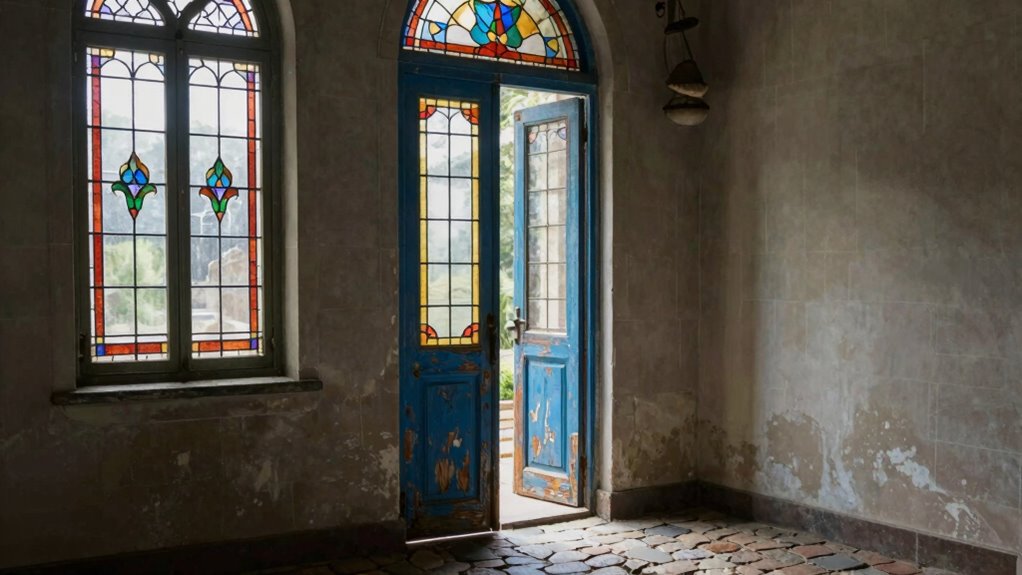
Have you ever wondered why writers often use windows and doors as symbols in fiction? These elements serve as powerful visual cues that tap into universal themes of change, choice, and possibility. When characters encounter a door or a window, it’s more than just a physical object; it becomes a metaphor for what lies ahead or what’s kept out of reach. Doors, in particular, are often depicted as doorways to opportunity. They represent moments when a character must decide whether to step forward into something new or stay behind in the familiar. A closed door can symbolize a barrier to entry, signaling that access is restricted or that a challenge must be overcome before progress can be made. Conversely, an open door invites exploration, suggesting that a new chapter is possible if you’re willing to take the risk. Sometimes, the way characters interact with these symbols reflects their internal conflicts and desires, serving as a mirror to their emotional state.
You might notice that in stories, characters’ interactions with doors and windows reflect their internal struggles. When a character hesitates before opening a door, it often signifies fear or uncertainty about what’s on the other side. When they push through a barrier to entry, it indicates resilience and a desire for growth. Windows offer a slightly different but equally meaningful symbol. Looking through a window can symbolize longing or curiosity, a desire to see beyond current circumstances without necessarily stepping into them. Sometimes, a window can also act as a barrier—blocked or barred—highlighting restrictions or confinement. In these moments, the window becomes a symbol of limitations, emphasizing what’s out of reach or what’s being denied. Additionally, the symbolism of transitional spaces like doors and windows can evoke feelings of hope or hesitation, depending on how they are portrayed in the narrative. Recognizing the symbolic significance of these elements can deepen your understanding of character development and story themes. Moreover, understanding the psychological symbolism behind these objects can reveal hidden layers of meaning in a story. This awareness is especially important in stories that deal with large-scale themes like hope, fear, and transformation.
As you engage with stories, pay attention to how characters’ choices around doors and windows shape their journeys. Do they hesitate or rush? Do they see doors as opportunities or obstacles? These choices reveal much about their internal states and the story’s underlying themes. Writers often use these symbols to evoke emotional reactions, guiding you to reflect on what opportunities or barriers you face in your own life. Whether a door is swung open or slammed shut, it carries meaning that resonates beyond the page. It prompts you to think about your own doorways to opportunity and barriers to entry, reminding you that every decision involves stepping into the unknown or confronting what keeps you from moving forward. Recognizing these symbols can also help you better understand the emotional states of characters and the narrative’s overall message.
decorative symbolic doors for home
As an affiliate, we earn on qualifying purchases.
As an affiliate, we earn on qualifying purchases.
Frequently Asked Questions
How Do Windows and Doors Represent Personal Transitions in Literature?
You see windows and doors as metaphorical thresholds that symbolize personal shifts in literature. When characters cross a door or look through a window, they’re experiencing boundary crossings—leaving behind their old selves or entering new phases. These symbols mark moments of change, growth, or revelation, reflecting inner journeys. They invite you to interpret these physical boundaries as representations of emotional or spiritual shifts, emphasizing the significance of transformation.
Are There Cultural Differences in the Symbolism of Windows and Doors?
Windows and doors are like universal gateways, but their architectural symbolism varies across cultures. In some societies, they symbolize new beginnings and opportunity, while in others, they represent barriers or boundaries. Cultural interpretations shape how these symbols are understood; for example, in Eastern traditions, they might signify spiritual passage, whereas Western cultures often associate them with change and openness. These differences deepen the layers of meaning in symbolic fiction worldwide.
How Do Windows and Doors Relate to Themes of Freedom and Confinement?
Windows and doors symbolize threshold boundaries, representing both freedom and confinement. They serve as passageways that offer escape or entry, highlighting themes of liberation or restriction. When you see them in fiction, recognize their role as symbolic passageways, emphasizing boundaries that can be crossed or maintained. Their presence reflects the tension between staying within limits or breaking free, making them powerful tools to explore characters’ desires for freedom or feelings of confinement.
Can Windows and Doors Symbolize Different Concepts in Various Genres?
Yes, windows and doors can symbolize different concepts across genres by opening boundaries and revealing secrets. In mystery stories, they often represent gateways to hidden truths, while in fantasy, they might symbolize portals to other worlds. You’ll find them used creatively to evoke curiosity, shift, or escape. Their versatility allows writers to explore themes of discovery, transformation, and the unknown, making them powerful symbols in various narrative contexts.
Do Windows and Doors Have Specific Symbolic Meanings in Religious Texts?
In religious texts, windows and doors often symbolize spiritual gateways and thresholds of change. You see them representing entry points to divine insight or transformation, like a door opening to enlightenment or a window revealing hidden truths. These symbols remind you that crossing these thresholds can lead to spiritual growth, new understanding, or a deeper connection with the divine. They serve as powerful metaphors for passages in your spiritual journey.
Conclusion
In the end, windows and doors serve as powerful symbols that open your eyes to new perspectives and opportunities, inviting you to step beyond the familiar. They remind you that sometimes, the key to growth lies just beyond the threshold, waiting for you to take that leap. Don’t be afraid to look through the window or walk through the door—each one holds the promise of a new chapter, proving that the grass is greener on the other side.
Fall Picks
fall essentials
As an affiliate, we earn on qualifying purchases.