

Awareness ribbons use specific colors and designs to symbolize support for various causes worldwide. For example, red ribbons represent AIDS awareness, pink signifies breast cancer, and blue stands for child abuse prevention. Different shades and patterns can indicate additional issues or solidarity efforts. These ribbons serve as powerful symbols to communicate messages quickly and emotionally across cultures. If you keep exploring, you’ll discover even more about how each color carries its own meaningful story.
Key Takeaways
- Different colors of awareness ribbons symbolize specific causes, such as red for AIDS or pink for breast cancer.
- Multiple-color ribbons or patterns often represent complex issues or solidarity with multiple causes.
- The choice of ribbon color can evoke emotional responses and cultural associations linked to the cause.
- Some ribbons feature additional symbols or designs to emphasize particular messages or initiatives.
- Awareness ribbons serve as visual tools to promote understanding, support, and advocacy across diverse communities.
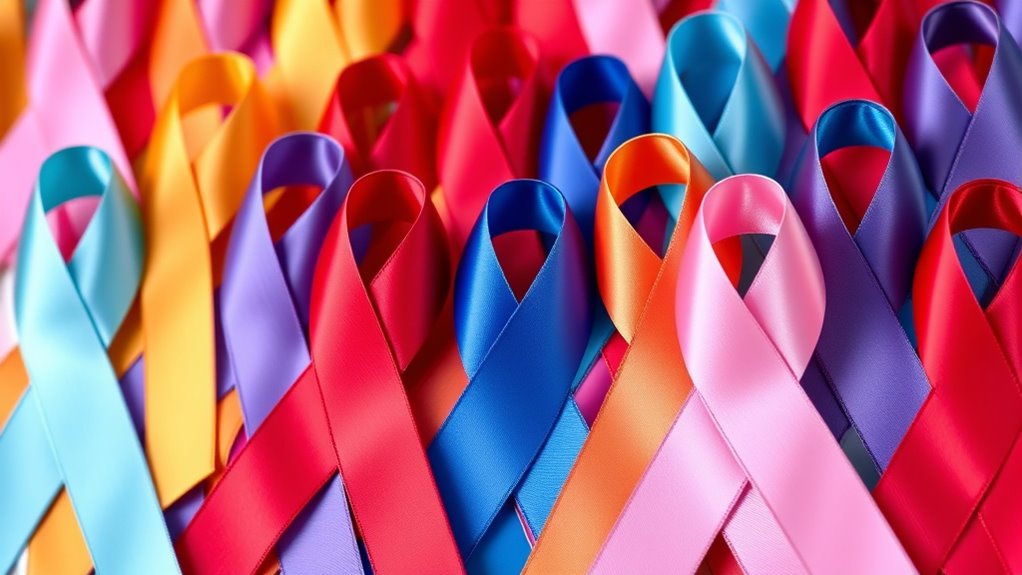
Have you ever wondered what those colorful ribbons symbolize? They’re more than just vibrant accessories; they represent awareness, support, and solidarity for countless causes around the world. These ribbons have a rich history that dates back decades, serving as powerful symbols to unite people and promote understanding. The significance of awareness ribbons lies in their ability to communicate a message quickly and emotionally, transcending language barriers and cultural differences. When you see a pink ribbon, for example, it immediately brings to mind breast cancer awareness, while a red ribbon might remind you of HIV/AIDS support. These colors have become universal symbols, fostering community and encouraging action.
Colorful ribbons symbolize awareness, support, and solidarity, uniting people worldwide to promote understanding and action.
Understanding the history significance of awareness ribbons reveals that they originated in the early 1970s, with the red ribbon becoming prominent as a symbol of AIDS awareness in the late 1980s. Over time, organizations adopted different colors to represent a wide array of causes, each with its unique story and purpose. The simplicity of a ribbon makes it a versatile and effective tool for advocacy, but it’s the design variations that truly give each ribbon its identity. Some ribbons feature multiple colors or patterns to signify complex issues or solidarity with multiple causes. Others are simple solid colors, chosen for their emotional and cultural connotations. The way a ribbon is designed can evoke specific feelings—hope, strength, remembrance—and deepen the connection people have with the cause it represents.
As you explore the world of awareness ribbons, you’ll notice that their design variations are intentional and meaningful. Some ribbons are made with textured fabrics or layered with additional symbols, such as hearts or infinity signs, to amplify their message. Others are shaped into bows or loops to make them more visually appealing and easier to wear. The size and material of the ribbons can also vary depending on the event or campaign, but their core purpose remains the same: to raise awareness and foster support. The diversity in design reflects the diversity of causes they stand for, ensuring that each cause can find a fitting symbol that resonates emotionally with the public.
In essence, awareness ribbons serve as a visual language that speaks to shared struggles and hopes. Their history significance underscores their enduring power, and their design variations allow for personalization and deeper engagement. Whether you wear one to honor a loved one, show your support, or simply start a conversation, these ribbons remind us that awareness and compassion are universal languages. They connect us across borders, generations, and backgrounds, making the act of wearing a simple ribbon a profound act of solidarity.
Top picks for "awarenes ribbon color"
Open Amazon search results for this keyword.
As an affiliate, we earn on qualifying purchases.
Frequently Asked Questions
How Are Awareness Ribbons Typically Distributed?
You typically receive awareness ribbons through distribution methods like fundraising events, awareness campaigns, or community gatherings. These ribbons serve as symbolic meanings, representing support or solidarity for specific causes. You might also find them handed out at health fairs or given by organizations to raise awareness. The distribution methods aim to spread awareness, foster unity, and encourage conversations about important issues, making the ribbons powerful symbols of collective effort and advocacy.
Can Awareness Ribbons Be Customized for Specific Events?
Yes, you can customize awareness ribbons for specific events. You’ll want to focus on ribbon design, choosing colors and styles that match your cause. Event personalization allows you to add logos, messages, or unique patterns to make the ribbons meaningful for your occasion. Many organizations offer custom ribbon services, making it easy to create memorable, tailored designs that effectively promote awareness and support for your cause.
Are Awareness Ribbons Recognized Internationally?
Yes, awareness ribbons are recognized internationally as symbols of support and solidarity. You’ll see their use across different countries, reflecting their role in global symbolism. However, keep in mind that cultural variations can influence how these ribbons are perceived or used. While the colors often carry common meanings, some cultures may interpret them differently, so understanding local customs enhances their impact and avoids miscommunication.
How Do Awareness Ribbons Vary in Different Cultures?
You’ll find awareness ribbons vary widely across cultures due to different cultural symbolism and regional variations. In some regions, specific colors hold unique meanings, so a ribbon that symbolizes one cause elsewhere might represent something entirely different locally. You should be aware that these regional differences influence how ribbons are used, accepted, or interpreted, making it important to take into account cultural context when recognizing or promoting awareness campaigns globally.
What Is the History Behind the First Awareness Ribbons?
Imagine a nurse wearing a pink ribbon during the 1970s to raise awareness about breast cancer. The historical origins of awareness ribbons trace back to this era, where ribbon symbolism gained popularity as a simple, visual way to promote causes. The first awareness ribbons served as symbols of support and solidarity, inspiring many to adopt different colors for various issues, creating a powerful, ongoing tradition of visual advocacy.
Conclusion
So, next time you pick a ribbon color, remember you’re not just decorating your wardrobe—you’re making a bold statement about your social awareness. Because nothing screams “I care” quite like sporting a rainbow of awareness ribbons, right? Whether you’re raising funds or just trying to look thoughtful, these ribbons are the perfect way to say you’re “doing your part.” After all, what’s more impactful than a tiny strip of fabric?