Emoji hand gestures can have different meanings depending on cultural context. For example, a thumbs-up usually means “okay” in Western countries but might be offensive elsewhere. The peace sign often signifies victory or peace, but showing the back of two fingers can be rude in some regions. Gestures like the pinched fingers can mean “wait,” “small amount,” or “money,” depending on where you are. If you’re curious, exploring the nuances can help you communicate more clearly and respectfully everywhere you go.
Key Takeaways
- Emoji hand gestures can symbolize approval, peace, or other sentiments, but meanings vary across cultures.
- The thumbs-up generally signifies “okay” in Western cultures but may offend in some Middle Eastern and Asian regions.
- The peace sign with two fingers typically indicates victory or peace, but showing the back of fingers can be rude in certain countries.
- The pinched fingers emoji can mean “wait,” “small amount,” or “money,” depending on cultural context.
- Using emoji hands thoughtfully and considering cultural differences helps prevent misunderstandings and promotes respectful communication.
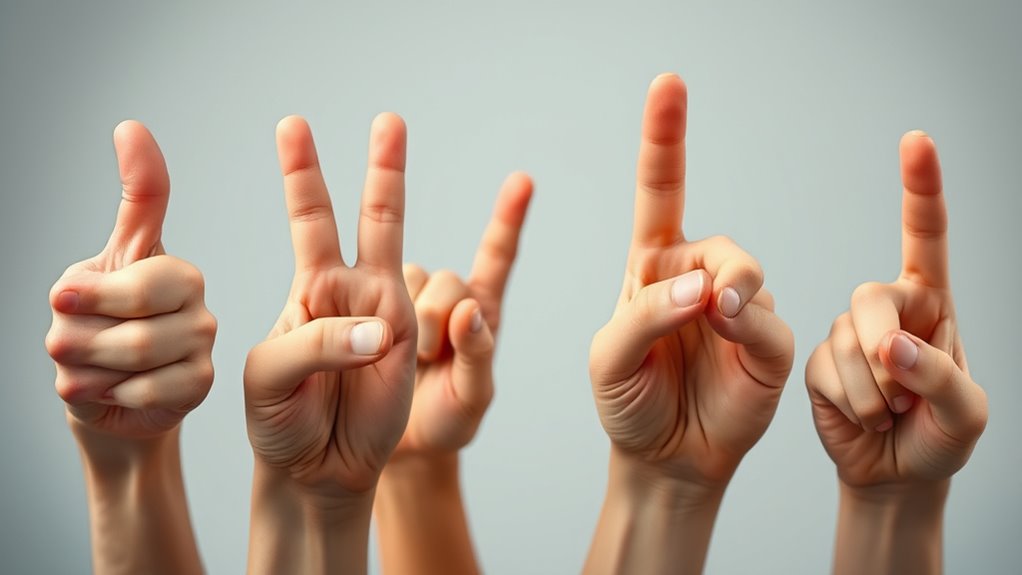
Have you ever wondered how emoji hands communicate so much with just a simple gesture? These tiny symbols pack a punch, conveying feelings, intentions, and even cultural nuances that words might struggle to express. But understanding what each emoji hand means isn’t always straightforward because cultural interpretations can vary widely. What’s considered friendly or polite in one country might be offensive or confusing in another. For example, the thumbs-up emoji is generally seen as a positive affirmation in many Western cultures, meaning “good job” or “okay.” However, in some parts of the Middle East and Asia, it can be interpreted as an offensive gesture, akin to giving someone the middle finger. Similarly, the peace sign with two fingers is a common symbol of victory or peace in the United States, but in certain countries like the UK and Australia, showing the back of your hand with two fingers can be a rude gesture.
This cultural diversity often leads to common misunderstandings. When you send an emoji hand, you might intend it to be friendly or neutral, but it can unintentionally offend someone from a different background. For instance, the pinched fingers emoji, often used to mean “wait a moment” or “small amount,” can be seen as a gesture of “money” or “pay me” in Italy. Without context, it’s easy to misinterpret these symbols, especially in international conversations. Recognizing these differences helps you avoid miscommunication and shows respect for cultural nuances.
Another aspect to contemplate is the way emoji hands are used in different settings. In professional environments, a simple open hand or thumbs-up might be seen as polite and reassuring, while in casual chats, more expressive gestures like the raised fist or the “OK” sign can carry different connotations. The raised fist, for example, symbolizes solidarity and resistance in many contexts but can also be associated with political movements that might not be appropriate for all conversations. The key is to understand that gestures carry weight beyond their visual appearance, and cultural context shapes their interpretation substantially.
Ultimately, emoji hands serve as powerful tools for communication, but they require awareness of cultural sensitivities. When you use them thoughtfully, you bridge gaps and connect more meaningfully. When unsure, it’s always wise to reflect on how someone from a different background might perceive your gesture. Doing so ensures your message comes across clearly and respectfully, avoiding the common misunderstandings that can happen when symbols are misinterpreted.
Frequently Asked Questions
How Do Cultural Differences Affect Emoji Hand Gesture Interpretations?
Cultural differences substantially influence how you interpret emoji hand gestures due to cross-cultural symbolism and regional gesture variations. What’s seen as friendly in one culture might be offensive elsewhere. For example, a thumbs-up is positive in many places but can be rude in others. You should consider these regional nuances to avoid misunderstandings, especially when communicating across cultures. Always remember that gestures carry different meanings depending on the cultural context.
Are There Any Emoji Hand Gestures That Are Universally Recognized?
You’ll find that some emoji hand gestures, like the thumbs-up, are widely recognized across cultures due to their simple, positive meaning. However, cross-cultural interpretations can vary, and emoji gesture evolution influences how people understand these symbols over time. While some gestures have become almost universal, it is crucial to remember that regional differences may still affect their reception, so always consider context when communicating internationally.
How Do Emoji Gestures Influence Digital Communication Etiquette?
Emoji gestures are like digital handshake signals, shaping your communication etiquette. They add nuance, helping you express tone and intent clearly. When you interpret emojis correctly, you avoid misunderstandings and foster positive interactions. Conversely, misreading them can lead to unintentional offense. Mastering emoji interpretation helps you navigate digital etiquette smoothly, ensuring your messages are respectful and engaging. Keep in mind, these tiny symbols carry big weight in shaping your online relationships.
Can Emoji Hand Signs Have Different Meanings in Various Regions?
You’ll find that emoji hand signs can have different meanings across regions due to cultural symbolism and regional variations. For example, a thumbs-up might be positive in one place but offensive elsewhere. It’s important to take into account these differences when using emojis, as misinterpretations can occur. Being aware of regional variations helps you communicate more effectively and respectfully in diverse digital environments.
Are There Any Controversial or Misunderstood Emoji Hand Gestures?
Yes, some emoji hand gestures can be controversial or misunderstood. You might encounter cultural misinterpretations, where a gesture popular in one region is seen as offensive in another. Be cautious with gestures like the thumbs-up or the peace sign, which can sometimes be interpreted as offensive gestures elsewhere. Always consider the context and your audience to avoid unintentional offense or miscommunication.
Conclusion
So, next time you toss out a thumbs-up or wave hello, remember—those tiny hand emojis might be saying more than you think. You might think you’re just being friendly, but in reality, you’re sending a whole language of signals you barely understand yourself. Isn’t it amusing how something so simple can carry so much weight? Maybe, just maybe, those little gestures are more powerful than your words—proof that sometimes, silence really does speak volumes.