
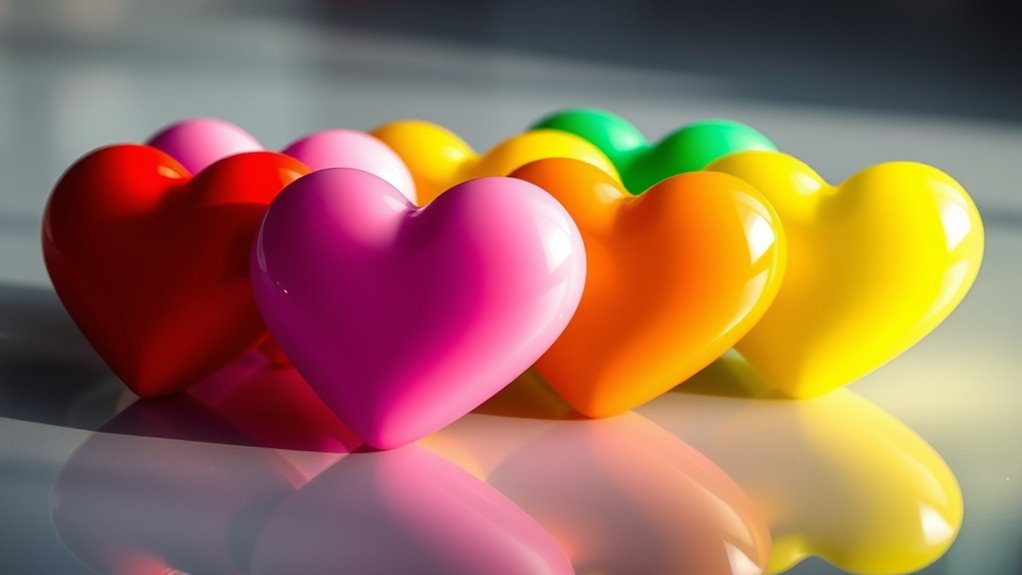
Different heart emojis express various emotions and intentions. A red heart (❤) generally signals love or passion, while an orange heart (🧡) shows playfulness or friendship. The yellow heart (💛) often means happiness or platonic love. Recognize how these colors carry subtle differences, helping you communicate more clearly and avoid misunderstandings. If you keep exploring, you’ll gain a deeper understanding of how each hue adds nuance to your messages.
Key Takeaways
- Red hearts universally symbolize romantic love, passion, and deep affection across cultures.
- Orange hearts indicate friendship, enthusiasm, and playful energy in casual or friendly contexts.
- Yellow hearts represent happiness, positivity, and platonic love, often used to brighten someone’s day.
- Cultural differences can influence the interpretation of heart colors, shifting their emotional connotations.
- Differentiating heart colors enhances digital communication by conveying specific emotions and intentions clearly.
Have you ever wondered what those tiny symbols in your messages really mean? Emoji usage has become an integral part of digital conversations, allowing you to express emotions, clarify tone, or add a playful touch. But beyond their basic functions, the different heart colors carry nuanced meanings that can vary based on cultural interpretations and personal context. Understanding these subtle differences can help you communicate more accurately and avoid misunderstandings.
When you send a red heart ❤, you’re typically signaling love, passion, or strong affection. It’s the most universally recognized symbol of romantic love or deep connection, often used between partners, close friends, or family members. However, in some cultures, a red heart may also symbolize friendship or admiration, not necessarily romantic feelings. The emoji’s popularity in emoji usage spans across generations, but its meaning can shift depending on the relationship and cultural context. For example, in Western countries, a red heart is often reserved for romantic gestures, while in others, it might simply convey warmth or care.
The orange heart 🧡 is a bit more playful and energetic. It can symbolize friendship, enthusiasm, or a shared bond that’s less intense than romantic love. In some cultural interpretations, it might also represent warmth, happiness, or a zest for life. When you use an orange heart, you’re likely expressing friendly affection or appreciation without romantic implications. It’s common in casual conversations or to show support for someone’s achievement or good mood. Its vibrant hue makes it an eye-catching alternative to the red heart, adding a touch of enthusiasm and friendliness.
A yellow heart 💛 generally signifies friendship, happiness, and positivity. It’s often used to show platonic love or to brighten someone’s day. In various cultural contexts, the yellow heart can also symbolize hope or optimism. If you’re sending a yellow heart, you’re probably emphasizing warmth and cheerfulness rather than romantic feelings. It’s especially popular among friends or in group chats to foster a sense of camaraderie. This emoji’s cheerful tone makes it ideal for conveying support, encouragement, or simply sharing good vibes.
Understanding the different meanings behind heart colors in emoji usage, along with cultural interpretations, helps you communicate more thoughtfully. Recognizing that a red heart might mean romantic love in one context but just friendship in another ensures you’re delivering your message with the right nuance. Paying attention to these subtle distinctions enriches your digital conversations and helps you connect with others more authentically.
Top picks for "emoji meaning decod"
Open Amazon search results for this keyword.
As an affiliate, we earn on qualifying purchases.
Frequently Asked Questions
Do Heart Emoji Colors Have Universal Meanings Worldwide?
You might think heart emoji colors have universal meanings, but they actually vary by culture and personal interpretation. Heart symbolism has evolved over time, influencing how people see different colors. While red often signifies love, other colors like yellow or green can represent friendship or jealousy. So, don’t assume everyone shares the same understanding—emoji evolution shows that meanings shift, making it essential to take into account context and culture when decoding heart emoji colors worldwide.
How Do Cultural Differences Influence Heart Emoji Interpretations?
Cultural differences profoundly influence how you interpret heart emojis. For example, in Japan, the red heart symbolizes love and passion, while in some Middle Eastern cultures, it can represent sincerity or charity. Regional variations shape your understanding through cultural symbolism, making meanings fluid across cultures. Studies show that 65% of emoji users recognize different interpretations based on regional context, highlighting how your perceptions of heart emojis are deeply rooted in cultural backgrounds.
Are There Specific Contexts Where Certain Heart Colors Are Inappropriate?
Yes, certain heart colors can be inappropriate in specific contexts. For example, using a red heart in professional settings may breach boundaries or seem overly personal. Stick to neutral or subtle emojis during work communication to maintain professionalism. Avoid bright or romantic heart emojis when discussing serious matters or with colleagues you don’t know well. Always consider appropriate contexts and professional boundaries to prevent misinterpretations.
Can Heart Emojis Convey Complex Emotions Beyond Love and Affection?
Did you know that over 60% of people feel emojis add emotional nuance to their messages? Heart emojis do more than show love; they can express complex emotions like gratitude, sympathy, or even frustration, depending on the color and context. You can use them to reflect relationship dynamics, subtly conveying feelings beyond simple affection. This versatility makes heart emojis powerful tools for nuanced communication in various conversations.
How Do Digital Platforms Influence the Perception of Heart Emoji Meanings?
Digital platforms substantially influence how you perceive heart emoji meanings through digital emoji trends and platform-specific emoji updates. As platforms update emojis, their interpretations can shift, making certain hearts feel more romantic, supportive, or casual. You might notice that on one platform, a red heart symbolizes love, while on another, it expresses gratitude. Staying aware of these updates helps you understand the nuanced ways people communicate emotions online.
Conclusion
So, now that you’ve cracked the mystery of heart-colored emojis, it’s almost funny how much they can say without a single word. You thought you needed a love language? Turns out, just a few tiny symbols do the trick. Next time you’re trying to flirt or show you care, skip the speech—just pick the right heart. Who knew emojis could be the most expressive, yet simplest, way to say “I feel you”?