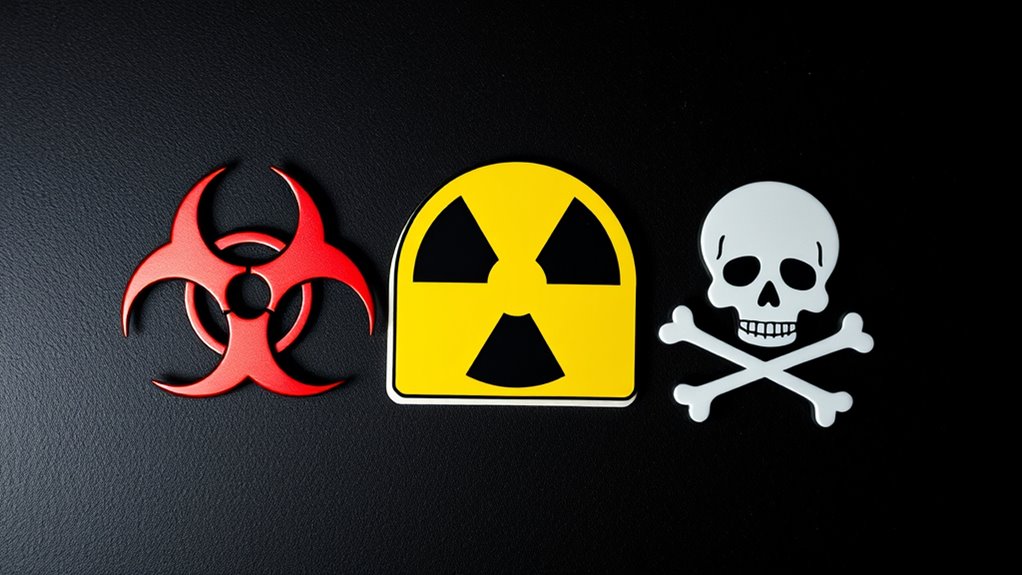

Understanding hazard symbols like biohazard, radiation, and toxicity is key to recognizing risks around you. Biohazard symbols warn of biological dangers such as infected materials, requiring protective gear and careful handling. Radiation symbols alert you to sources like radioactive materials, advising safe distances and shielding. Toxicity symbols indicate harmful substances that need careful storage and protective measures. Grasping these symbols helps prevent accidents and keeps you safe—there’s more to learn about each symbol’s specific precautions.
Key Takeaways
- Recognizing biohazard, radiation, and toxicity symbols is crucial for safety awareness in workplaces and homes.
- Biohazard symbols alert to biological risks like infected materials, requiring protective measures.
- Radiation hazard symbols warn of ionizing radiation sources, emphasizing distance and shielding.
- Toxicity symbols indicate poisonous substances that need careful handling and proper storage.
- Proper interpretation of these symbols ensures compliance with safety protocols and reduces health risks.
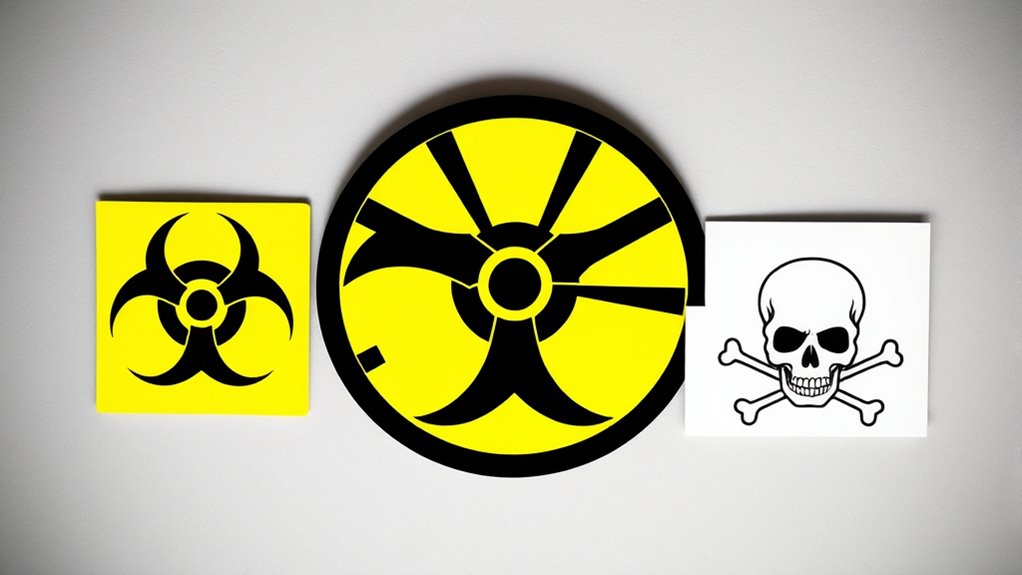
Have you ever wondered how you can quickly identify dangers in the workplace or at home? Recognizing hazard symbols is a essential skill that helps you stay safe and avoid accidents. Proper symbol interpretation allows you to understand the risks associated with various substances or environments immediately. When you see a hazard symbol, it’s a clear signal to implement safety protocols that protect you and others around you. These symbols communicate important information efficiently, so mastering their meanings is imperative for maintaining safety in any setting.
Recognizing hazard symbols is essential for staying safe and preventing accidents at work and home.
For example, biohazard symbols are designed to alert you to biological threats, such as infected materials or medical waste. When you spot this symbol, it’s a reminder to exercise caution, wear appropriate protective gear, and follow specific handling procedures. Proper symbol interpretation ensures you don’t underestimate the severity of biological risks. By adhering to safety protocol implementation, you minimize exposure and prevent the spread of dangerous pathogens. Whether you’re working in a laboratory, a healthcare facility, or handling waste at home, recognizing this symbol is essential.
Radiation hazard symbols are next. They warn of ionizing radiation sources, like radioactive materials or certain medical equipment. If you see the radiation warning sign, it’s a signal to keep a safe distance, limit exposure time, and use shielding or protective gear. Understanding these symbols helps you assess the danger quickly and act accordingly. Implementing safety protocols, such as wearing dosimeters or following specific handling procedures, reduces your risk of radiation exposure, which can have serious health consequences over time.
Toxicity symbols alert you to harmful or poisonous substances. When you encounter this warning, it’s necessary to handle the material with care, use proper protective equipment, and store it safely away from children or pets. Recognizing toxicity symbols requires careful interpretation because many chemicals and substances you use daily may carry such warnings. Ignoring these signs can lead to poisoning or other health issues. Hence, following safety protocol implementation—like proper labeling, ventilation, and disposal—is essential in minimizing risks.
Frequently Asked Questions
How Are Hazard Symbols Standardized Worldwide?
You can understand that hazard symbols are standardized worldwide through international safety regulations and symbol recognition standards. These regulations, like those from OSHA or the GHS, ensure consistent design, color, and meaning across countries. By following these standards, you can swiftly recognize hazards no matter where you are, promoting safety and effective communication. This uniformity helps prevent accidents and ensures proper handling of dangerous materials globally.
What Materials Are Commonly Marked With Biohazard Symbols?
Imagine a warning sign as a guardian at the gate—you’re responsible for recognizing it. Biohazard symbols mark materials like medical waste, blood samples, and contaminated laboratory equipment to guarantee safety. These symbols alert you to handle items carefully, preserving laboratory safety and preventing infection. Always look for the biohazard sign on sharps containers, specimen bags, or contaminated surfaces, so you can act swiftly and responsibly to minimize risk.
How Does Radiation Risk Vary Among Different Symbols?
Radiation risk varies depending on the symbol recognition and the level of radiation exposure involved. You should understand that a radiation symbol indicates potential danger from ionizing radiation, which can cause serious health issues. The risk increases with higher exposure levels, so recognizing the symbol promptly helps you take safety measures. Always follow protocols when you see the radiation symbol, and minimize your exposure to stay safe from radiation hazards.
Are There Specific Training Requirements for Handling Toxic Substances?
Yes, you need specific training when handling toxic substances. You’ll learn about proper use of personal protective equipment like gloves and masks, and how to respond in emergencies. This training helps you recognize hazards quickly and minimizes risks. You’ll also understand cleanup procedures and disposal methods to prevent contamination. Staying informed and prepared guarantees your safety and the safety of others when working with toxic materials.
How Can You Safely Dispose of Hazardous Materials Marked With Symbols?
Think of hazardous materials as delicate time bombs—you must handle them carefully. To safely dispose of them, you follow strict protocols, like chemical spill response plans, and always wear personal protective equipment. Never pour them down the drain or toss them in regular trash. Instead, contact your hazardous waste disposal service or follow your facility’s procedures. Your caution guarantees safety for everyone and prevents environmental harm.
Conclusion
So, next time you see these symbols, remember they’re just trying to give you a friendly warning—unless you’re secretly planning to play chemical roulette. Biohazard, radiation, and toxicity signs aren’t just decorative; they’re your backstage passes to danger. Ignoring them is like inviting disaster to your door with a bow on top. Play it safe, respect the symbols, and leave the thrill-seeking to comic book heroes—you’re better off without the radioactive souvenir.