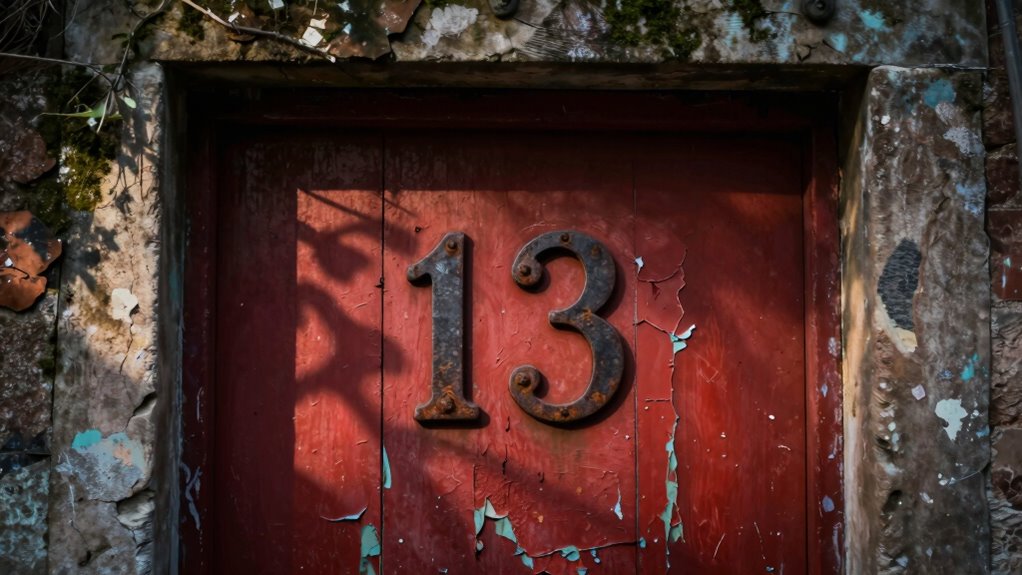

The number 13 has often been seen as unlucky because of historical, religious, and cultural stories—like the Last Supper and Norse legends—that link it to betrayal and misfortune. However, its meaning varies worldwide; in some places, it symbolizes luck, prosperity, or neutrality. Many beliefs are shaped by tradition and media, not inherent qualities. Want to uncover the true origins and diverse perceptions behind 13? There’s more to understand just ahead.

Get school and study supplies delivered free — and shop member deals
- Fast, free delivery on millions of items
- Access to Prime Big Deal Days deals on October 6–7
- Prime Video, Amazon Music and more included
Key Takeaways
- The number 13 is historically linked to negative events like the Last Supper and Norse legends, shaping its superstitions.
- Cultural perceptions of 13 vary globally, with Western societies viewing it as unlucky, while others see it as fortunate.
- Superstitions about 13 influence behaviors, such as avoiding it in buildings, scheduling, and social settings.
- Religious and mythological stories have reinforced the association of 13 with betrayal and bad luck.
- Understanding its cultural and historical roots reveals that 13’s meaning is culturally specific and not inherently unlucky.
Have you ever wondered what the number 13 truly symbolizes? Many people see it as an unlucky number, but the story behind that belief is more complex than you might think. The superstitions origins of the number 13 date back centuries, blending history, religion, and cultural perceptions. In some traditions, the number is linked to negative events or bad luck, while in others, it holds different meanings altogether. These superstitions have traveled across generations, shaping behaviors and beliefs around the world.
The number 13’s meaning varies worldwide, shaped by history, culture, and tradition rather than inherent luck or misfortune.
Cultural variations play a significant role in how 13 is perceived. For example, in Western societies, especially in the United States and Europe, 13 is often considered unlucky. This belief has led to the omission of the 13th floor in many skyscrapers, and some hotels skip labeling a room 13 altogether. The fear of the number has even influenced social behaviors, with some people avoiding events scheduled on the 13th day of the month or skipping meals at a table with 13 guests. These practices stem from deeply rooted superstitions that have persisted over time, reinforcing the idea that 13 brings misfortune. Interestingly, superstition origins can also be traced to specific historical events and religious beliefs that have contributed to these perceptions. Additionally, the modern media has perpetuated these beliefs, further solidifying the superstition in popular culture.
Conversely, in other cultures, 13 isn’t viewed as ominous at all. For instance, in Italy, the number 13 is considered lucky, symbolizing prosperity and growth. Similarly, in some Asian cultures, the significance of 13 varies, and it can be associated with positive outcomes or neutrality, depending on the context. This divergence shows how cultural variations influence the meaning attributed to the number, highlighting that superstition isn’t universal.
The origins of superstitions about 13 are often linked to historical or religious events. Some trace the negative connotations back to the Last Supper, where Jesus and his 12 apostles dined together, with Judas, the betrayer, being the 13th guest. This story helped cement the number’s association with betrayal and bad luck in Christian cultures. Others point to ancient Norse legends or pagan beliefs that also contributed to the superstition. Over time, these stories became intertwined with societal fears, giving rise to the widespread avoidance of 13 in various contexts. Additionally, cultural perceptions about the number 13 continue to evolve, influenced by modern interpretations and media. Recognizing the historical roots of these superstitions can help demystify the number and reduce unwarranted fears surrounding it.
All of this shows that whether you see 13 as unlucky or lucky depends largely on where you come from and the stories you’ve been told. The superstition origins and cultural variations demonstrate that such beliefs are shaped by history and tradition, not inherent qualities of the number itself. So, next time you encounter 13, remember that its meaning is more fluid than it might seem, rooted in stories and customs that have evolved over centuries.
As an affiliate, we earn on qualifying purchases.
Frequently Asked Questions
How Does the Number 13 Influence Superstitions Worldwide?
The number 13 influences superstitions worldwide through its varied cultural symbolism and numerology. In some traditions, it’s seen as unlucky, leading to practices like skipping the 13th floor or avoiding certain dates. Conversely, other cultures view it as a symbol of luck and renewal. Your perception of 13 depends on these cultural variations and numerology symbolism, shaping your beliefs and behaviors around this intriguing number.
Are There Any Historical Figures Associated With the Number 13?
You’ll find that many historical figures are linked to the number 13 through ancient numerology and symbolism. For instance, Leonardo da Vinci considered 13 a symbol of transformation, while Napoleon’s love for the number reflected his belief in its power. Historically, 13 often represented rebirth and renewal in ancient cultures. These associations highlight how the number 13 has held significance in various eras, shaping perceptions and superstitions worldwide.
Is 13 Considered Lucky in Any Cultures?
In some cultures, 13 is actually considered lucky due to its numerology significance and cultural symbolism. For example, in Italy, 13 is seen as a symbol of prosperity and good fortune. You might find that in certain traditions, the number is associated with positive energy and new beginnings. Embracing this perspective, you can see that 13’s meaning varies widely, and in some contexts, it’s truly a fortunate number.
How Do Different Religions Interpret the Number 13?
In Christianity, the number 13 is often seen as unlucky, linked to the Last Supper where Jesus dined with 12 apostles, making 13 guests. This reflects the numerology significance of 13 as associated with upheaval or change. Cultural variations reveal that some religions or regions don’t assign negative meaning, instead viewing 13 neutrally or positively. For instance, in Judaism, 13 symbolizes maturity and responsibility, illustrating diverse interpretations across faiths.
What Are Some Common Myths About the Number 13?
Many myths surround the number 13, like it being inherently unlucky or cursed. You might hear that it brings bad luck or misfortune, but these ideas often stem from cultural symbolism and superstitions rather than facts. In numerology beliefs, 13 can symbolize transformation and rebirth. Recognizing these myths helps you see that the number’s meaning varies widely and isn’t always negative, depending on cultural context.
Conclusion
So, next time you see the number 13, remember it’s more than just superstition. In fact, studies show that about 85% of buildings skip the 13th floor, revealing how deeply ingrained this fear is in our culture. But whether you embrace it or not, understanding its history can help you see it as a symbol of change and transformation. Don’t let fear hold you back—sometimes, the number 13 can mean new beginnings.
Halloween Picks
halloween
As an affiliate, we earn on qualifying purchases.