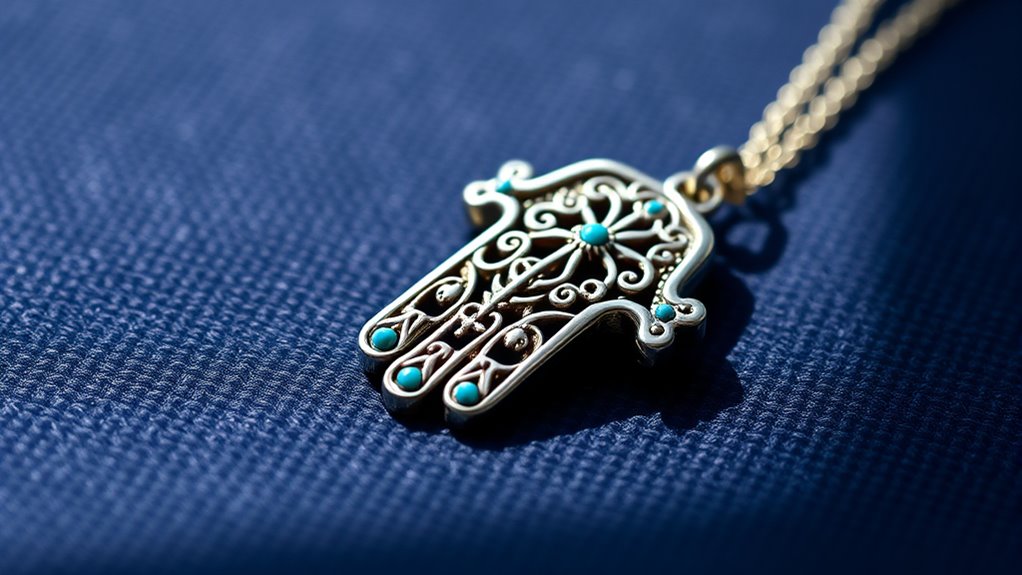

The Hands of Fatima, or Khamsa, is a symbol of protection rooted in cultures across North Africa and the Middle East. You’ll find it often in jewelry and homes as a talisman to ward off negative energies and the evil eye. Its five fingers represent concepts like the five pillars of Islam or senses, while embedded eye motifs enhance its protective power. To discover how this ancient symbol continues to influence lives today, keep exploring its cultural and spiritual significance.
Key Takeaways
- The Hands of Fatima, or Khamsa, is a protective symbol representing spiritual safeguarding against negative energies and the evil eye.
- It features five fingers symbolizing concepts like the five pillars of Islam or senses, often embedded with eye motifs.
- The Khamsa is used in jewelry, wall hangings, and amulets to invoke divine protection and promote positive energy.
- Its design emphasizes protection, offering a sense of security, peace, and spiritual connection in daily life.
- Passed down through generations, it embodies cultural heritage, resilience, and a universal symbol of divine safeguarding.

The Hands of Fatima, also known as the Khamsa, is a powerful symbol found across various cultures and spiritual traditions. You might notice it in jewelry, wall hangings, or amulets, and it’s often regarded as more than just decorative. Its core purpose is rooted in protective symbolism, serving as a shield against negative energies, evil eye, and misfortune. When you see the Khamsa, you’re witnessing a symbol that’s been cherished for centuries, carrying a deep cultural significance that spans North Africa, the Middle East, and beyond. Its widespread use highlights its importance as a talisman that offers safety and spiritual protection, resonating deeply within the communities that keep it alive.
In many cultures, the Khamsa’s design isn’t accidental. The five fingers are symbolic, representing various concepts like the five pillars of Islam or the five senses, anchoring its protective powers in spiritual and physical awareness. You may also notice eye motifs embedded within the hand, often called the “evil eye,” which is believed to ward off jealousy and malicious intent. This combination of symbols makes the Khamsa a potent emble of safeguarding both body and soul. Its cultural significance goes beyond mere superstition; it’s a part of identity, tradition, and faith. Wearing or displaying the Khamsa connects you to a larger spiritual narrative that values protection, harmony, and divine blessing.
The hands themselves are a universal gesture of offering and protection, but when paired with the eye and other symbols, they become a potent spiritual tool. You might see the Khamsa in homes, on jewelry, or even in religious settings, emphasizing its role in daily life and spiritual practice. Its protective symbolism isn’t just about warding off harm but also about fostering a sense of security and peace. Many believe that by keeping the Khamsa close, you invite positive energy and divine favor into your life. Its cultural significance is deeply ingrained, often passed down through generations, preserving its meaning and power.
Ultimately, the Hands of Fatima serve as a reminder of the importance of spiritual protection and cultural heritage. Whether you wear it, display it, or simply admire its craftsmanship, you’re engaging with a symbol that embodies centuries of tradition, faith, and hope. Its enduring presence across different societies underscores its significance as a universal emblem of safety, resilience, and spiritual connection.
Frequently Asked Questions
Can the Hands of Fatima Be Worn by Anyone Regardless of Religion?
Yes, you can wear the Hands of Fatima regardless of your religion, as it promotes interfaith acceptance and cultural symbolism. Many people see it as a protective talisman beyond religious boundaries, appreciating its universal meaning of protection and good fortune. Wearing it allows you to connect with diverse traditions, embracing its spiritual significance without exclusivity. This open approach fosters unity and respect across different cultural and spiritual backgrounds.
Are There Specific Rituals Associated With Using the Khamsa for Protection?
You can absolutely perform protective rituals with the Khamsa, and yes, there are specific spiritual practices that amplify its power. These rituals can include prayers, meditation, or even lighting candles while focusing on protection. By engaging wholeheartedly in these spiritual practices, you harness the full protective energy of the Khamsa, making it a mighty shield against negative forces. Embrace these rituals, and watch your protection soar to extraordinary heights!
How Does the Hands of Fatima Influence Mental Well-Being?
You find that the Hands of Fatima can positively influence your mental well-being by encouraging mindfulness practices. Focusing on its symbolism helps reduce anxiety and promotes a sense of protection and calm. When you meditate or reflect on its spiritual meaning, you become more present and centered, which eases stress. Incorporating the Khamsa into your daily routine can serve as a visual reminder to stay mindful and manage anxiety effectively.
Is There a Preferred Material for Crafting Authentic Khamsa Amulets?
You should choose materials like silver, gold, or terracotta for authentic khamsa amulets, as they hold cultural significance and symbolize protection, purity, and strength. Silver is often valued for its spiritual purity, while gold signifies wealth and divine connection. Terracotta offers earthy symbolism of grounding. Opting for these materials guarantees your amulet resonates with cultural meanings and enhances its protective qualities.
Can the Hands of Fatima Be Incorporated Into Modern Jewelry Designs?
Yes, you can incorporate the Hands of Fatima into modern jewelry designs. Many designers explore cultural symbolism, blending traditional motifs like the Khamsa with current fashion trends. This fusion creates unique, meaningful pieces that celebrate heritage while staying stylish. By doing so, you not only honor spiritual meanings but also make the symbolism accessible and trendy, appealing to those who appreciate cultural depth in their fashion choices.
Conclusion
As you explore the Hands of Fatima, it’s fascinating how this symbol often appears just when you need protection or guidance the most. That coincidence might be a gentle reminder that spiritual symbols are always around us, offering comfort and strength. Whether you wear it as jewelry or keep it nearby, the Khamsa’s meaning can resonate deeply, reminding you that sometimes, the universe aligns to shield and inspire you in unexpected ways.