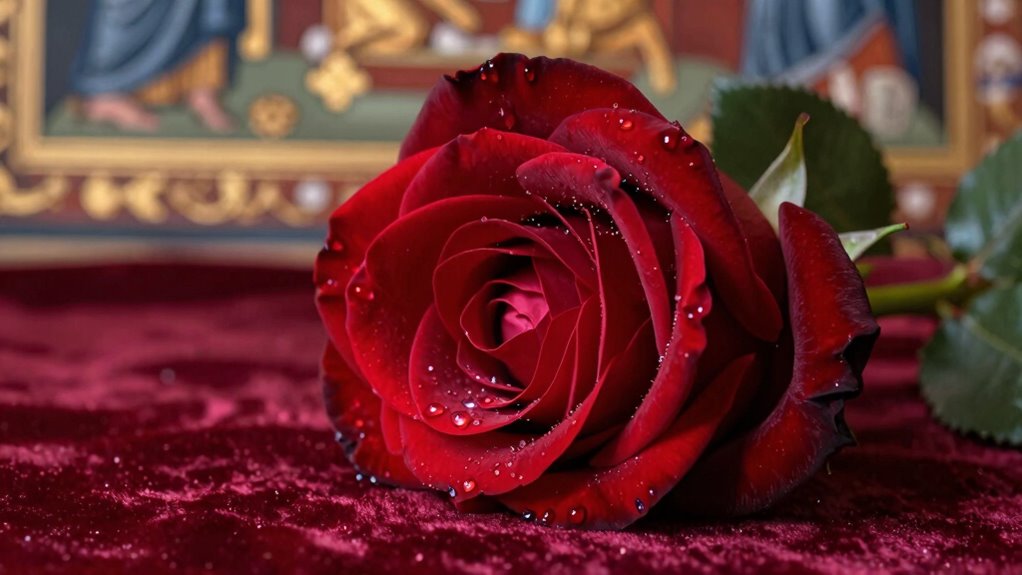

The rose symbolizes love, secrecy, and spirituality across many cultures. A red rose often expresses romantic desire, while the white symbolizes purity and innocence. Historically, roses also represented divine love and spiritual awakening, used in religious art and rituals. In some traditions, they convey hidden messages or private devotion. As you explore further, you’ll discover how this timeless flower holds layered meanings that connect personal feelings with deep cultural stories.

Get school and study supplies delivered free — and shop member deals
- Fast, free delivery on millions of items
- Access to Prime Big Deal Days deals on October 6–7
- Prime Video, Amazon Music and more included
Key Takeaways
- Red roses universally symbolize love, desire, and romantic affection across cultures and history.
- Roses often represent secrecy, with “sub rosa” indicating confidentiality and hidden messages.
- In Christian and medieval art, roses symbolize divine love, purity, and spiritual devotion.
- Cultural variations associate roses with mystical beauty, harmony, and spiritual balance.
- The layered symbolism of roses connects personal emotions with collective cultural and religious narratives.
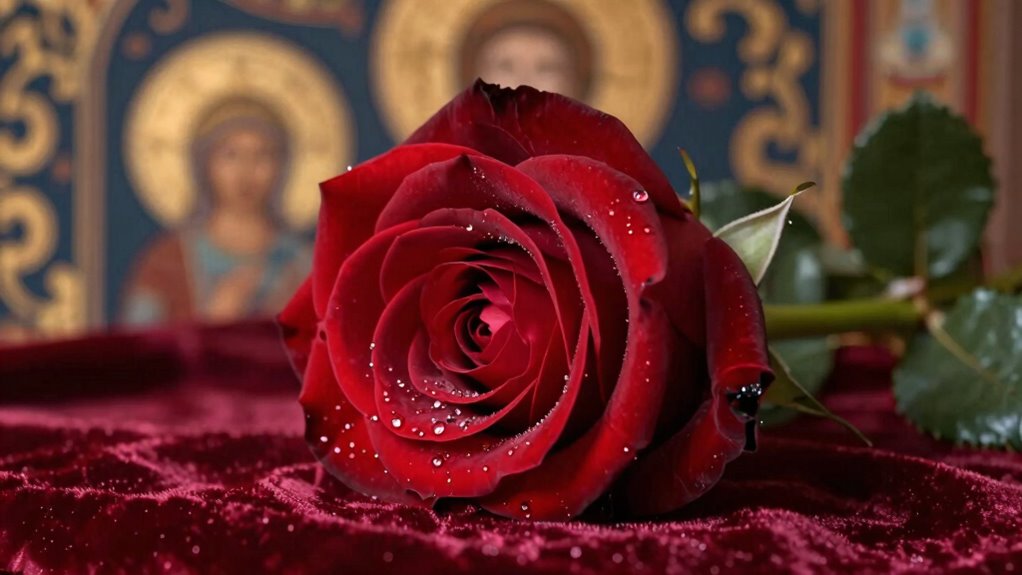
Have you ever wondered why the rose has become such a powerful symbol across cultures and centuries? Its meaning isn’t just about beauty; it’s rooted in deep historical symbolism and varies widely across different cultures. Throughout history, the rose has often represented love, passion, and secrecy, making it a versatile emblem that resonates on many levels. In ancient Greece and Rome, roses were associated with the gods of love—Aphrodite and Venus—symbolizing romance and desire. They were used in ceremonies and rituals, emphasizing their connection to the divine and mortal love. Over time, the rose’s symbolism expanded, carrying different meanings depending on cultural context. In some societies, it became a symbol of purity and innocence, often linked to the Virgin Mary, while in others, it signified political power or social status.
The rose symbolizes love, passion, and secrecy, with meanings shifting across cultures and history.
In Western traditions, the rose’s role in love is perhaps its most iconic association. Red roses, in particular, have long been a universal sign of romantic affection. When you give someone a red rose, you’re not just offering a flower—you’re communicating desire, admiration, and deep emotional connection. But the symbolism of the rose extends beyond romance; it also embodies secrecy. During the Victorian era, giving a single rose or even a specific color conveyed hidden messages, a practice called “floriography.” For example, a yellow rose might symbolize friendship, while a white rose indicated purity or remembrance. This use of the rose as a secret language allowed lovers and friends to express feelings discreetly, especially when social norms restricted open declarations of emotion. Additionally, the symbolic language of flowers played a significant role in shaping how people communicated subtle messages through floral arrangements. Modern floral symbolism continues to carry layered meanings, demonstrating the enduring nature of this tradition.
The significance of the rose also finds a sacred dimension in art and religious symbolism. In Christian iconography, the rose often appears as a symbol of divine love and spiritual awakening. It is frequently associated with the Virgin Mary, representing purity and grace. During the Middle Ages, the rose became a key motif in sacred art, illustrating themes of devotion and the soul’s journey toward enlightenment. Its sacred symbolism highlights how the rose’s meanings transcend the physical, touching on the spiritual and divine. The spiritual symbolism of roses reflects their importance not just in art but in religious practices and personal devotion, emphasizing their universal significance across different faiths and traditions.
Across different cultures, the rose’s symbolism remains rich and layered. In Persia, for example, the rose is linked to divine beauty and the mystical path, while in China, it may symbolize balance and harmony. These cultural variations deepen your understanding of the rose’s universal yet diverse significance. Whether as a symbol of love, secrecy, or sacred art, the rose continues to evoke profound emotions and cultural stories. Its enduring power lies in its ability to embody complex meanings, connecting personal feelings with collective history across the ages.
As an affiliate, we earn on qualifying purchases.
Frequently Asked Questions
How Did the Symbolism of Roses Originate Historically?
You should know that the symbolism of roses originates from ancient civilizations like Egypt, Greece, and Rome, where they held sacred and cultural significance. Over time, their symbolic meaning evolved through historical origins into representations of love, secrecy, and beauty. This symbolic evolution reflects how societies valued roses, transforming them from divine symbols to universal icons of romance and mystery. Their rich history continues to influence their meanings today.
Are There Cultural Differences in Rose Symbolism Worldwide?
Yes, cultural differences profoundly shape rose symbolism worldwide. In Western cultures, roses often represent love and romance, while in Japan, they symbolize admiration and gratitude, aligning with regional traditions. In Middle Eastern cultures, roses are linked to spiritual purity, often intertwined with cultural rituals. These regional variations highlight how local customs and traditions influence the meanings attached to roses, making them a universal yet culturally specific symbol.
What Are the Most Rare and Meaningful Rose Varieties?
You might think rare roses are just beautiful, but their significance runs deeper through rose hybridization and botanical symbolism. Unique varieties like the Black Rose symbolize mystery, while the Blue Rose represents the impossible or the unattainable. These rare blooms carry profound meanings, making them highly meaningful for collectors and lovers alike. Their rarity amplifies their symbolism, turning them into powerful symbols of mystery, rarity, and deep emotional significance.
How Do Different Colors of Roses Influence Their Symbolism?
Different rose colors influence their symbolism through rose color psychology and floral language evolution. Red roses symbolize love and passion, while white roses represent purity and innocence. Pink roses convey admiration and gratitude, and yellow roses signify friendship and joy. Orange roses express enthusiasm, and purple roses symbolize enchantment. As floral language evolves, these color meanings deepen, allowing you to communicate complex emotions through specific rose hues effectively.
Can Roses Be Used to Convey Messages in Modern Communication?
Absolutely, you can use roses to subtly send messages through digital messaging or romantic gestures. When words might fall short, a carefully chosen rose or a virtual bouquet can whisper your feelings, adding depth to your communication. Whether it’s a red rose for love or a yellow for friendship, these symbols help you convey emotions delicately, making your modern messages more meaningful and heartfelt without saying a word outright.
Conclusion
You now see how the rose symbolizes love, secrecy, and sacredness across cultures and art forms. Its layered meanings deepen your appreciation for this timeless flower. Did you know that roses have been cultivated for over 5,000 years, making them one of the oldest cultivated flowers? Next time you see a rose, remember its rich history and the powerful emotions it embodies—truly a flower that speaks volumes without words.
Halloween Picks
halloween
As an affiliate, we earn on qualifying purchases.