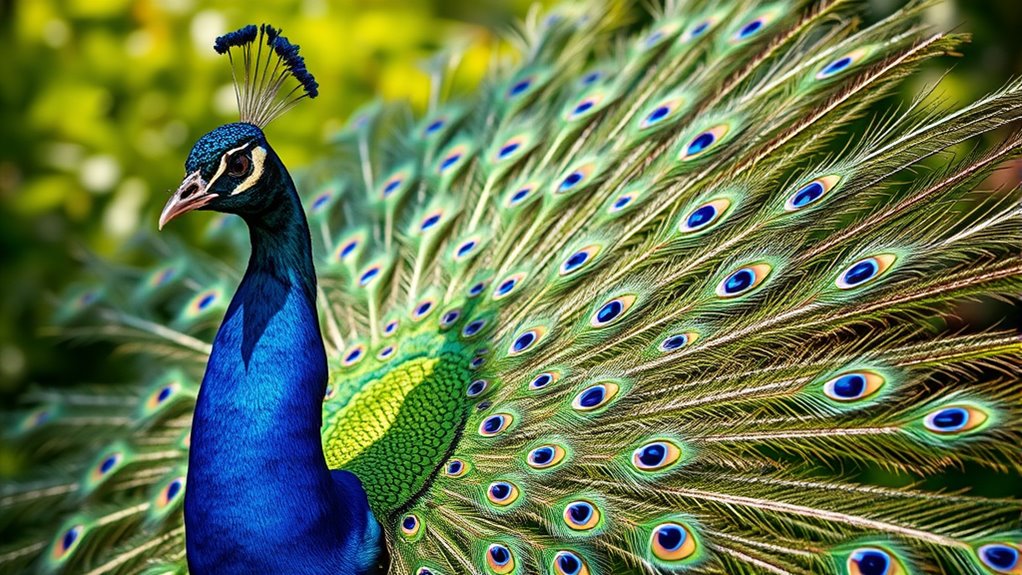

Peacocks symbolize beauty and pride, inspiring admiration for their vibrant feathers and elegant display. They remind you to embrace your own uniqueness and confidence, as their showy plumes are a natural act of boasting that highlights self-worth. Across cultures, they represent renewal, nobility, and divine connection, making them powerful symbols of self-assurance. To discover more about what these stunning birds embody, explore their rich symbolism across different traditions and meanings.
Key Takeaways
- Peacocks symbolize beauty and grandeur, with their vibrant plumage representing aesthetic excellence and artistic inspiration.
- Their display of feathers is a natural act of pride, embodying confidence and self-assurance.
- In various cultures, peacocks are sacred symbols of renewal, spiritual awakening, and divine connection.
- Artistic depictions highlight their intricate patterns, emphasizing nobility, elegance, and higher ideals.
- As symbols of pride and confidence, peacocks inspire self-worth and celebrating individual uniqueness.
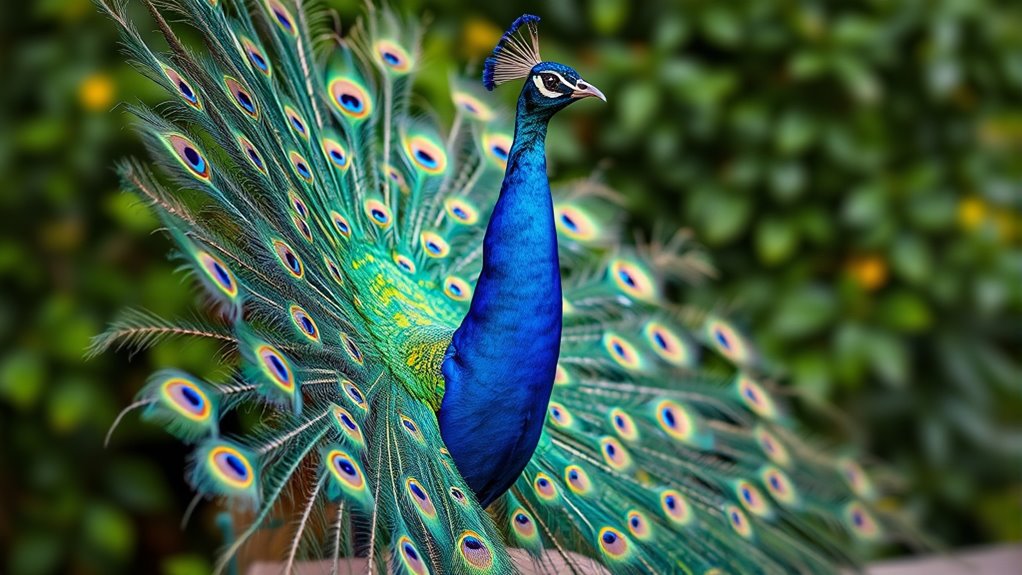
Have you ever wondered why peacocks have long been symbols of beauty and spirituality across cultures? It’s because these magnificent birds carry deep cultural significance that goes far beyond their striking appearance. Throughout history, they’ve been revered in countless traditions, embodying qualities like pride, beauty, and renewal. Their vibrant, iridescent feathers aren’t just a visual feast; they’re woven into stories, beliefs, and rituals that highlight their importance in human culture. You might notice that many artistic representations of peacocks emphasize their elaborate plumage, often depicted in intricate patterns and vivid colors. Artists from different eras and regions have used the bird to symbolize nobility, elegance, and divine connection. In Hindu mythology, the peacock is associated with the goddess Saraswati, representing wisdom and spirituality, while in Christianity, it’s often seen as a symbol of resurrection and eternal life. These artistic portrayals serve to remind us of the bird’s symbolic power, elevating it from mere beauty to a meaningful emblem of higher ideals.
In many cultures, peacocks also represent pride and confidence. Their display of feathers is a natural act of boasting, yet it’s often viewed as a positive trait—an assertion of self-worth and dignity. When you see a peacock spreading its tail, it’s not just showing off; it’s making a statement about self-assurance and uniqueness. This act has inspired countless artworks, from traditional paintings to modern fashion, where the bird’s regal posture and vibrant display symbolize the importance of embracing one’s identity with pride. The cultural significance of peacocks extends into spiritual domains as well, where they symbolize renewal and awakening. Their feathers are sometimes thought to hold healing properties or serve as a reminder of the cyclical nature of life—death giving way to rebirth. Artistic representations often highlight this aspect, depicting peacocks amidst lush landscapes or celestial settings, reinforcing their role as messengers between worlds.
Ultimately, the symbolism of peacocks is rich and multifaceted. Their cultural significance spans continents and religions, inspiring artists to capture their essence through various mediums. Whether as a symbol of divine beauty, pride, or renewal, peacocks continue to fascinate and inspire. Their vibrant feathers and majestic presence remind us to celebrate our individuality, embrace beauty in all forms, and acknowledge the deeper spiritual meanings woven into their symbolism. As you observe a peacock or contemplate its image, remember that it’s more than just a bird—it’s a timeless emblem that bridges the aesthetic and the sacred in human culture.
Frequently Asked Questions
What Are the Origins of Peacock Symbolism in Different Cultures?
You might find that the cultural origins of peacock symbolism trace back to ancient civilizations like India and Greece, where they held mythological significance. In Indian culture, peacocks are sacred and symbolize beauty and spirituality, while in Greek mythology, they represent pride and immortality. These diverse origins highlight how different cultures have long revered peacocks for their striking appearance and symbolic meanings, connecting them to concepts of divine beauty and pride.
How Do Peacocks Influence Modern Fashion and Art?
You see peacocks influencing modern fashion and art through vibrant colors and elaborate patterns. They inspire fashion trends with bold, feather-inspired motifs and intricate embroidery, making garments stand out. Artists incorporate peacock imagery into their work, using eye-catching designs as artistic motifs that symbolize beauty and pride. This influence encourages creativity and adds a touch of elegance, allowing you to express confidence and sophistication through style and visual art inspired by these magnificent birds.
Are There Any Myths Linking Peacocks to Immortality?
In peacock mythology, many believe that peacocks symbolize eternal life. You’ll find stories where their vibrant feathers represent immortality, especially in ancient cultures. Some myths suggest that the peacock’s eye-like patterns ward off evil spirits, symbolizing protection and everlasting life. This connection to eternal life influences how people see peacocks today, viewing them as symbols of renewal, immortality, and the divine in various spiritual and cultural traditions.
What Is the Significance of Peacock Feathers in Spiritual Practices?
Peacock feathers act as a mirror to your soul, guiding your spiritual awakening through their vibrant colors and intricate patterns. In spiritual practices, they symbolize renewal, protection, and divine beauty. Their shimmering allure serves as powerful ritual symbolism, helping you connect with higher domains and inner wisdom. When you incorporate these feathers into your rituals, you invite a sense of pride and harmony, making your spiritual journey more profound and visually inspiring.
How Do Peacock Behaviors Reflect Their Symbolic Meanings?
You notice how peacocks reflect their symbolic meanings through their behavior, especially during courtship and feather display rituals. When they fan out their vibrant feathers, they’re showcasing beauty and pride, attracting mates and asserting dominance. These displays highlight their confidence and elegance, embodying the qualities people associate with them—pride, beauty, and status. By observing peacock behaviors, you see how their actions mirror the deeper symbolic meanings attributed to them.
Conclusion
As you reflect on the vibrant symbolism of the peacock, remember its deep connection to beauty and pride. Yet, beneath its dazzling display lies a mystery—what secrets does this regal creature truly hold? Will its dazzling feathers forever symbolize confidence, or is there more to its story? Keep watching, because the true meaning of the peacock’s brilliance might just surprise you, revealing a hidden truth that could change how you see yourself and the world around you.