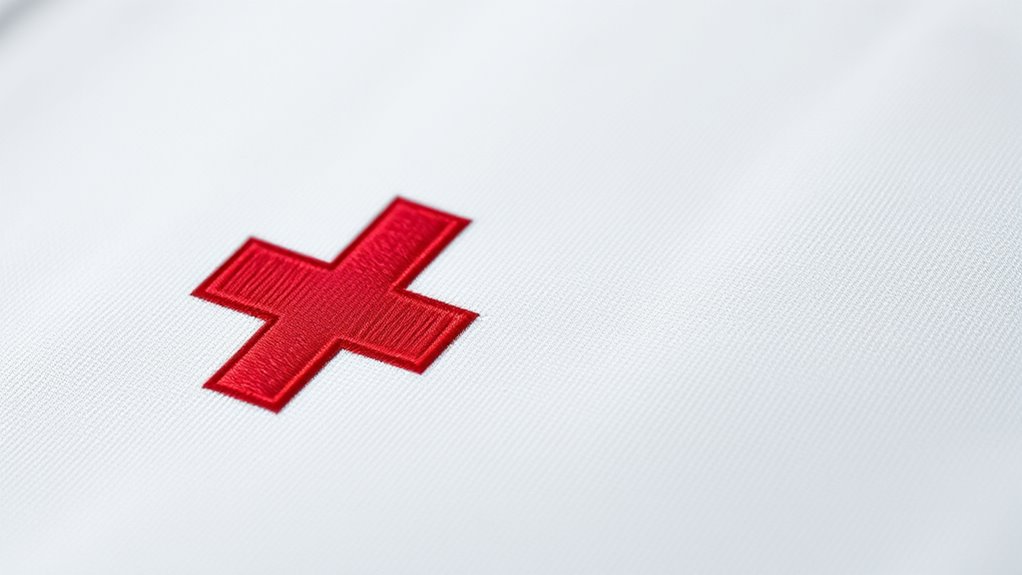

The Red Cross symbol was created in 1863 to protect medical workers and facilities during conflicts, inspired by the Swiss flag to emphasize neutrality. Its simple red cross on a white background quickly became a universal sign of humanitarian aid and protection, even with adaptations like the Red Crescent and Red Crystal for cultural sensitivity. The symbol embodies neutrality, aid, and hope, remaining powerful and recognizable over time—if you’re interested, you’ll discover more about its evolving meanings and significance.

Prime made for students and young adults
- Fast, free delivery for dorm and study essentials
- Prime Video and Amazon Music included
- Member-only deals
Key Takeaways
- The Red Cross symbol was introduced in 1863 as a neutral emblem to protect medical personnel during conflicts.
- It was inspired by the Swiss flag, symbolizing neutrality, clarity, and recognition in war zones.
- Variations like the Red Crescent and Red Crystal were created to respect cultural sensitivities.
- The symbol represents humanitarian principles, neutrality, and a commitment to saving lives worldwide.
- Its simple, consistent design has endured over time, maintaining its role as a universal sign of aid and protection.

The Red Cross symbol is a widely recognized emblem that represents humanitarian aid and medical assistance worldwide. Its history significance is rooted in its origin during a time of intense conflict and the need for a neutral emblem that could protect medical personnel and facilities. The symbol was first introduced in 1863, during the founding of the International Red Cross, to serve as a sign of protection for wounded soldiers and medical workers on the battlefield. Its adoption was a response to the brutal realities of war, aiming to guarantee that those providing aid wouldn’t be mistaken for combatants or targeted. Over time, this symbol became a universal sign of neutrality and help, transcending borders and conflicts.
The design evolution of the Red Cross symbol reflects a careful balance between tradition and adaptability. Originally, it was simply a red cross on a white background, inspired by the Swiss flag, in honor of the movement’s Swiss origins. This design was straightforward and easy to recognize, which was vital in the chaos of war zones. As the symbol gained global prominence, efforts were made to maintain its neutrality and clarity, leading to the establishment of strict guidelines for its use. During the development process, the focus was on guaranteeing the symbol’s visibility and distinctiveness, which is why it has remained largely unchanged since its inception. However, variations have emerged, such as the Red Crescent, introduced in the Muslim world to respect cultural sensitivities, and more recently, the Red Crystal, designed to be a neutral emblem in cases where the other symbols might be inappropriate. These adaptations demonstrate how the core idea of the symbol has evolved to meet diverse cultural and operational needs, all while maintaining its essential meaning of aid and protection.
Throughout its history, the importance of the Red Cross symbol has stayed constant: it embodies humanitarian principles and acts as a beacon of hope during crises. Its design evolution ensures that it remains relevant and respectful across different cultures, yet instantly recognizable worldwide. You can see how this simple but powerful emblem has endured through centuries because of its clear message of neutrality and aid. Its ability to adapt while preserving its core identity has helped it maintain the trust and respect of people everywhere. When you see the red cross or its variations, you’re witnessing a symbol that’s not just a logo, but a tribute to the universal commitment to save lives, uphold dignity, and foster hope in times of need.
As an affiliate, we earn on qualifying purchases.
Frequently Asked Questions
How Is the Red Cross Symbol Protected Internationally?
You’re protected internationally through the Geneva Conventions, which recognize the Red Cross symbol as a medicinal emblem, ensuring humanitarian protection. This symbol is universally respected, and unauthorized use is prohibited by law to prevent misuse and maintain its neutrality. Countries have also adopted national laws to enforce these protections, making sure the symbol remains a powerful sign of aid and safety during conflicts and emergencies.
Are There Any Similar Symbols Used by Other Organizations?
You’ll find that many organizations use symbols similar to the Red Cross, but they often incorporate religious symbols or cultural variations to distinguish themselves. For example, the Red Crescent and Red Crystal are recognized alternatives, especially in Muslim countries or for cultural reasons. These symbols are protected internationally, just like the Red Cross, ensuring respect across different traditions and avoiding confusion with religious or cultural symbols.
Has the Red Cross Symbol Ever Been Legally Challenged?
Yes, the Red Cross symbol has faced legal disputes and trademark challenges over the years. Some organizations attempted to use similar symbols, leading to court cases to protect its unique design. You should be aware that the symbol’s protected status helps prevent unauthorized use, ensuring its association with humanitarian aid remains clear. These legal disputes highlight the importance of safeguarding symbols with significant cultural and legal value.
What Are the Guidelines for Using the Red Cross Emblem?
You might think there are no rules for using the Red Cross emblem, but there are strict use restrictions. Always guarantee the emblem is registered properly with the relevant authorities to avoid misuse. You should only use it for authorized purposes, like medical aid or humanitarian work. Unauthorized use can lead to legal consequences, so follow the guidelines carefully to respect its protected status and maintain its humanitarian significance.
How Does the Red Cross Ensure the Symbol’s Neutrality?
You can see the Red Cross guarantees neutrality by strictly adhering to international guidelines, emphasizing its cultural significance as a humanitarian symbol rather than a political one. They actively promote understanding and respect across different cultures, helping avoid historical controversies that once questioned its impartiality. By safeguarding the emblem’s integrity, they maintain trust and prevent misuse, ensuring it remains a universal sign of aid and protection for all in need.
Conclusion
As you carry the Red Cross symbol in your heart, remember it’s more than just a mark—it’s a beacon of hope shining through the storm. Like a steady lighthouse guiding ships to safety, this emblem stands for compassion, protection, and unity. When you see it, know you’re part of a global promise to care for those in need. Let it remind you that even in darkness, a symbol of kindness can light the way forward.
Fall Picks
fall essentials
As an affiliate, we earn on qualifying purchases.