TL;DR

Prime made for students and young adults
- Fast, free delivery for dorm and study essentials
- Prime Video and Amazon Music included
- Member-only deals
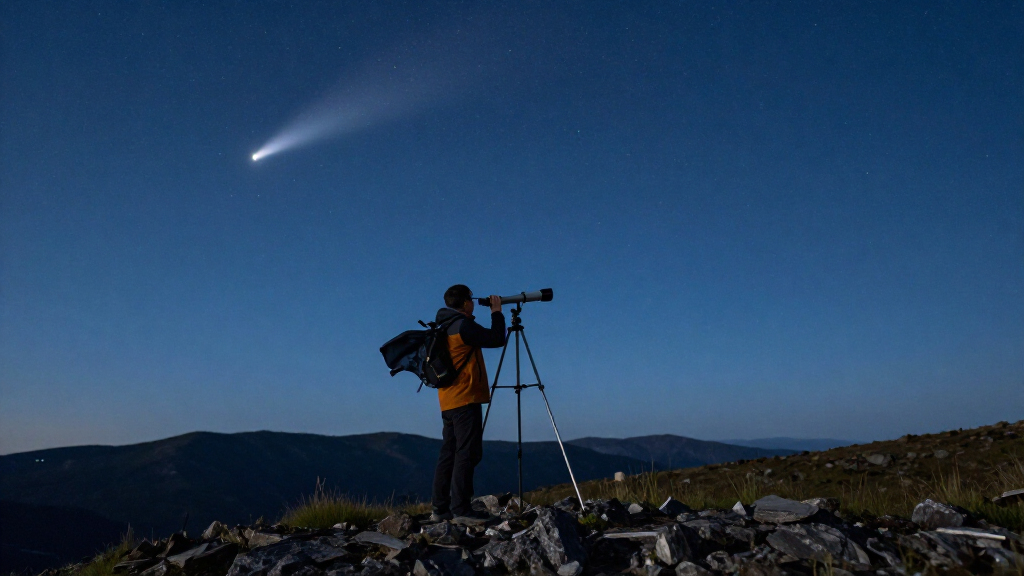
NASA’s Astronomy Picture of the Day for Nov. 3, 2026, features a photograph of Comet C/2025 R3 (PanSTARRS) and a colorful meteor streak captured from Hautacam, France. NASA says the meteor probably did not come from the comet; its apparent color may indicate a complicated composition, but the image alone does not establish its origin.
NASA’s Astronomy Picture of the Day on Nov. 3, 2026, features Comet C/2025 R3 (PanSTARRS) alongside a colorful meteor streak photographed from Hautacam, France. NASA’s explanation says the meteor probably did not come from the comet, underscoring that a striking pairing in a sky photograph does not establish a shared origin.
The photograph, credited to Eddy Metais, was taken in France in April, when the comet displayed an ion tail described as blue and a dust tail. NASA says the comet lies far behind the meteor streak in the image. Their apparent alignment is a perspective effect: the objects are not shown as neighboring bodies in space.
In its APOD explanation, NASA writes, “Did this meteor come from that comet? Probably not.” The agency says that although many meteors originate from comets, thousands of comets have visited the inner Solar System in recent times, making it difficult to match an individual meteor to a particular comet. The image and description do not identify the streak’s parent body.
NASA describes the streak as colorful and says its appearance “may indicate a complicated composition.” That is a qualified interpretation, not a confirmed chemical analysis. The APOD notes that sand-sized rocky debris entering Earth’s atmosphere typically appears as meteors; it does not provide measurements of this streak’s composition or enough information to determine its origin.
A Photograph Cannot Trace a Meteor’s Origin
The image offers a timely reminder of the difference between visual proximity and a proven physical connection. Comets can shed debris that later produces meteors, but seeing a meteor in the same frame as a comet does not show that the comet supplied that particle. NASA’s explanation keeps that distinction clear and avoids claiming more than the photograph can establish.
The distinction matters as several annual meteor showers approach their peaks. NASA identifies the Southern and Northern Taurids and the Leonids as notable November showers, each associated in the APOD description with a particular comet. Those established shower connections are different from assigning an isolated streak in a photograph to a specific comet.
Popular right now

Dyson Ball Animal 3 Upright Vacuum

Dyson V8 Cyclone Cordless Vacuum

Bose QuietComfort Headphones (2nd Gen), Wireless Over-Ear Noise-Cancelling Headphones, Hazelnut Taupe
As an affiliate, we earn on qualifying purchases.
Three November Meteor Showers Ahead
NASA says the Southern Taurids will reach their peak over the next few days after the APOD’s Nov. 3 publication, while the Northern Taurids are expected to peak about a week later. The agency attributes both showers to Comet 2P/Encke.
The APOD calls November most famous for the Leonids, which it says originate from Comet 55P/Tempel-Tuttle and are expected to reach their peak in about two weeks. These are forecasts and descriptions in NASA’s Nov. 3 entry; the source does not give exact peak dates, observing conditions, or expected meteor rates.
NASA’s Astronomy Picture of the Day pairs a daily space image with an explanation written by a professional astronomer. For this entry, the image credit is Eddy Metais, and the listed authors and editors are Robert Nemiroff, Jerry Bonnell, Cecilia Chirenti and Keighley Rockcliffe.
The Streak’s Parent Body Is Unknown
NASA’s entry does not establish which comet, if any, supplied the meteor photographed by Metais. It also gives no independent evidence for the streak’s composition; the suggestion that its colors may reflect a complicated composition remains tentative. The photograph shows the comet in the background and the meteor in the foreground, but does not by itself determine the objects’ distances or physical relationship.
The source does not specify the exact date or time of the April exposure, the meteor’s trajectory, or the observing conditions. It also gives approximate timing rather than exact calendar dates for the November shower peaks. Those details should not be inferred from the image or from the APOD text.
Taurids and Leonids Approach Peak
According to NASA’s Nov. 3 description, the Southern Taurids are due to reach their peak in the following days, followed about a week later by the Northern Taurids. The Leonids are expected to peak roughly two weeks after publication. The APOD does not provide exact dates or forecasts for viewing conditions, so readers should check current observing guidance for their location as each shower approaches.
NASA’s next APOD entry was listed as “a hidden gem.” No further analysis of the photographed meteor’s origin or composition was included in the Nov. 3 report.
Key Questions
Did the meteor come from Comet PanSTARRS?
NASA says probably not. The APOD notes that many meteors come from comets, but there are thousands of possible comet sources, and the image does not identify this meteor’s parent body.
Where and when was the photograph taken?
The image credit identifies Eddy Metais, and NASA says it was captured from Hautacam, France, in April. The APOD does not give the exact day or time.
What causes the colorful meteor streak?
NASA says its colors may indicate a complicated composition, but the entry does not report a chemical analysis or confirm what caused the colors in this particular streak.
Which meteor showers are approaching?
NASA lists the Southern Taurids as nearing their peak on Nov. 3, 2026, followed about a week later by the Northern Taurids. The Leonids are expected to peak in about two weeks. The APOD links both Taurid showers to Comet 2P/Encke and the Leonids to Comet 55P/Tempel-Tuttle.
Source: science.nasa.gov