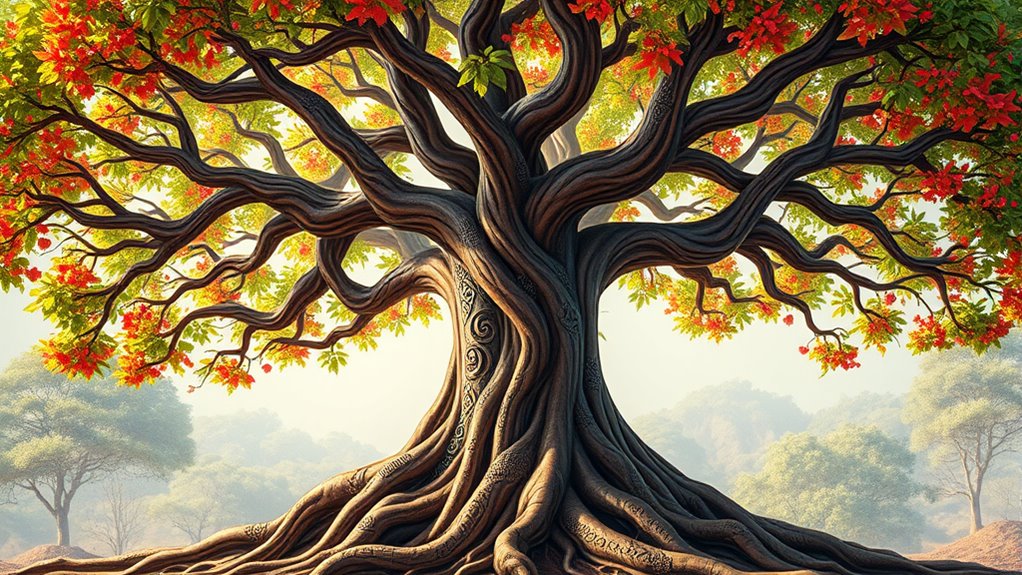

The Tree of Life motif symbolizes growth, interconnectedness, and eternity across many cultures. You’ll see it in ancient Mesopotamian, Norse, African, and Egyptian art, each with unique meanings like divine authority, cosmic order, or spiritual harmony. Roots, trunk, and branches often represent different levels of existence or life cycles. If you explore further, you’ll discover how this powerful symbol continues to inspire spiritual and artistic expressions worldwide.
Key Takeaways
- The Tree of Life symbolizes growth, interconnectedness, and renewal across diverse cultures and religious traditions worldwide.
- Artistic representations vary, depicting roots, trunk, and branches to symbolize earthly, spiritual, and divine realms.
- Cultures like Mesopotamia, Norse, African tribes, and Egypt use the motif to illustrate creation, divine authority, and eternal life.
- The symbol often appears in rituals, texts, and art, conveying complex spiritual concepts and cultural values.
- Despite cultural differences, the Tree of Life universally embodies humanity’s quest to understand life’s meaning and connectedness.
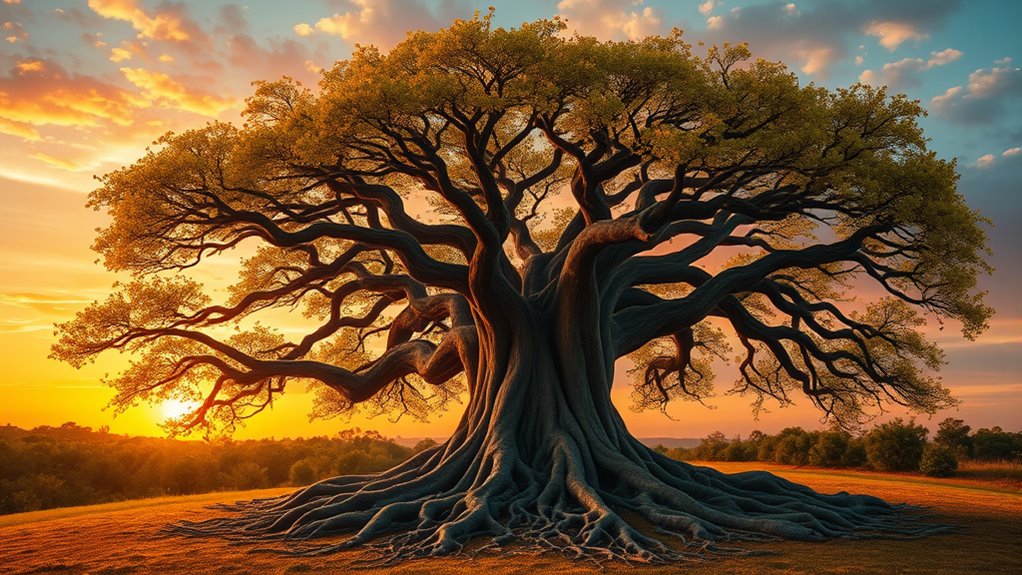
Have you ever wondered why the Tree of Life motif appears across so many cultures and eras? It’s a powerful symbol that resonates universally, embodying ideas of growth, connection, and eternity. When you explore its symbolism diversity, you’ll discover how different civilizations interpret this motif based on their unique beliefs, environments, and histories. For some, it’s a sacred tree bridging worlds; for others, it’s a symbol of vitality or ancestral roots. Despite these variations, the core idea remains consistent—a representation of life’s interconnectedness and perpetual renewal.
The Tree of Life symbolizes growth, connection, and eternal renewal across cultures and eras.
In artistic representations, the Tree of Life takes countless forms, each reflecting the cultural values and spiritual beliefs of its creators. In ancient Mesopotamian art, it appears as a lush, sprawling tree often associated with divine authority, symbolizing cosmic order and divine blessing. Meanwhile, in Norse mythology, Yggdrasil stands as a colossal ash tree connecting the nine worlds, emphasizing the universe’s interconnectedness. Across Africa, many tribal artworks depict the Tree of Life with intricate patterns and vibrant colors, conveying community, lineage, and spiritual harmony. These artistic representations serve as visual narratives, telling stories of creation, life cycles, and the divine.
You’ll notice that in many cultures, the Tree of Life is not just a decorative motif but also a sacred symbol woven into rituals, myths, and everyday life. For example, in ancient Egypt, the sacred tree represented eternal life and was believed to be the source of all existence. In Jewish tradition, the Tree of Life appears in sacred texts as a symbol of eternal life and divine wisdom, often depicted in illuminated manuscripts and religious art. In each context, the artistic representations of the Tree of Life act as powerful visual tools that communicate complex spiritual concepts and cultural values.
When you look at these artistic representations, you see a recurring pattern: the tree’s roots, trunk, and branches symbolize different levels of existence—earthly, spiritual, and divine. The diversity in how the Tree of Life is depicted demonstrates its adaptability and deep significance across cultures. It’s not just an ornamental motif but a symbol that encapsulates the human experience—our origins, growth, and hope for immortality. Whether carved into ancient stone, woven into textiles, or painted on sacred scrolls, the Tree of Life remains a compelling testament to humanity’s universal desire to understand and express the mystery of life itself.

Kyiyhzp Tree of Life Canvas Wall Art plant abstract painting print artwork Modern Ready-to-Hang Decor for Living Room, Bedroom, Dining Room or Home Office, Nature Style Home Wall Decor 16" x 12"
Color Tree of Life Canvas Wall Art:This cool art wall decor measures approximately 16×12 inches (40×30 cm), a…
As an affiliate, we earn on qualifying purchases.
As an affiliate, we earn on qualifying purchases.
Frequently Asked Questions
How Does the Tree of Life Motif Evolve Over Different Historical Periods?
You see the symbol evolution of the Tree of Life across eras, reflecting changing beliefs and artistic styles. In ancient cultures, it symbolizes connection and growth, often depicted as a sturdy, sprawling tree. During the medieval period, stylistic variations become more intricate, emphasizing divine connection. Today, you notice modern adaptations that blend symbolism with abstract designs, showcasing how the motif evolves while maintaining its core meaning of interconnectedness and life’s continuity.
Are There Any Common Symbolic Themes Across Cultures Using the Motif?
Picture a towering, vibrant tree rooted in the heart of every culture. You’ll find universal symbolism in its representation of life, growth, and connection. Its mythological significance spans from fertility to spiritual enlightenment, uniting diverse traditions. Across civilizations, the tree embodies renewal, wisdom, and the cycle of life, making it a powerful symbol of interconnectedness and hope that transcends borders and beliefs.
What Influence Has the Tree of Life Had on Modern Art and Design?
The tree of life has profoundly influenced modern art and design through its symbolic representation of growth, connection, and renewal. You’ll notice its aesthetic influence in logo designs, tattoos, and artwork that evoke unity and energy. It inspires artists to explore themes of interconnection and life’s cyclical nature, making it a powerful motif that bridges cultural symbolism with contemporary visual expression.
How Do Indigenous Interpretations of the Tree of Life Differ From Others?
You see that indigenous interpretations of the Tree of Life differ by emphasizing its mythical origins and deep environmental symbolism. Unlike others, indigenous cultures often view the tree as a sacred connector between humans, nature, and spirits, highlighting its role in creation stories. It’s more than just a symbol; it embodies life’s interconnectedness, serving as a essential spiritual and environmental emblem rooted in their cultural identity and worldview.
Can the Tree of Life Motif Be Linked to Specific Religious or Spiritual Practices?
You can definitely link the tree of life motif to specific religious or spiritual practices because it embodies mythical symbolism and spiritual connections. Many traditions see it as a sacred symbol representing growth, renewal, or divine connection. It’s like hitting two birds with one stone—this motif often appears in sacred texts, rituals, and artwork, highlighting its deep-rooted significance across different faiths and spiritual paths.

Dreamtimes Tree of Life Necklace for Women Stainless Steel Gold Color Clear Zircon Round Pendant Neck Chains Family Tree Fashion Charm Luxury Jewelry Wedding Gift (GOLD)
DESIGN CONCEPT:The Family Tree Necklace incorporates elements of the Tree of Life. It symbolises eternal life, thriving families,…
As an affiliate, we earn on qualifying purchases.
As an affiliate, we earn on qualifying purchases.
Conclusion
Throughout various cultures, the Tree of Life symbolizes growth, connection, and eternity. notably, over 70 cultures across the world incorporate this motif, highlighting its universal significance. This widespread presence shows how humanity shares a deep-rooted desire to understand our origins and interconnectedness. So, next time you see a Tree of Life, remember it’s more than just a symbol—it’s a reflection of our shared human journey and timeless quest for meaning.
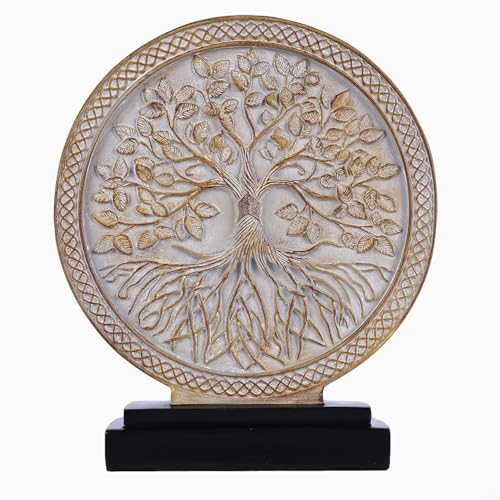
DOVDOV Circular Tree of Life Decorative Sculpture, Wood-Effect Home Decor Statue, Modern Art Home Decor Suitable for Office Bookshelves, Coffee Tables, and countertops as Decorative Accents.
Design Inspiration: A unique circular decorative sculpture featuring carved Tree of Life motifs. Its modern abstract design complements…
As an affiliate, we earn on qualifying purchases.
As an affiliate, we earn on qualifying purchases.

Moon Phase Tree of Life Tapestry Nature Flower Plant Butterfly Tapestries Boho Mandala Spiritual Tapestry Aesthetic Wall Hanging for Home Decor Bedroom Living Room Dorm Decor (35.44" x 47.25", Blue)
【Unique Design】This nature tree of life tapestry is designed with black and white elements, crisp lines and delicate…
As an affiliate, we earn on qualifying purchases.
As an affiliate, we earn on qualifying purchases.