The cornucopia is an ancient symbol of abundance that represents prosperity, divine blessing, and gratitude for nature’s gifts. Its shape, resembling a curved horn or overflowing basket, comes from Greek myth, linked to the myth of Zeus’ nursemaid. Throughout history, it’s been used in festivals, art, and literature to symbolize prosperity and the earth’s bounty. If you want to explore its fascinating origins and cultural significance, keep exploring this timeless icon.
Key Takeaways
- The cornucopia symbolizes plentiful harvests and divine abundance, often used in harvest festivals worldwide.
- Originates from Greek mythology, linked to Zeus’ nursemaid Amalthea and the legend of the goat’s horn.
- Adopted by Romans in festivals and art, emphasizing prosperity as a divine gift.
- Its shape and overflowing contents represent prosperity, nourishment, and earth’s bounty.
- Serves as a universal icon of abundance, gratitude, and reverence for nature’s gifts across cultures.
Have you ever wondered which ancient symbol has long represented prosperity and abundance across cultures? If so, you’re likely thinking of the cornucopia, often called the horn of plenty. This iconic symbol appears repeatedly in harvest festivals worldwide, where it signifies bountiful harvests and plentiful resources. Its roots go deep into mythological origins, connecting stories of gods, nature, and the cycles of life. Understanding this connection helps you appreciate why the cornucopia remains a powerful emblem of abundance today.
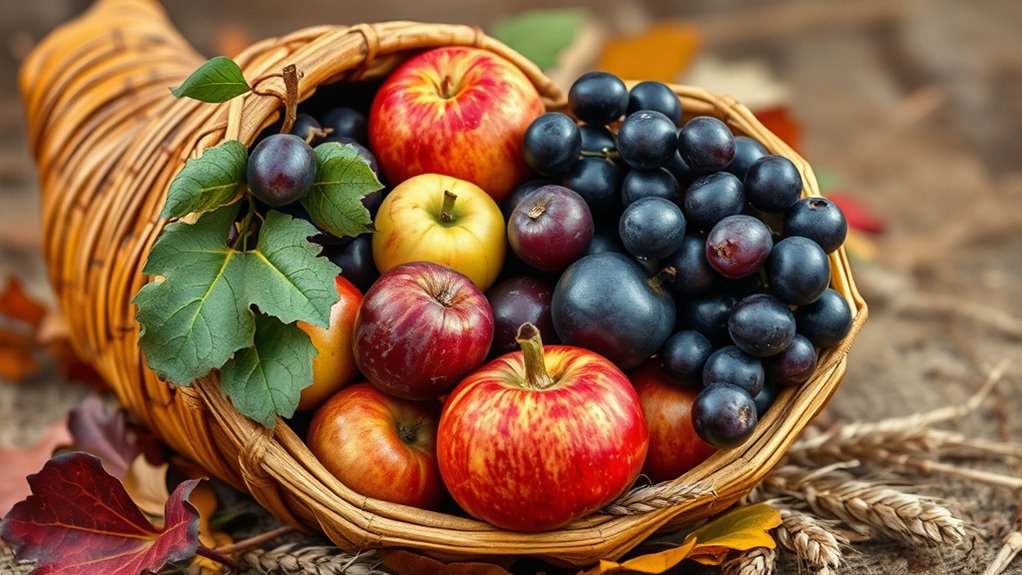
In ancient times, harvest festivals celebrated the successful gathering of crops and livestock, marking times of gratitude and hope. During these festivities, symbols of prosperity were central, and the cornucopia emerged as a prominent fixture. Its shape resembles a curved horn or basket overflowing with fruits, vegetables, grains, and flowers—visual representations of plentiful harvests. These festivals weren’t just about celebration; they were rituals to invoke fertility and ensure future abundance. The cornucopia, thus, became more than a decorative item; it was a symbol of the earth’s generosity and the cycle of nature providing for mankind.
The mythological origins of the cornucopia trace back to ancient Greece and Rome. In Greek mythology, it is linked to the story of Zeus’ nursemaid, Amalthea, who nursed the infant god with divine milk from a goat. According to legend, in a moment of fury, Zeus tore off one of the goat’s horns, which then became the cornucopia—a magical vessel overflowing with nourishment. This myth underscores themes of divine providence, nourishment, and abundance that resonate across cultures. The Romans adopted this symbolism, incorporating it into their own festivals and art, emphasizing prosperity’s divine origin.
You can see the mythological significance reflected in its design: the horn shape symbolizes divine blessing and the earth’s bounty, while the overflowing contents represent abundance and prosperity. Over time, the cornucopia has transcended its mythological roots to become a universal icon of plenty. Whether used in holiday displays, art, or literature, it continuously reminds you of the importance of gratitude for nature’s gifts. Its mythological origins highlight that abundance isn’t just material but also spiritual—an enduring legacy from ancient stories that continue to inspire today’s celebrations of harvest and prosperity.
In essence, the cornucopia embodies the timeless idea that abundance is a divine gift, fostered through gratitude and reverence for nature. Its roots in harvest festivals and mythological origins underscore its significance as a symbol that connects you to a long history of celebrating life’s plentiful blessings.
Top picks for "cornucopia ancient symbol"
Open Amazon search results for this keyword.
As an affiliate, we earn on qualifying purchases.
Frequently Asked Questions
What Materials Were Traditionally Used to Craft Cornucopias?
You’ll find that traditional crafting materials for cornucopias include woven wicker, straw, and gourds, which are easy to shape and symbolize abundance. Sometimes, artisans add fabric, paper, or even metal accents for decoration. These materials hold cultural symbolism, representing harvest, prosperity, and gratitude. Using natural, rustic elements connects the craft to its historical roots, making the cornucopia a meaningful symbol of plenty and generosity during celebrations.
How Did the Cornucopia Influence Modern Holiday Decorations?
You notice how the cornucopia’s mythological symbolism blends with harvest festival traditions, influencing modern holiday decorations. Its overflowing abundance reminds you of gratitude and prosperity, making it a popular motif during celebrations like Thanksgiving. The vibrant, filled horn now adorns tables and wreaths, symbolizing plenty. This ancient symbol transforms into contemporary decor, bridging myth and festivity, and reminding you of the timeless appeal of abundance and gratitude.
Are There Specific Cultures That Worshiped the Cornucopia?
You’ll find that ancient cultures, like the Greeks and Romans, revered the cornucopia as a symbol of fertility and abundance during mythological harvest festivals. They worshiped it as an ancient fertility symbol, believing it brought prosperity and plentiful harvests. These cultures celebrated with rituals honoring the bounty of the earth, and the cornucopia played a central role in their mythological and cultural expressions of gratitude and abundance during these harvest festivals.
What Are Some Variations of the Cornucopia Symbol Worldwide?
You’ll find variations of the cornucopia symbol worldwide, especially during harvest festivals where it represents abundance and prosperity. In Greek mythology, it’s linked to mythological representations of gods like Zeus, symbolizing wealth and nourishment. In other cultures, similar symbols appear as baskets or horns filled with fruits and grains, embodying abundance. These variations highlight how different societies celebrate fertility, harvest, and prosperity through their unique adaptations of the cornucopia.
How Is the Cornucopia Represented in Contemporary Art?
In contemporary art, the cornucopia bursts like a vibrant garden overflowing with life. You see it as bold sculptures, colorful paintings, and digital illustrations, each symbolizing abundance and prosperity. Visual representations often blend traditional forms with modern styles, while symbolic interpretations explore themes of generosity and harvest. Artists use dynamic colors and mixed media to breathe new meaning into this ancient motif, making it resonate with modern viewers and contemporary ideas.
Conclusion
Remember, a picture is worth a thousand words. The cornucopia, with its roots in ancient times, reminds you that abundance often comes from gratitude and sharing. As the saying goes, “Good things come to those who wait,” but also to those who appreciate what they have. So, embrace the spirit of the horn of plenty, and let it inspire you to cultivate abundance in your own life through kindness and gratitude.