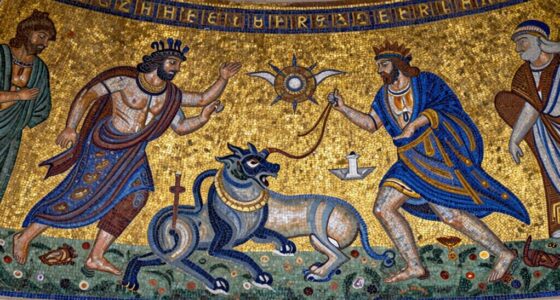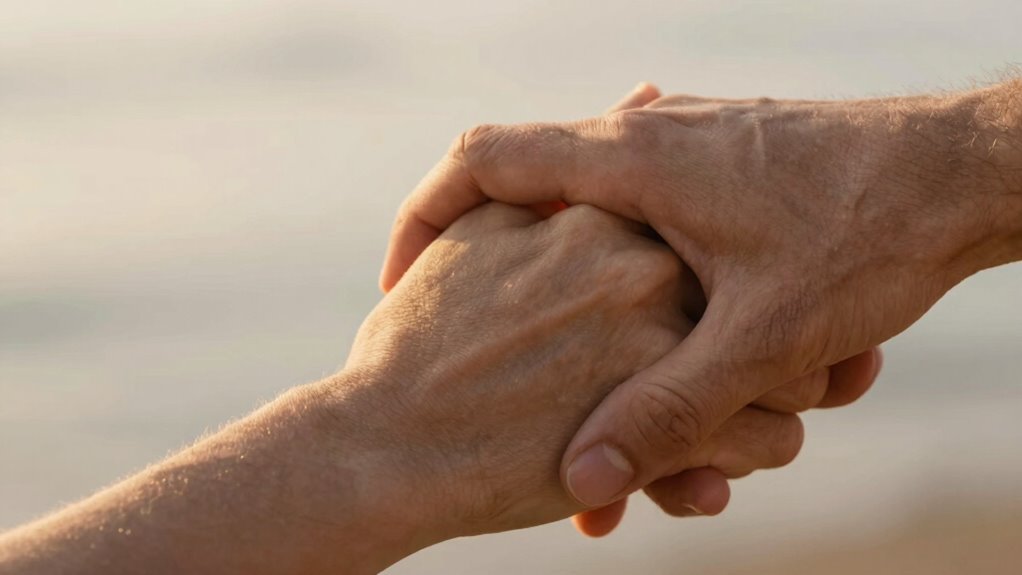

You see hands as powerful symbols in religion and art because they communicate deep spiritual and emotional messages beyond words. Through deliberate gestures, hands embody divine authority, compassion, and reverence, making complex meanings clear across cultures. Artists skillfully capture these gestures to evoke feelings of power, hope, or protection. By exploring the layered significance of hand poses, you’ll uncover how hands serve as essential carriers of divine and human emotion—there’s much more to discover behind each gesture.

Prime made for students and young adults
- Fast, free delivery for dorm and study essentials
- Prime Video and Amazon Music included
- Member-only deals
Key Takeaways
- Hands convey universal spiritual messages and divine authority through specific gestures recognizable across cultures.
- Their expressive and accessible nature allows direct, immediate communication of emotions and spiritual meanings.
- Artistic techniques highlight hand gestures’ symbolic depth, enhancing storytelling and emotional impact.
- Hand poses carry layered meanings, such as blessing, reassurance, and divine connection, adding complexity to religious art.
- Hands serve as spiritual extensions, embodying messages of faith, hope, and compassion beyond words.
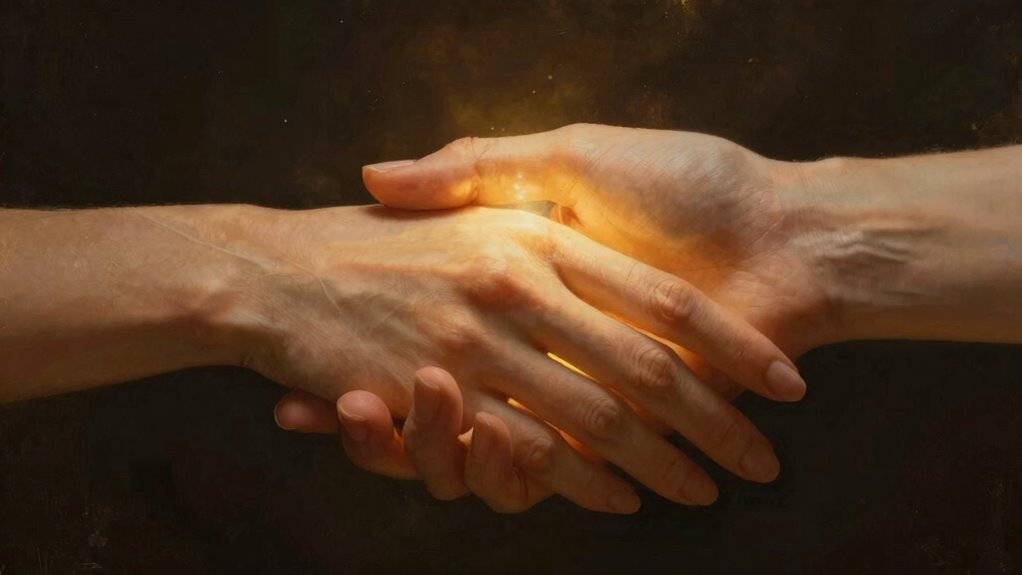
Throughout history, hands have served as powerful symbols in both religion and art, conveying meaning beyond words that resonate deeply across cultures. You might notice that in religious icons or sculptures, the way a hand is positioned can communicate specific spiritual messages or divine authority. These gesture meanings are often universally understood, whether it’s a blessing, a gesture of protection, or a sign of teaching. In art, the expressive potential of hands enhances storytelling, helping you connect emotionally with a piece. Artistic hand techniques, such as the delicate rendering of fingers or the dynamic positioning of palms, reveal the artist’s skill and intention, making the gestures more meaningful. Every curl of a finger or tilt of a wrist can symbolize reverence, power, or compassion.
Hands are particularly effective symbols because they are so expressive and accessible. You don’t need words to understand a hand’s gesture; it communicates directly and instantly. When you see a raised hand in religious art, it often signifies blessing or divine intervention. When a hand is extended outward, it might suggest offering help or showing mercy. These gestures transcend language barriers, allowing messages of faith, hope, or authority to be universally understood. Artists have long exploited this power, developing artistic hand techniques that emphasize these gestures’ emotional weight. Through shading, positioning, and detail, they craft hands that speak volumes even without context or words.
In religion, hands are often depicted in specific, learned poses that carry layered meanings. For example, the “Abhaya Mudra” in Buddhist art signifies fearlessness and reassurance, while in Christian art, a hand pointing upwards can symbolize divine connection or salvation. These symbolic gestures are crafted with precise artistic hand techniques to evoke reverence or awe. As you observe these representations, you realize that the hands are not just physical parts but carriers of spiritual significance. They serve as an extension of the divine or human soul, embodying a message that words could never fully capture.
religious hand gesture sculptures
As an affiliate, we earn on qualifying purchases.
As an affiliate, we earn on qualifying purchases.
Frequently Asked Questions
How Did Hands Become Symbols of Divine Power Historically?
Hands became symbols of divine power historically because they represent divine authority and the ability to perform spiritual blessings. You see this in religious art where gods and saints extend their hands to bestow grace, signifying power and benevolence. Hands also convey connection, authority, and the act of blessing, making them powerful symbols of divine intervention and spiritual authority across cultures and throughout history.
Are Specific Hand Gestures Associated With Particular Religions?
You notice the subtle power in specific hand gestures, like the Christian sign of blessing or the Buddhist mudras, each carrying deep symbolic hand signs and gesture meanings. These gestures serve as visual codes conveying spiritual truths, protection, or enlightenment. In religions, these symbolic hand signs help followers connect with divine energy, making the gestures more than mere movements—they become sacred symbols that transcend words and speak directly to the soul.
What Cultural Differences Influence Hand Symbolism in Art?
Cultural differences heavily influence hand symbolism in art, reflecting various cultural rituals and beliefs. You’ll notice that in some societies, raised hands symbolize peace or blessing, while in others, clenched fists express strength or defiance. These artistic expressions convey cultural values and histories, shaping how hands are interpreted across different traditions. Recognizing these variations helps you appreciate the diverse ways cultures communicate through the powerful language of hand gestures.
How Do Hand Symbols Evolve Over Different Historical Periods?
Hand symbols evolve over historical periods as cultures interpret gestures differently, reflecting societal values and spiritual beliefs. You’ll notice that hand gestures become more stylized or simplified, influencing their symbolic representations. For example, ancient civilizations might depict intricate hand gestures in religious art, while modern times favor minimalism. These changes reveal shifting meanings and cultural priorities, showing how hand symbols adapt to express new ideas and maintain their significance across generations.
Can Hand Symbolism Convey Universal Messages Across Cultures?
You might wonder if hand symbolism can truly convey universal messages across cultures. The answer is yes, thanks to gesture universality and cross-cultural symbolism. Certain hand gestures—like open palms or pointing—resonate globally, evoking trust or direction. Yet, beneath this shared language lies a thrilling complexity; meanings can shift subtly, revealing different cultural narratives. This delicate balance makes hand symbolism a powerful bridge, connecting diverse worlds through simple yet profound gestures.
Conclusion
Your hands carry more than life—they hold stories, blessings, and power. In religion and art, they become bridges between the divine and the mortal, whispering secrets of faith and creativity. As you observe their gestures, remember: hands are silent poets, speaking volumes without words. They remind us that within every gesture lies a universe of meaning, a dance of connection that transcends time. Hands, then, are eternal symbols—silent yet eloquent, powerful yet gentle.
Fall Picks
fall essentials
As an affiliate, we earn on qualifying purchases.