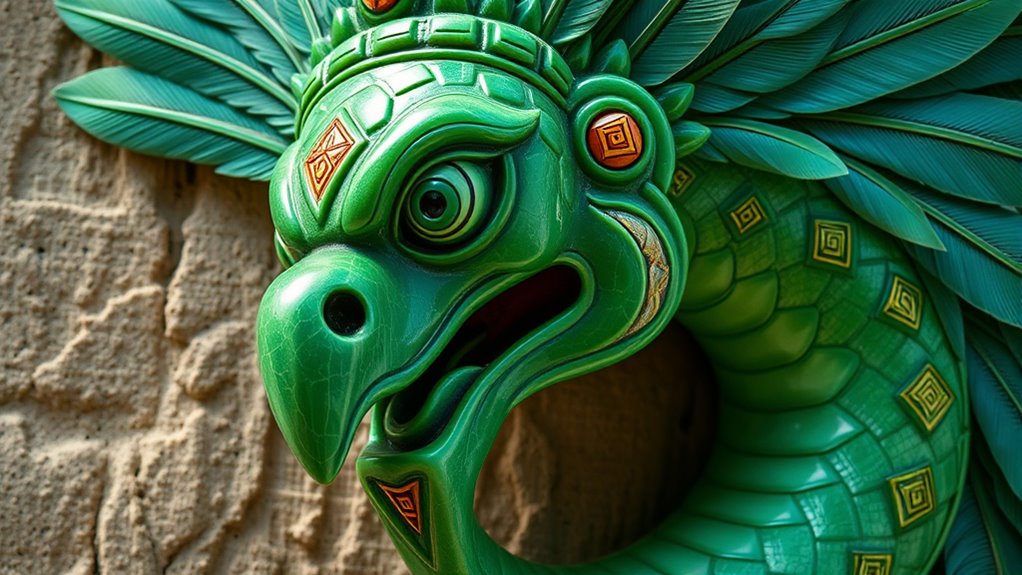

The feathered serpent Quetzalcoatl is a powerful symbol of harmony, renewal, and divine connection in Mesoamerican culture. You’ll notice its combination of serpent and bird features representing the unity of earth and sky. It embodies spiritual wisdom, life cycles, and natural rebirth, inspiring respect and reverence. Exploring its rich iconography and mythological significance reveals how this symbol reflects core values of balance and sacredness—if you keep looking, you’ll discover even deeper meanings behind this iconic deity.
Key Takeaways
- Quetzalcoatl symbolizes the union of earth and sky, representing cosmic harmony and divine connection in Mesoamerican culture.
- As a creator god, he embodies wisdom, renewal, fertility, and cosmic order through his serpent and feathered attributes.
- His iconography features a serpent body with vibrant feathers, signifying beauty, spirituality, and celestial realms.
- Quetzalcoatl reflects core values of balance, life cycles, spiritual insight, and the interconnectedness of natural and divine worlds.
- The deity’s symbolism emphasizes eternal renewal, harmony, and the sacred relationship between humans, nature, and the divine.
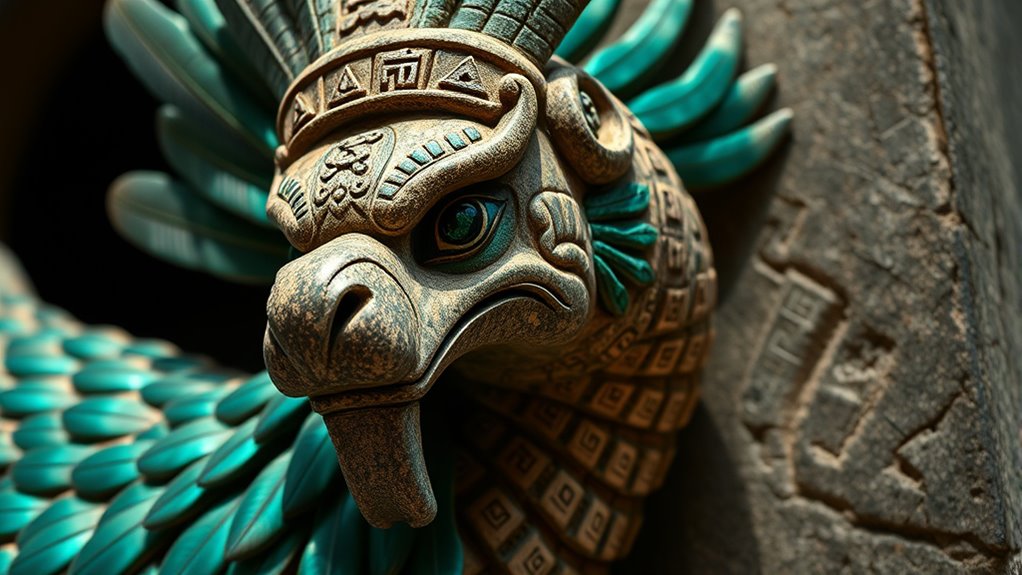
Have you ever wondered what Quetzalcoatl symbolizes in Mesoamerican culture? At its core, Quetzalcoatl is more than just a mythological figure; he embodies profound spiritual and cultural values. Known as the sacred serpent, this deity combines the attributes of a serpent and a bird, symbolizing the union of earth and sky. As a feathered deity, Quetzalcoatl represents the connection between the terrestrial and the divine, bridging the physical world with spiritual domains. His image often features vibrant feathers intertwined with a serpent’s sinuous form, emphasizing the harmony between these elements. This duality highlights the importance of balance in Mesoamerican beliefs, where nature’s forces are intertwined and sacred.
Quetzalcoatl: the sacred serpent uniting earth and sky in Mesoamerican spirituality.
In Mesoamerican mythology, Quetzalcoatl is revered as a creator god, associated with wisdom, wind, and knowledge. His role as the sacred serpent signifies renewal and fertility, as serpents shed their skin and symbolize transformation. The feathered aspect of the deity underscores his divine nature and elevated status among gods. The feathers, particularly those of the quetzal bird, are considered precious and symbolize beauty, spirituality, and the celestial domain. When you think of Quetzalcoatl, envision a figure that embodies the sacredness of life cycles, the renewal of nature, and the divine authority that sustains the universe.
This feathered serpent also holds a central place in Mesoamerican rituals and iconography. Temples, carvings, and codices depict Quetzalcoatl as a majestic figure with a serpent body adorned with feathers. These images serve as reminders of his influence over creation and the cosmic order. To the ancient peoples, invoking Quetzalcoatl meant seeking wisdom, fertility, and protection. His symbolism extends beyond religion, representing the essential principles of life, growth, and spiritual transcendence. As a cultural icon, Quetzalcoatl’s image continues to inspire modern interpretations of Mesoamerican history and spirituality.
Understanding Quetzalcoatl as the sacred serpent and feathered deity reveals how intertwined nature, spirituality, and daily life were for the ancient Mesoamericans. His symbolism encapsulates the idea that life is a continuous cycle of death, rebirth, and renewal—an eternal dance between the earthly and divine. When you explore this figure, you see not just a myth, but a reflection of a worldview that celebrates harmony, spiritual insight, and the sacredness of all existence.
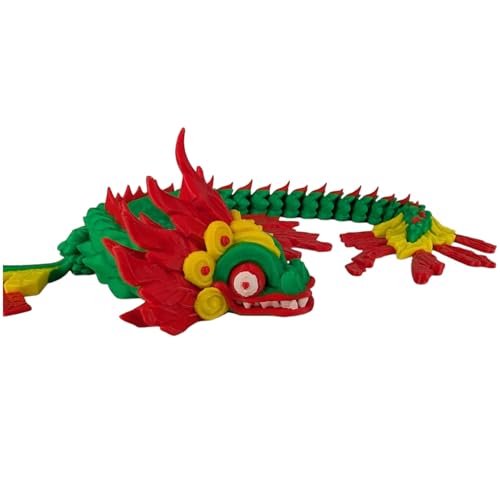
Articulated Quetzalcoatl Dragon Figurine – Colorful Aztec Serpent Collectible with Flexi Body for Display & Gifting – 3D Printed in Canada
🐉 Legendary Design – Bold Quetzalcoatl dragon design inspired by Aztec mythology; striking reds, greens, and yellows make…
As an affiliate, we earn on qualifying purchases.
As an affiliate, we earn on qualifying purchases.
Frequently Asked Questions
How Did Quetzalcoatl’s Image Influence Modern Mexican Culture?
You see Quetzalcoatl’s image in modern Mexican culture through vibrant cultural festivals and artistic representations. It influences celebrations like Día de los Muertos, where serpent motifs appear, and inspires contemporary art, murals, and jewelry. This symbol connects you to indigenous roots, blending mythology with daily life. Its powerful imagery reminds you of Mexico’s rich history, inspiring pride and cultural identity across the country.
Are There Any Specific Rituals Associated With Quetzalcoatl Today?
Today, you’ll find that indigenous ceremonies and contemporary rituals still honor Quetzalcoatl. Participants often perform offerings, dances, and prayers in festivals or sacred sites, seeking blessings or spiritual connection. These rituals preserve ancient traditions while adapting to modern contexts, blending indigenous beliefs with contemporary practices. Whether during specific celebrations or daily spiritual routines, honoring Quetzalcoatl remains a essential part of cultural identity and spiritual life for many communities.
What Are the Similarities Between Quetzalcoatl and Other Mythological Snakes?
You’ll notice that Quetzalcoatl and other mythological snakes share themes of cosmic serpents and divine wisdom. They symbolize creation, transformation, and connection between heaven and earth. Like the serpent in other cultures, Quetzalcoatl embodies duality—both destructive and regenerative. Their mythological symbolism highlights cosmic forces, spiritual renewal, and the unity of natural and spiritual domains, making them powerful symbols across various traditions.
How Did Quetzalcoatl’s Symbolism Change Over Different Mesoamerican Periods?
You see that Quetzalcoatl’s symbolism evolved over different Mesoamerican periods through iconographic shifts and cultural influences. Initially, he represented fertility and wind, but later, his image incorporated elements of rulership and divine authority. As time passed, his depiction merged with other gods, reflecting changing religious beliefs and societal values. This symbolism evolution shows how Quetzalcoatl adapted to new contexts, maintaining his significance across various cultures and eras.
Are There Any Archaeological Sites Dedicated Solely to Quetzalcoatl Worship?
Yes, archaeological sites feature ceremonial sites and dedicated shrines to Quetzalcoatl. You’ll find notable examples at Teotihuacan, where the Feathered Serpent Temple aligns with astronomical events, and at Tula, with its elaborate serpent sculptures. These sites were built specifically for worship, rituals, and offerings to Quetzalcoatl, highlighting his importance across different Mesoamerican cultures. Visiting these places reveals how deeply he was revered in ancient societies.

Aztec-Inspired Ritualistic Gold Relief Ancient Mesoamerican Deity Art Circular Wooden Painting Wall Decor 12 Inch Seasonal Display
Smooth & Durable Material: Crafted From High-Quality Mdf Wood, Offering A Fine, Stable Surface With A Smooth Finish…
As an affiliate, we earn on qualifying purchases.
As an affiliate, we earn on qualifying purchases.
Conclusion
As you explore the rich symbolism of Quetzalcoatl, you realize it’s more than just a feathered serpent—it’s a cosmic force shaping Mesoamerican culture. This deity embodies wisdom, creation, and renewal, connecting heaven and earth like an unbreakable celestial thread. Truly, understanding Quetzalcoatl *unlocks* the universe’s deepest secrets, revealing a mythic tapestry woven with divine power. Embrace this knowledge, and you’ll see how this legendary figure’s influence surpasses even the stars themselves.

1980 Mexico 5 Pesos coin pendant Aztec Quetzalcoatl feathered serpent god Teotihuacan Nahuatl K'iche' Maya Xochicalco Gukumatz calzada de los muertos Kukulkan pyramid Tohil Yucatán eagle n001629
front: Aztec sculpture of feathered serpent god Quetzalcoatl
As an affiliate, we earn on qualifying purchases.
As an affiliate, we earn on qualifying purchases.

PELOVNY Aztec Jewelry 925 Sterling Silver Quetzalcoatl Mayan Pendant Mexico Necklace Mexican Jewelry Christmas Birthday Gifts for Men Women Unisex
★ AZTEC JEWELRY ★ Quetzalcoatl, AKA Kukulkan, is a feathered serpent deity revered in Mayan, Toltec, and Aztec…
As an affiliate, we earn on qualifying purchases.
As an affiliate, we earn on qualifying purchases.