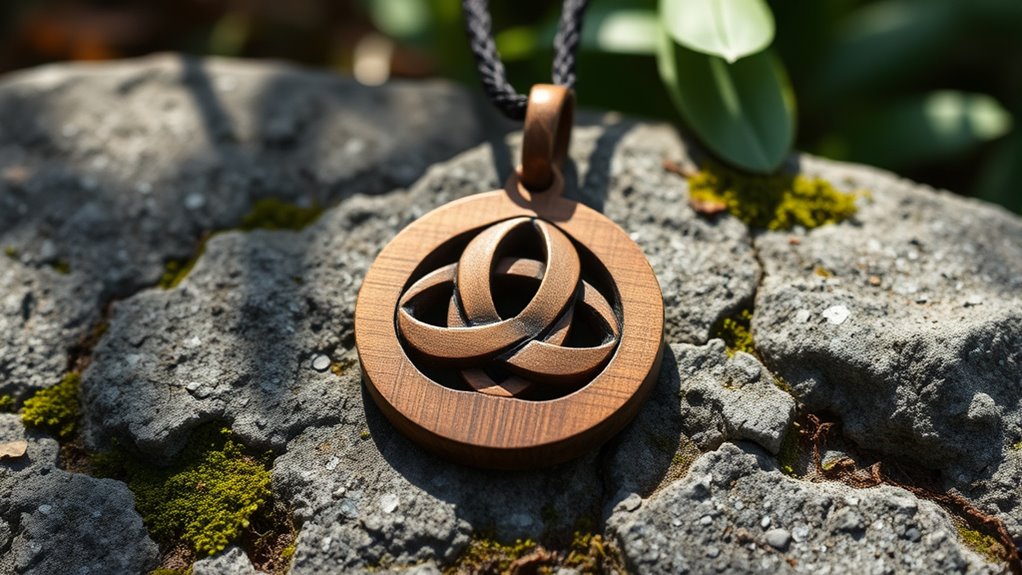
The Triquetra in Celtic culture symbolizes eternal interconnectedness, unity, and spiritual continuity. You’ll see it in ancient carvings, jewelry, and Christian symbols like the Holy Trinity. Its continuous lines represent life cycles, bonds, and the interconnectedness of nature and spirit. Over thousands of years, it’s remained a meaningful emblem of heritage and spirituality. If you explore further, you’ll discover how this timeless symbol continues to inspire modern designs and personal expressions today.
Key Takeaways
- The Triquetra symbolizes interconnectedness, eternity, and unity, representing themes of life, spirituality, and relationships in Celtic culture.
- It appears in Celtic art, stone carvings, and manuscripts dating back to around 500 BCE, often linked to nature and spiritual beliefs.
- Originally a pagan symbol, it later became associated with the Christian Holy Trinity, blending Celtic and Christian symbolism.
- In jewelry, the Triquetra signifies unbreakable bonds and spiritual connection, serving as both cultural and personal talismans.
- Its enduring relevance continues in modern fashion, representing Celtic heritage, spirituality, and the interconnectedness of all things.
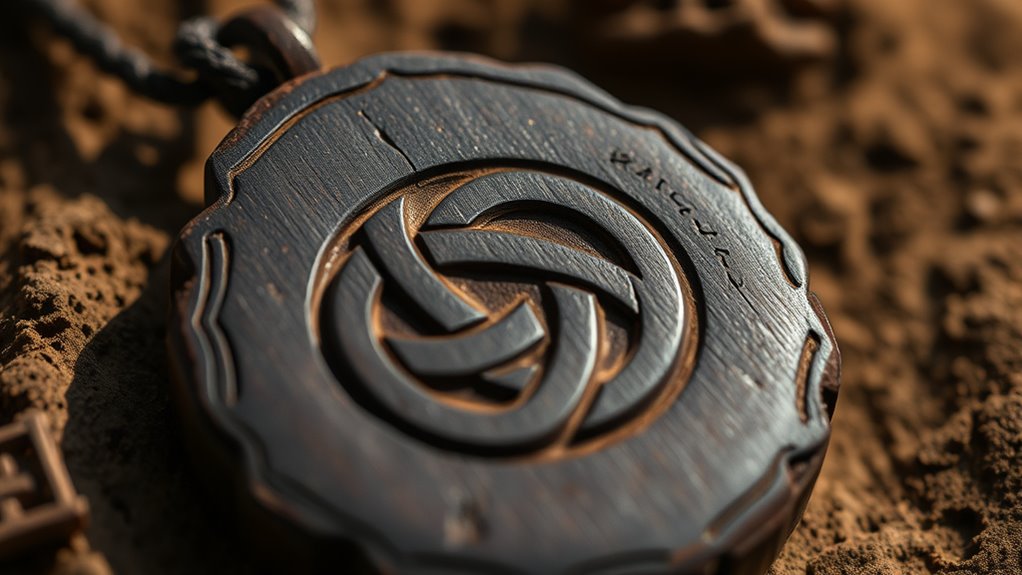
The triquetra, often called the Celtic knot or Trinity knot, is a prominent symbol in Celtic culture that represents interconnectedness and eternity. You might notice it frequently in jewelry, where its symbolism in jewelry holds deep significance. When worn as pendants, rings, or earrings, the triquetra serves as a reminder of the unbreakable bonds between family, friends, or spiritual beliefs. Its continuous, unending lines symbolize eternal life, unity, and the interconnectedness of all things. Many people wear it to honor their heritage or to keep a spiritual connection close. Its beauty is not just in its intricate design but also in what it signifies to those who wear it.
Historically, the origins of the triquetra trace back to ancient Celtic art and symbolism, dating as far back as 500 BCE. Originally, it appeared in early Celtic stone carvings, illuminated manuscripts, and metalwork. Its design was often intertwined with other symbols of nature and spirituality, emphasizing the Celts’ reverence for interconnectedness and cycles of life. The symbol’s roots are thought to predate Christianity, representing themes of threefold unity, such as life, death, and rebirth, or land, sea, and sky. Over time, it became associated with Christian symbolism as well, representing the Holy Trinity — Father, Son, and Holy Spirit — further cementing its significance in spiritual contexts.
The enduring appeal of the triquetra lies in its versatility and deep symbolism. When incorporated into jewelry, it acts as a visual reminder of eternity and the interconnectedness of life’s elements. Whether you wear it as a personal talisman or a cultural statement, its historical origins lend it a timeless quality. The design’s simplicity combined with its profound meaning makes it suitable for various styles, from ancient-inspired pieces to modern interpretations. You might choose a triquetra necklace not only for its aesthetic appeal but also for its connection to your heritage or spiritual beliefs. Its symbolism in jewelry allows you to carry a piece of Celtic history and spirituality wherever you go, turning a simple ornament into a powerful emblem of unity, eternity, and cultural identity.

NIGHTCRUZ Witches Knot Necklace, Celtic Knot Pendant with Triquetra Trinity
Quaternary Celtic Knot: Intricate and harmonious, this quaternary Celtic knot necklace is beautiful and symbols about North, South,…
As an affiliate, we earn on qualifying purchases.
As an affiliate, we earn on qualifying purchases.
Frequently Asked Questions
What Are the Origins of the Triquetra Symbol?
You might be surprised to learn that the origins of the triquetra symbol date back to ancient times, with roots in early Celtic and Norse cultures. Its design, featuring three interconnected loops, carries symbolic meanings like unity, eternity, and interconnectedness. This powerful symbol has been used for centuries to represent spiritual concepts and the cycles of life, making it a timeless emblem of balance and harmony across various cultures.
How Is the Triquetra Used in Modern Celtic Spirituality?
Did you know that over 60% of people incorporating Celtic symbols in their spirituality use the triquetra for meditation? Today, you can use the triquetra as a focus in meditative practices, emphasizing its spiritual symbolism of interconnectedness and eternity. You might wear jewelry or create art featuring the symbol to deepen your connection, making it a meaningful tool in your modern Celtic spirituality journey.
Are There Variations of the Triquetra in Different Celtic Regions?
You’ll find regional variations of the triquetra across Celtic regions, each adding unique symbolic meanings. In Ireland, it often emphasizes the interconnectedness of life and eternity, while in Scotland, it may highlight spiritual protection. These variations reflect local traditions and beliefs, giving the symbol different nuances. Understanding these regional differences helps you appreciate how the triquetra’s symbolic meanings adapt and evolve within Celtic culture, enriching its spiritual significance.
What Are Common Myths Associated With the Triquetra?
The triquetra symbolizes unity, eternity, and the interconnectedness of life, but many believe it’s solely a symbol of paganism, leading to cultural misconceptions. You might think it represents just three gods or elements, yet its layered symbolic meanings extend to spiritual growth and balance. Myths often oversimplify its significance, overlooking its deeper role in Celtic spirituality. Don’t let misconceptions distort its true cultural and spiritual importance.
How Does the Triquetra Relate to Celtic Art and Jewelry?
You see the triquetra in Celtic art and jewelry as a powerful symbol that represents unity, eternity, and spiritual growth. Artists often use intricate design techniques like interlacing and knotwork to create visually mesmerizing pieces. When you wear or view these designs, you connect with its symbolic meanings, appreciating the craftsmanship that highlights its significance in Celtic culture. The triquetra’s elegant form makes it a timeless choice in jewelry and art.

St Patricks Day Shamrock Earrings Sterling Silver Four Leaf Clover Irish Triquetra Celtic Knot Earrings for Women Emerald Green CZ Stud Prom Valentines Day Gift
[FOUR LEAF CLOVER] Four leaf clover is believed to bring "Good Luck" and each leaf in the clover…
As an affiliate, we earn on qualifying purchases.
As an affiliate, we earn on qualifying purchases.
Conclusion
As you explore the triquetra’s ancient roots, you realize it’s more than just a symbol—it’s the heartbeat of Celtic spirituality, echoing through time like a thunderous drum. Imagine feeling the energy of sacred circles swirling around you, binding gods, earth, and eternity in a never-ending dance. The triquetra isn’t just a shape; it’s the universe’s secret code, whispering its powerful magic directly into your soul, forever connecting you to the Celtic soul’s timeless pulse.

HZMAN Triquetra Trinity Knot Stainless Steel Irish Celtic Knot Ring Size(Silver,9)
Occasion: Suitable for all occasions, can be used for various purposes, as a wedding ring, engagement ring, anniversary…
As an affiliate, we earn on qualifying purchases.
As an affiliate, we earn on qualifying purchases.

Sterling Silver Celtic Pendant Necklace Fashion Love Knot Cross Triangle White Gold Plated Hypoallergenic Vintage Jewelry with Chain Charms Birthday Gifts for Women
💕 DESIGN INSPIRATION 💕 Solid and classic design, don't worry about the necklace breaking or tarnishing. These dainty…
As an affiliate, we earn on qualifying purchases.
As an affiliate, we earn on qualifying purchases.