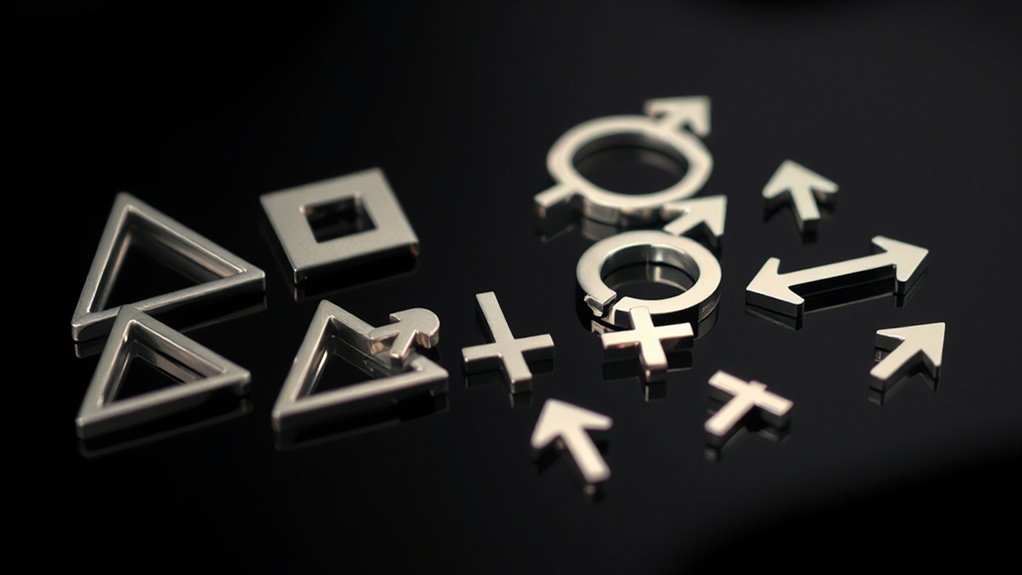

Non-binary and transgender symbols are modern icons that help you express and identify your gender identity clearly. They foster visibility, build community, and promote understanding by providing visual markers for diverse gender expressions. From the classic Mars and Venus symbols to inclusive flags like the non-binary flag, these icons evolve with society’s growing awareness. If you’re interested, you’ll discover how these symbols continue to shape conversations around gender and acceptance today.
Key Takeaways
- Modern symbols like the non-binary flag and transgender pride flag visually represent gender diversity beyond the binary.
- Evolving icons reflect societal acceptance and awareness of non-binary and transgender identities.
- Symbols serve as tools for visibility, affirmation, and community connection within LGBTQ+ activism.
- New gender symbols aim to normalize and communicate a spectrum of gender identities in social and digital spaces.
- Cultural significance of these icons fosters understanding, inclusion, and ongoing progress toward gender equality.
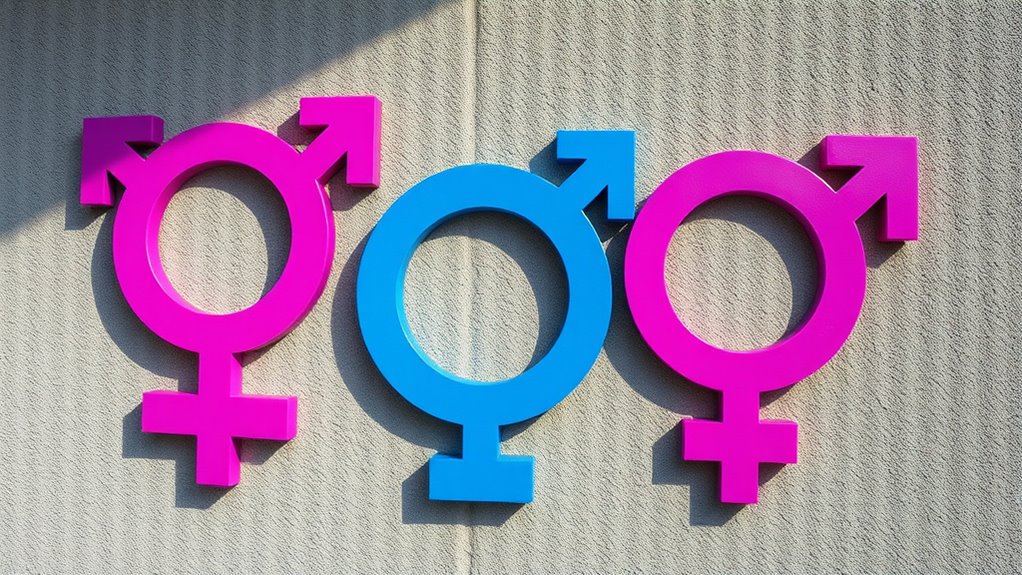
Symbols play an essential role in representing non-binary and transgender identities, helping individuals express their authentic selves and foster visibility. These symbols serve as visual markers that communicate gender identity and support a sense of community. Over time, the way these symbols are designed and understood reflects the ongoing evolution of gender identity representation and the historical symbolism evolution within LGBTQ+ communities. As society becomes more accepting and aware, these icons take on deeper significance, connecting personal identity with collective history and activism.
Symbols are vital in expressing gender identities and building community awareness over time.
Historically, symbolism related to gender and sexuality has been complex, often rooted in cultural, religious, or political contexts. Early symbols, like the Mars and Venus signs, originated in ancient Greece and Rome, representing male and female. However, these icons were limited in scope, reinforcing binary notions of gender. As awareness grew around gender diversity, the symbolism evolved to include more inclusive representations. For instance, the rainbow flag, created in 1978, became a prominent symbol of LGBTQ+ pride, encompassing a broad spectrum of identities and emphasizing unity. Similarly, the transgender pride flag, designed in 1999, explicitly highlighted gender diversity with its blue, pink, and white stripes, signifying traditional masculinity, femininity, and non-binary identities.
In recent years, new symbols have emerged that better capture the complexity of gender beyond the binary. The non-binary flag, with its yellow, white, purple, and black stripes, represents genders outside the male-female dichotomy. Its design reflects a conscious effort to provide visibility for identities that don’t fit traditional categories. These symbols are often adopted in various contexts, from social media to activist demonstrations, reinforcing their importance as tools for gender identity representation.
Understanding the historical symbolism evolution reveals how icons have shifted from rigid, binary markers to fluid representations of gender diversity. These symbols aren’t static; they continue to adapt as language, understanding, and acceptance evolve. By embracing these visual cues, you participate in a broader effort to normalize and celebrate gender variation, helping others see and respect the diversity of identities. In this way, symbols aren’t just images—they’re powerful tools that foster connection, affirm identity, and push forward ongoing conversations about gender in society. As you learn about and use these symbols, you contribute to a richer, more inclusive cultural landscape that honors the full spectrum of human experience.
Top picks for "binary transgender symbol"
Open Amazon search results for this keyword.
As an affiliate, we earn on qualifying purchases.
Frequently Asked Questions
How Do Non-Binary and Transgender Symbols Evolve Over Time?
You see non-binary and transgender symbols evolve through historical symbol development and design evolution trends. As society’s understanding deepens, these icons shift in color, shape, and meaning to better represent identities. You notice more inclusive, simplified designs gaining popularity, reflecting ongoing conversations about gender. This continuous evolution helps foster acceptance, making the symbols more recognizable and meaningful to diverse communities over time.
Are There Cultural Variations in These Identity Icons Worldwide?
You’ll find that cultural symbolism and regional variations shape these identity icons profoundly. In some countries, colors and shapes carry deep cultural meanings, making symbols unique to each region. These icons evolve with local traditions, beliefs, and social norms, creating a vibrant tapestry of representation worldwide. Embracing this diversity reveals how identity symbols are deeply rooted in cultural contexts, making their significance even more powerful and personal across different communities.
Can Symbols Influence Societal Acceptance and Understanding?
Symbols markedly influence societal acceptance and understanding of gender expression. When you see inclusive icons, it encourages more positive societal perception, making people feel recognized and validated. These symbols foster awareness and empathy, helping society move toward greater acceptance of diverse gender identities. By embracing and sharing these icons, you contribute to a culture where gender expression is respected, ultimately shaping a more inclusive environment for everyone.
How Do Designers Ensure Inclusivity in Symbol Creation?
You guarantee inclusivity in symbol creation by thoughtfully considering color symbolism and the evolution of iconography. You involve diverse communities in the design process to reflect multiple perspectives. You choose colors that symbolize acceptance and identity, avoiding stereotypes. You adapt iconography over time, staying current with societal shifts. This approach helps create symbols that resonate broadly, fostering understanding and acceptance across different identities.
What Is the Process for Adopting New Symbols Within Communities?
You start by engaging in community consultation, where you gather feedback and build consensus. Then, you work on symbol standardization, ensuring the design is clear and meaningful. Once the community agrees, the new symbol gains recognition through advocacy and official channels. This collaborative process fosters acceptance, making sure the symbol resonates deeply and becomes an accepted part of community identity over time.
Conclusion
You now see how these symbols serve as powerful beacons of identity, shining a light on diversity in a world that often prefers black and white. By embracing these icons, you help break down barriers and paint a richer, more inclusive picture of humanity. Remember, understanding and acceptance are the keys to building bridges—don’t let the opportunity slip through your fingers. Together, you can help turn this vibrant mosaic into a true reflection of everyone’s authentic self.