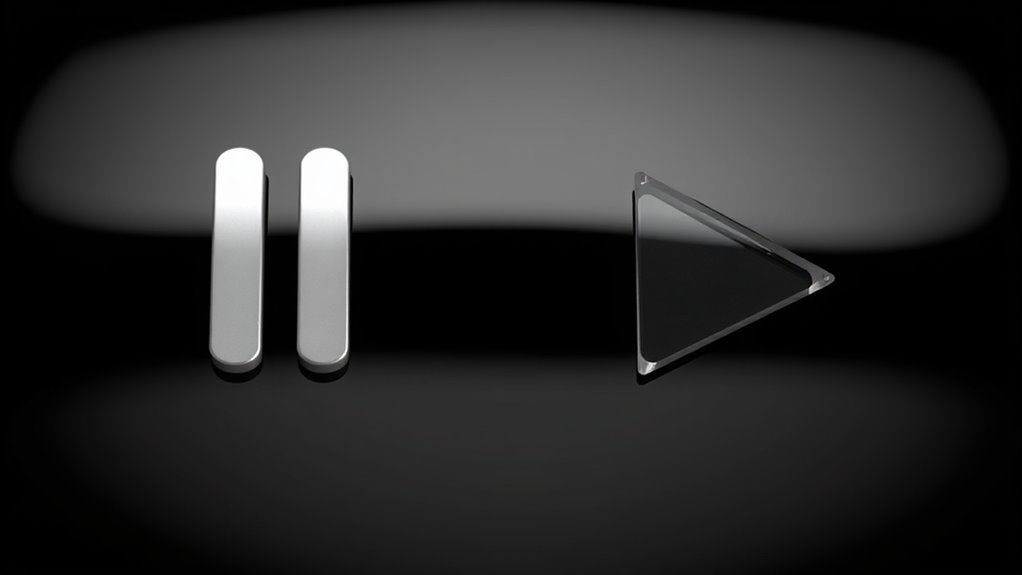

Pause and play symbols are universally recognized icons that quickly convey media control functions across cultures and digital devices. The triangle pointing right indicates “play,” while two vertical bars signify “pause,” making them easy to understand regardless of language or background. These simple, intuitive symbols have evolved from analog devices to digital platforms, becoming a shared visual language that enhances user experience worldwide. Keep exploring to discover how these symbols shape our media interactions even further.
Key Takeaways
- The play symbol is a right-pointing triangle, originating from analog devices to indicate forward motion.
- The pause symbol consists of two vertical bars, representing a break or halt in media playback.
- Both icons have become universal symbols, transcending language barriers across digital and analog media.
- Their simple, intuitive designs reflect cultural preferences for minimalism and clarity in interface design.
- These icons facilitate seamless media control across global platforms, devices, and media formats.

Have you ever wondered why the pause and play symbols are so universally recognizable? These icons aren’t just random images; they carry a rich history of media icons and a deep cultural significance that has helped shape how we interact with technology. To understand their prominence, you need to look back at the evolution of media icons over time. Early media devices used physical buttons with labels or shapes that indicated their function, but as technology advanced, designers needed simple, intuitive symbols that could transcend language barriers. The triangle pointing right for play and the two vertical bars for pause emerged as standard symbols because they’re easy to understand at a glance. Their origins trace back to the era of analog recording devices, where visual cues replaced textual instructions, making media controls more accessible across different cultures and languages.
These symbols grew in importance as media became more widespread, especially with the rise of cassette tapes, VCRs, and eventually digital media players. Their simplicity and clarity made them ideal for universal recognition, allowing users worldwide to operate devices without needing instructions in every language. Over time, the cultural significance of these symbols expanded beyond their functional purpose. They became icons representing the very act of engaging with media—playing, pausing, and controlling entertainment or information. This universality fostered a shared experience, creating a visual language that transcended borders and cultures. You might not think about it often, but these symbols serve as a bridge connecting people through a common understanding of media interaction.
Their design also reflects a broader cultural tendency to favor minimalism and clarity. The right-pointing triangle suggests forward motion, progress, and action, while the pause symbol’s two vertical bars convey stability, interruption, or a break in activity. These visual cues align with our intuitive understanding of movement and stoppage, making them effective across different contexts—whether you’re controlling a music playlist, a video, or a podcast. The cultural significance of these symbols extends into modern digital interfaces, where they appear on streaming platforms, remote controls, and apps, maintaining their role as universal signs of media control. In this way, these simple icons are more than just symbols—they embody a shared cultural language that continues to evolve but retains its core meaning, connecting users worldwide through a common visual vocabulary.

Mars Fox BT Multimedia Music Player Remote Control for Play Pause Next Prevtrack Volume Up/Down Mute Fit for iOS iPhone ipad Android System Smartphone Tablet Devices Sony FiiO Player ect
You don’t need to change the Music with your fingers. This bluetooth remote control can scroll the pause/play…
As an affiliate, we earn on qualifying purchases.
As an affiliate, we earn on qualifying purchases.
Frequently Asked Questions
How Have Media Icons Evolved Over the Decades?
You’ve seen media icons evolve as cultural interpretations and technological innovations develop. Originally simple symbols like the triangle for play and two vertical bars for pause became more streamlined and intuitive. Today, they adapt seamlessly across devices, reflecting changes in technology and culture. You notice how these icons now incorporate minimalist design, ensuring quick recognition and universal understanding, making your media experience smoother regardless of the platform or context.
Are Pause and Play Symbols Standardized Worldwide?
You’ll find that pause and play symbols aren’t fully standardized worldwide, as cultural interpretations and technological influences shape their designs. While these icons generally look similar, some variations exist across regions and devices. You might notice differences based on local preferences or technological updates. However, the core concepts remain consistent, helping users easily recognize and operate media controls regardless of where they are or what technology they’re using.
What Are Common Variations of These Icons?
You might think pause and play icons are exactly the same everywhere, but they’re wildly varied! Common variations include different button designs like triangles for play and double vertical bars for pause, with icon color schemes ranging from classic black and white to vibrant reds and blues. Some use minimalist lines, while others feature detailed graphics. These differences make each media interface unique, even though they serve the same purpose.
How Do Accessibility Features Incorporate Media Symbols?
You’ll find accessibility features incorporate media symbols through assistive technology and tactile symbols. Assistive tech, like screen readers, recognize these icons and describe their functions aloud, helping users understand media controls. Tactile symbols add physical cues for individuals with visual impairments, allowing them to identify buttons by touch. Together, these features guarantee everyone can navigate media controls independently and confidently, making digital content more inclusive.
Can These Icons Be Customized for Branding Purposes?
Yes, you can customize media icons for branding purposes. By leveraging brand customization options, you guarantee your icons align with your visual identity. Keep up with current icon design trends, which emphasize simplicity and recognizability. You might adjust colors, shapes, or add unique elements to make the icons stand out while maintaining their functionality. Customizing these symbols helps reinforce your brand and improves user experience across your media platforms.

Universal Remote Control for All TVs, Blu-ray/DVD Players, Streaming Media Players, Soundbars, Cable receivers and All Audio/Video Devices – Simple Setup Universal Remote
【Universal Remote Control】Universal Remote Control for All TVs,Blu-ray/DVD players,Streaming media players,Soundbars,Cable receivers and all audio/video devices.
As an affiliate, we earn on qualifying purchases.
As an affiliate, we earn on qualifying purchases.
Conclusion
You see the pause and play symbols everywhere—yet their meaning is simple. They’re universal, guiding your actions in a world filled with noise and chaos. In their silence, you find clarity; in their play, you discover motion. These icons are small but powerful, reminding you that sometimes, stopping is just as important as moving forward. Embrace these symbols—they’re your quiet guides through the loud, endless stream of media.

DROK USB Volume Knob with 1.5m Cable, One-Click Mute Button and 3 Modes External Volume Control for Speakers, PC Media Controller for Win 7/8/10/Mac
Plug & Play Compatibility: Simply connect it to your Windows (10/8/7) or Mac computer no drivers needed. It's…
As an affiliate, we earn on qualifying purchases.
As an affiliate, we earn on qualifying purchases.

ACEMAX 4K Digital Signage Media Player — Auto Play & Loop USB Videos, No WiFi Needed, Supports USB up to 8TB & MicroSD 1TB, HDMI 4K H.265 Media Player for TV Displays
Built for Digital Signage (24/7 Playback); Designed for continuous operation with auto-play, auto-loop and resume functions — ideal…
As an affiliate, we earn on qualifying purchases.
As an affiliate, we earn on qualifying purchases.