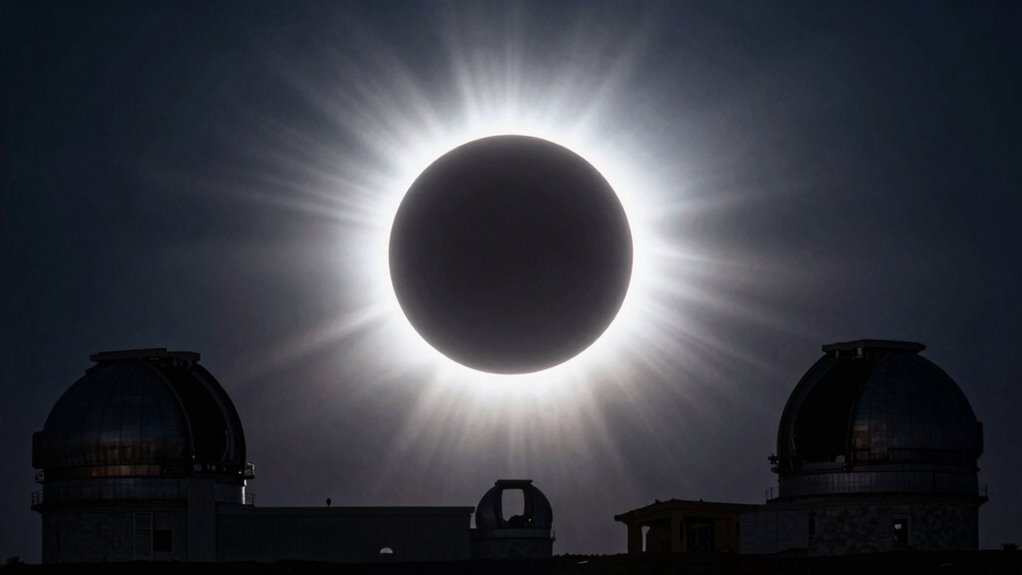

Eclipses are symbolically powerful across cultures because they evoke awe and symbolize cosmic battles, divine messages, or spiritual renewal. People have historically seen them as signs from gods or portals to understanding the universe’s mysteries. These celestial events inspire rituals, myths, and shared reflections that reinforce cultural values and human curiosity. Their dramatic nature connects you to something greater, reminding us of life’s cyclical patterns. Keep exploring, and you’ll discover how these powerful moments influence us even today.
Key Takeaways
- Eclipses are rare and dramatic natural events that evoke awe and wonder across cultures.
- They are historically linked to divine messages, cosmic battles, or supernatural forces.
- Rituals and ceremonies during eclipses reinforce social bonds and spiritual beliefs.
- Eclipses symbolize transformation, renewal, and the cyclical nature of life and death.
- Their universal mystery inspires human curiosity and connects societies through shared symbolism.
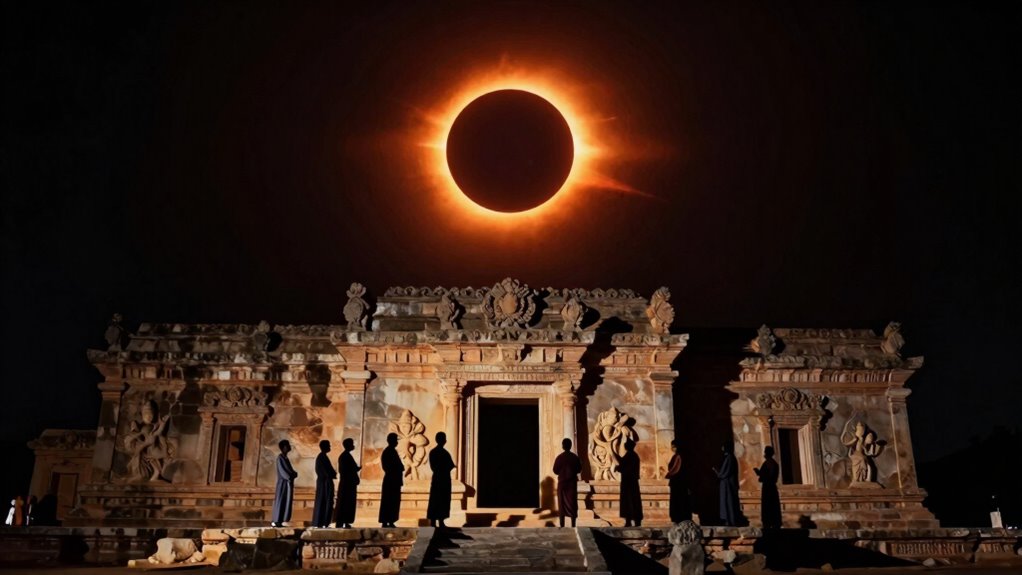
Have you ever wondered how different cultures have interpreted the mysterious phenomenon of eclipses? Throughout history, people from diverse societies have looked up at the sky during these celestial events with a mixture of awe, fear, and curiosity. Their interpretations often stem from mythical stories and beliefs, giving eclipses a deeper, symbolic meaning that resonates across generations. Many cultures saw eclipses as powerful signs from the gods or supernatural forces, often linked to cosmic battles or divine warnings. These mythical interpretations serve to explain the inexplicable, transforming a natural event into a narrative that reinforces cultural values and beliefs. For example, some ancient civilizations believed that an eclipse was a dragon or monster swallowing the sun or moon, which justified rituals to ward off evil or restore balance. In this way, eclipses became more than just astronomical phenomena; they became part of a society’s mythic storytelling and spiritual understanding.
Beyond myth, eclipses held significant ritual importance for many cultures. They were seen as pivotal moments to perform specific ceremonies, mark seasonal changes, or seek divine favor. These rituals often involved offerings, prayers, or even fasting, emphasizing the event’s sacred nature. For instance, in ancient China, eclipses were believed to be a sign of celestial displeasure, prompting emperors to conduct elaborate rites to appease the heavens. Similarly, in Indigenous American traditions, eclipses were viewed as sacred times when communication with spirits was intensified, and ceremonies were performed to ensure harmony between humans and the cosmos. These rituals, often deeply rooted in cultural traditions, helped to reinforce social cohesion and shared spiritual beliefs. The ritual significance of eclipses underscores their role as catalysts for communal unity and spiritual reflection. They act as reminders of humanity’s connection to the universe and the divine forces believed to govern it. Additionally, the visual spectacle of an eclipse often reinforced its role as a powerful symbol, inspiring awe and reverence across cultures. The cultural significance of eclipses continues to influence modern interpretations and celebrations. Furthermore, the understanding of eclipses as cosmic events has evolved with scientific advancements, yet their mythic and spiritual importance persists in many cultures worldwide.
This enduring symbolism is also connected to the way eclipses have historically represented transformation and renewal, emphasizing the cyclical nature of life and death. The layered myths and rituals associated with eclipses reveal a universal human tendency to interpret extraordinary phenomena as portals to understanding ourselves and our place in the universe. Whether seen as divine messages, cosmic struggles, or sacred moments, eclipses remain a potent symbol across cultures—reminding us of the awe-inspiring power of the cosmos and our enduring desire to find meaning in its mysteries.
As an affiliate, we earn on qualifying purchases.
Frequently Asked Questions
How Do Different Cultures Interpret Lunar Versus Solar Eclipses?
You see, different cultures interpret lunar and solar eclipses through celestial symbolism and ritual significance. Lunar eclipses often symbolize transformation, renewal, or the moon’s power, prompting rituals for protection or fertility. Solar eclipses, however, are seen as powerful, sometimes ominous, events representing divine wrath or rebirth. These interpretations shape rituals and myths, emphasizing how each culture channels celestial events into meaningful practices that reflect their unique beliefs about the universe.
What Ancient Myths Explain the Occurrence of Eclipses?
Ancient myths explain eclipses through mythical explanations like cosmic battles between gods or celestial creatures. You might see stories where a dragon or serpent swallows the sun or moon, causing darkness. These myths depict cosmic battles that temporarily obscure the sky, symbolizing divine conflicts or cosmic order. Such tales reflect humanity’s attempt to understand these rare, awe-inspiring events, emphasizing their significance across different cultures.
Are Eclipses Considered Omens in Modern Cultures?
Eclipses are often seen as ominous signs in modern cultures, fueling superstitions surrounding eclipses. You might think they’re portents of disaster, but today, many see them as powerful symbols of change and renewal. While some still believe in eclipse omens, most embrace modern eclipse symbolism, viewing these celestial events as awe-inspiring natural phenomena rather than warnings. Still, their dramatic appearance keeps the superstition alive for many.
How Have Eclipse Beliefs Influenced Cultural Rituals?
Eclipse beliefs have deeply influenced cultural rituals by emphasizing their celestial significance and solar symbolism. You might participate in ceremonies to honor the sun or seek protection during an eclipse, reflecting its spiritual power. These rituals reinforce the idea that eclipses connect humans with celestial events, symbolizing renewal or balance. Across cultures, such practices demonstrate a collective acknowledgment of the eclipse’s profound impact on spiritual and cultural understanding.
Do All Cultures View Eclipses as Negative Events?
You might think all cultures see eclipses as negative, but that’s not true. Coincidences reveal that superstitions origins and historical perceptions vary widely. While some cultures feared eclipses as ominous signs, others saw them as powerful, transformative events. This diversity shows that eclipses hold different symbolic meanings worldwide, often reflecting cultural values and beliefs, rather than universally negative perceptions.
Conclusion
You might find it fascinating how eclipses quietly remind us of life’s delicate balance and mysteries beyond our grasp. These celestial events serve as gentle whispers from the universe, urging us to reflect on our place within the grand, unfolding story. Though they fade from view, their symbolism lingers, inviting us to embrace the unknown with a sense of reverence and wonder—a subtle nudge that there’s always more beneath the surface than meets the eye.