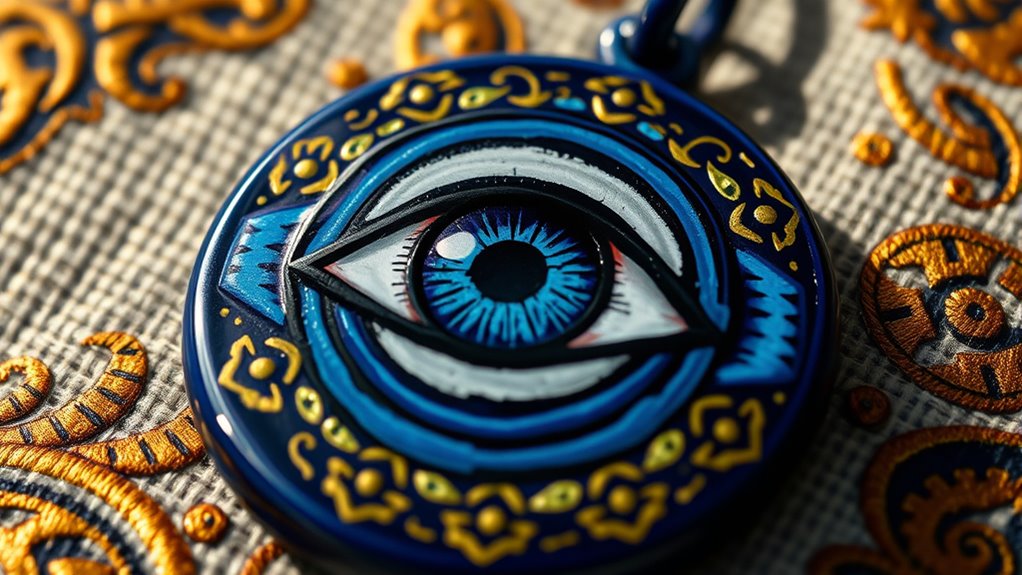

The evil eye is a powerful symbol used across many cultures to protect against envy, negative energy, and bad luck. You’ll find it in Greek, Turkish, North African, and Middle Eastern traditions, often as charms or amulets with blue or eye-shaped designs. These symbols act as shields, deflecting harmful intentions and ensuring positivity. If you want to uncover the deep roots and cultural meanings behind this protective icon, exploring further reveals fascinating insights you won’t want to miss.
Key Takeaways
- The evil eye is a protective symbol rooted in ancient beliefs guarding against envy and malevolent energy.
- Different cultures use various amulets, like blue beads or eye-shaped charms, to ward off negative influences.
- Wearing or displaying evil eye symbols provides spiritual reassurance and connects individuals to cultural traditions.
- Placement of these symbols in homes or as jewelry serves as constant protection and a reminder of cultural beliefs.
- The evil eye embodies a universal desire for unseen protection, transcending regional differences through shared symbolism.
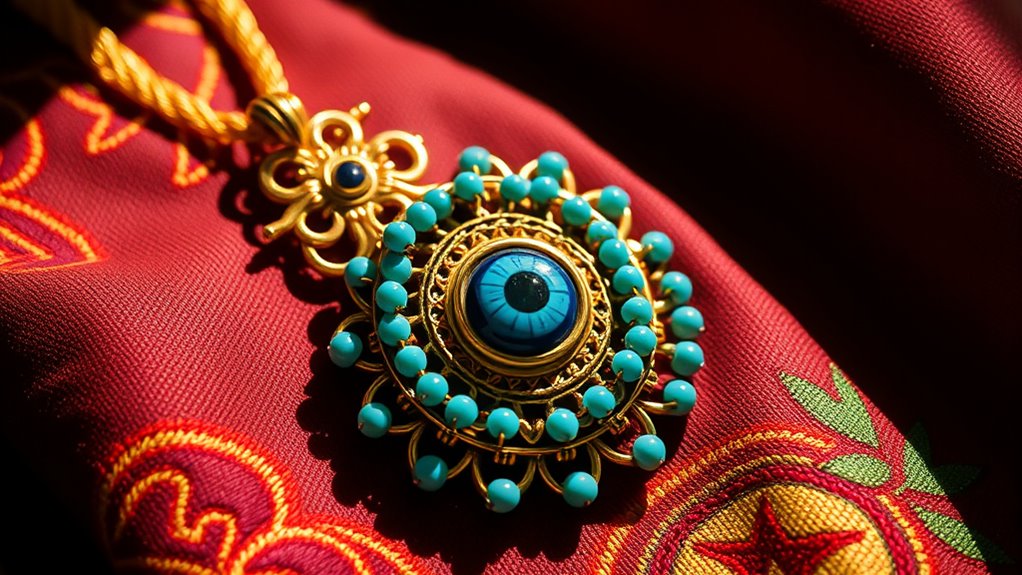
Many cultures believe that envy and negative energy can cause harm, so they turn to the evil eye as a powerful protective symbol. This ancient belief is rooted in the idea that someone’s jealous glare can bring misfortune, injury, or bad luck. To counteract this, people wear or display amulets featuring the evil eye to ward off these malicious influences. The amulet significance is deeply intertwined with cultural symbolism, making it more than just a piece of jewelry or decoration — it’s a powerful talisman rooted in centuries of tradition.
The cultural symbolism of the evil eye varies from region to region, but its core purpose remains consistent: protection. In Mediterranean countries, like Greece and Turkey, the blue eye bead is a common sight, believed to reflect and absorb harmful energies. In North Africa and the Middle East, similar symbols are used, often incorporating eye-shaped charms or amulets crafted from various materials such as glass, metal, or embedded stones. These amulets aren’t just decorative items; they serve as a visual reminder of a collective belief in safeguarding oneself from envy and malevolent forces.
When you consider the amulet significance, it’s clear that these symbols carry more than mere aesthetic value. They embody cultural beliefs and spiritual practices passed down through generations. Wearing an evil eye charm isn’t just about fashion; it’s about aligning yourself with a tradition that emphasizes protection and positive energy. The amulet acts as a barrier, redirecting negative thoughts and feelings away from you. Its presence can provide reassurance, fostering a sense of safety rooted in cultural symbolism that resonates on a personal level.
Across different societies, the evil eye symbol has also taken on a more spiritual role, representing protection not only from envy but also from spiritual harm and misfortune. Many believe that the eye’s gaze can influence one’s destiny, so keeping a protective amulet close becomes essential. Whether hung in homes, worn as jewelry, or incorporated into everyday objects, these symbols serve as constant reminders of the cultural importance placed on safeguarding one’s well-being.
In essence, the evil eye’s amulet significance and cultural symbolism reflect a universal desire for protection against unseen dangers. You might wear an eye-shaped pendant or hang a charm in your home, not just because it looks appealing, but because of the deep-rooted cultural belief that it can shield you from harm. These symbols connect you to ancient traditions and collective wisdom, offering both spiritual comfort and a tangible form of protection against negativity.
Top picks for "evil protective symbol"
Open Amazon search results for this keyword.
As an affiliate, we earn on qualifying purchases.
Frequently Asked Questions
How Is the Evil Eye Believed to Cause Harm?
You might believe the evil eye causes harm through superstitious beliefs, thinking that envy or jealousy directs negative energy your way. This can lead to psychological effects like anxiety or fear, making you feel vulnerable. When someone looks at you with envy, you might think they wish you harm, which can heighten stress and discomfort. These beliefs influence your perception, reinforcing the idea that the evil eye has real, harmful power.
Are There Specific Rituals to Ward off the Evil Eye?
Did you know over 80% of people in some cultures use amulet significance to ward off the evil eye? You can perform ritual practices like hanging charms, such as the blue eye amulet, to protect yourself. Some traditions include reciting specific prayers or blessings, or sprinkling salt or holy water. These rituals help reinforce your protection, making you feel safer and more secure from negative energies.
Which Cultures Have the Most Unique Evil Eye Symbols?
You’ll find the most unique evil eye symbols in Turkish, Greek, and North African cultures, each showcasing ancient amulet designs that are rich in cultural symbolism. Turkish nazar beads, with their vibrant blue circles, stand out, while Greek Mati charms feature eye motifs believed to ward off evil. North African talismans often incorporate intricate patterns, blending traditional artistry with deep spiritual meaning to protect against negative energies.
Can the Evil Eye Be Accidentally Cast?
Sure, you can accidentally cast the evil eye—those superstitious beliefs make it seem like a simple glare could curse someone. If you unintentionally envy or scowl at someone, it’s believed you might release an accidental curse. It’s like your subconscious’s way of saying, “Oops, I didn’t mean that,” but in superstitious terms, your unintended look can still carry enough bad vibes to harm others.
Is There Scientific Evidence Supporting the Evil Eye’s Effects?
There’s no scientific evidence supporting the evil eye’s effects, but the psychological effects can be powerful. You might believe in its influence, which can lead to real feelings of anxiety or confidence shifts — a placebo influence. This mind-over-matter effect shows how your beliefs shape perceptions and reactions, making the evil eye seem effective even without scientific backing. Your mindset plays a vital role in how you experience these phenomena.
Conclusion
Even if you’re skeptical about the evil eye’s power, it’s worth recognizing its cultural significance and the protection it offers to many. These symbols have survived centuries because they provide comfort and a sense of safety. So, whether you believe in their magic or not, embracing this shared tradition can connect you to a rich history of safeguarding loved ones. Don’t dismiss it outright—sometimes, the most meaningful symbols are those we carry with us for peace of mind.